La brèche au Diable – Soumont-Saint-Quentin
Description
English
Deutsch
Dutch
Español
Italiano
Description
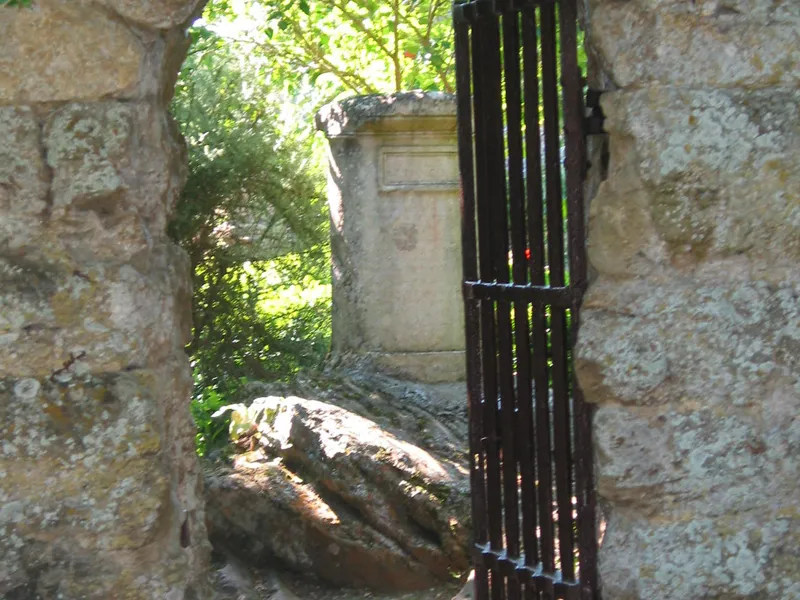
Selon la légende, la Brèche au Diable, enclavée dans la plaine de Caen, serait née d'un pacte entre Saint-Quentin et le Diable pour créer un passage aux eaux du Laizon.Près du hameau de Saint-Quentin, après avoir emprunté le chemin du bas de la roche, vous serez surpris par le paysage. Face aux impressionnantes parois verticales, vous ne pourrez que croire qu'elles sont l'oeuvre du Diable. En bordure du Laizon, quelques arbres prennent des formes surprenantes dans leur course à la recherche de lumière. Non loin de la rive, deux polissoirs ajoutent du mystère au lieu. Les traces laissées dans ces gros blocs de roches par le frottement des silex ainsi qu'un abri sous roche témoignent ici même de la présence de l'homme préhistorique. Sur les hauteurs, le bois cède sa place à une lande d'ajoncs et de bruyères. Cette même lande près de la chapelle du mont Joly, sert également de décor à la sépulture de Marie Joly, célèbre actrice de la comédie française de la fin du XVIIIème siècle. Il est possible de stationner sur le parking de l’église de Soumont-Saint-Quentin.
English
The breche au Diable or Devil’s breach in English, is unique in Normandy. This deep wooded ravine with its stream and rock formations was first inhabited in the Paleolithic with finds dating from then through to the Neolithic. Many legends are associated with it, the most famous being that of St Quentin and the Devil. St Quentin decided to live here as a hermit to help the local people who were constantly struggling with the rise and fall of the river Laizon. He made a pact with the Devil. If the Devil opened a channel in the rock for the river waters and then performed a simple task, he could take St Quentin’s soul. The hermit asked the Devil to wash a fleece in the stream and make it white again. But the Saint had given him a goat skin rather than a fleece and the Devil couldn't get it as white as a lamb. So Saint Quentin saved his soul without going back on his word. Marie Joly was a famous 18th century French actress. She was extremely beautiful and had many suitors, but she settled on M Nicolas Fouquet Dulomboy from Caen who was mayor of Tassily St Quentin. When she died, aged only 37, he was so striken with grief he erected this romantic tomb. The tomb and the surrounding area are still looked after by the family in whose care he left his beloved.
Deutsch
Der Legende nach entstand die von der Ebene von Caen eingeschlossene Brèche au Diable aus einem Pakt zwischen Saint-Quentin und dem Teufel, um einen Durchgang für das Wasser des Laizon zu schaffen.In der Nähe des Weilers Saint-Quentin, nachdem Sie den Weg zum unteren Teil des Felsens genommen haben, werden Sie von der Landschaft überrascht sein. Angesichts der beeindruckenden senkrechten Felswände werden Sie nicht umhin können, zu glauben, dass sie das Werk des Teufels sind. Am Ufer des Laizon nehmen einige Bäume auf ihrer Jagd nach Licht überraschende Formen an. Nicht weit vom Ufer entfernt befinden sich zwei Poliermaschinen, die dem Ort etwas Geheimnisvolles verleihen. Die Spuren, die in diesen großen Felsblöcken durch das Reiben von Feuersteinen hinterlassen wurden, sowie ein Felsunterstand zeugen hier von der Anwesenheit prähistorischer Menschen. Auf den Anhöhen weicht der Wald einer Heide aus Ginster und Heidekraut. Diese Heide in der Nähe der Kapelle des Mont Joly dient auch als Kulisse für die Grabstätte von Marie Joly, einer berühmten Schauspielerin der französischen Komödie vom Ende des 18. Jahrhunderts. Parken ist auf dem Parkplatz der Kirche von Soumont-Saint-Quentin möglich
Dutch
Volgens de legende is de Duivelsbreuk, ingesloten in de vlakte van Caen, ontstaan uit een pact tussen Saint-Quentin en de Duivel om een doorgang te creëren voor het water van de Laizon.In de buurt van het gehucht Saint-Quentin, na het nemen van het pad onderaan de rots, wordt u verrast door het landschap. Geconfronteerd met de indrukwekkende verticale muren, kun je alleen maar geloven dat ze het werk van de duivel zijn. Aan de oevers van de Laizon nemen sommige bomen verrassende vormen aan als ze op zoek gaan naar licht. Niet ver van de bank, voegen twee polijsters mysterie toe aan de plaats. De sporen die in deze grote rotsblokken zijn achtergelaten door het wrijven van de vuurstenen en een schuilplaats in de rotsen getuigen van de aanwezigheid van de prehistorische mens hier. Op de hoogten maakt het bos plaats voor een heideveld van brem en heide. Ditzelfde veen bij de kapel van de Berg Joly is ook het decor voor de begrafenis van Marie Joly, een beroemde Franse actrice uit het einde van de 18e eeuw. Het is mogelijk te parkeren op de parkeerplaats van de kerk van Soumont-Saint-Quentin
Español
Según la leyenda, la Brecha del Diablo, encerrada en la llanura de Caen, nació de un pacto entre Saint-Quentin y el Diablo para crear un paso para las aguas del Laizon.Cerca de la aldea de Saint-Quentin, tras tomar el camino al pie de la roca, le sorprenderá el paisaje. Ante las impresionantes paredes verticales, sólo se puede creer que son obra del Diablo. En las orillas del Laizon, algunos árboles adoptan formas sorprendentes al correr en busca de la luz. No muy lejos del banco, dos pulidores añaden misterio al lugar. Las huellas dejadas en estos grandes bloques de roca por el roce de los sílex, así como un refugio rocoso, atestiguan la presencia del hombre prehistórico en este lugar. En las alturas, el bosque da paso a un brezal de aulagas y brezos. En este mismo páramo, cerca de la capilla del Monte Joly, está enterrada Marie Joly, una famosa actriz francesa de finales del siglo XVIII. Es posible aparcar en el aparcamiento de la iglesia de Soumont-Saint-Quentin
Italiano
Secondo la leggenda, la Breccia del Diavolo, racchiusa nella piana di Caen, nacque da un patto tra Saint-Quentin e il Diavolo per creare un passaggio per le acque del Laizon.Nei pressi della frazione di Saint-Quentin, dopo aver imboccato il sentiero alla base della roccia, sarete sorpresi dal paesaggio. Di fronte alle impressionanti pareti verticali, si può solo credere che siano opera del diavolo. Sulle rive del Laizon, alcuni alberi assumono forme sorprendenti mentre corrono alla ricerca della luce. Non lontano dalla banca, due lucidatrici aggiungono mistero al luogo. Le tracce lasciate in questi grandi blocchi di roccia dallo sfregamento delle selci e un riparo nella roccia testimoniano la presenza dell'uomo preistorico. Sulle alture, il bosco lascia il posto a una brughiera di ginestre ed eriche. Questa stessa brughiera, nei pressi della cappella del Monte Joly, è anche lo scenario della sepoltura di Marie Joly, famosa attrice francese della fine del XVIII secolo. È possibile parcheggiare nel parcheggio della chiesa di Soumont-Saint-Quentin
, 14220 Soumont-Saint-Quentin
Crédits: OT Pays Falaise