Place de l'Evêché de la cité médiévale de Lescar – Lescar
Description
English
Deutsch
Dutch
Español
Italiano
Description
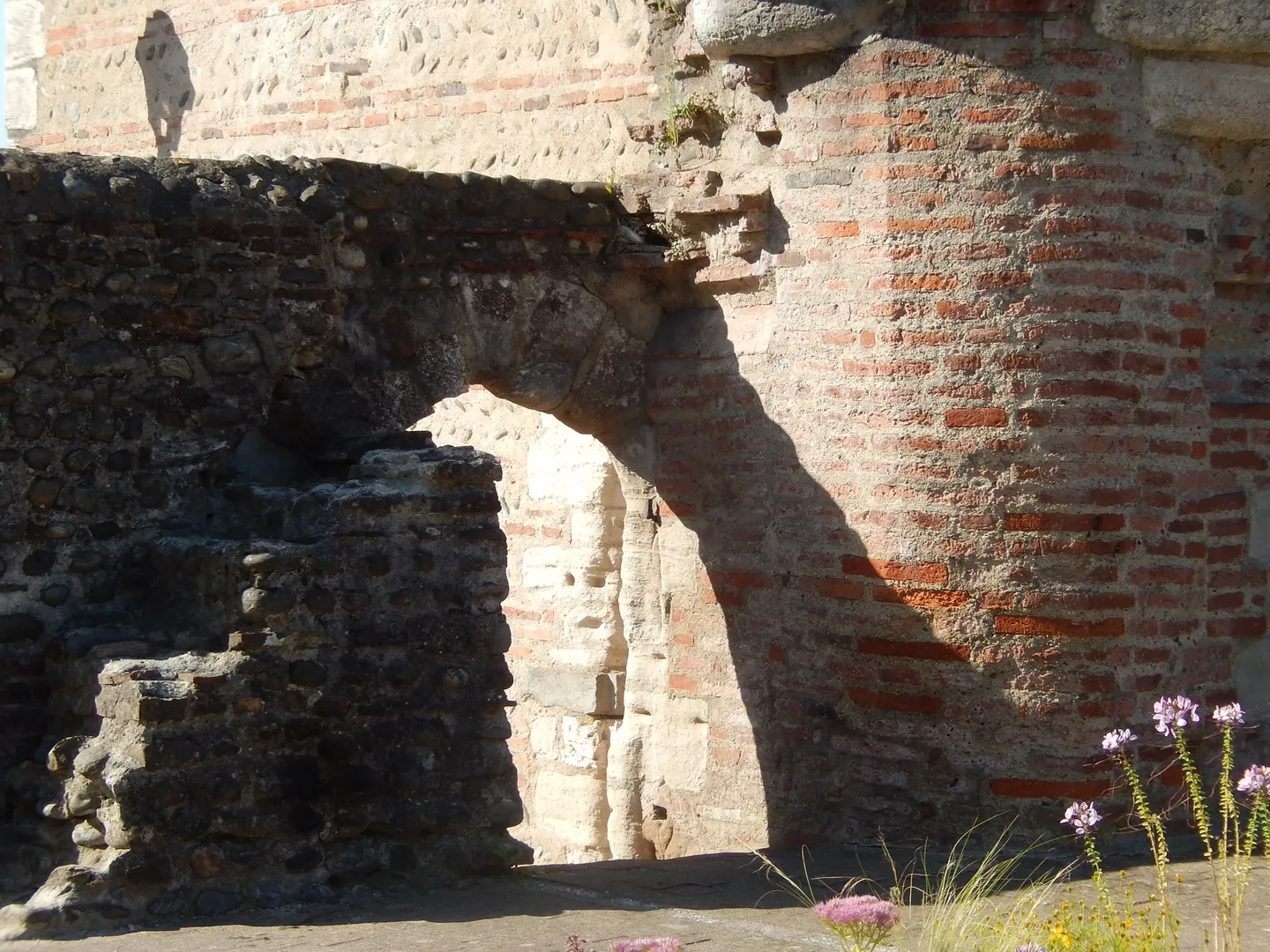
Dans la cité médiévale de Lescar, situé derrière le musée gallo-romain, vous découvrirez cette charmante place où se tenait le palais Épiscopal au XIVème siècle. Il est détruit à la révolution mais vous verrez au fond de la place côté ouest, la ruine de la grande cheminée des cuisines dont on a conservé la partie basse afin d'y installer la prison avec un cachot (sans doute au moment de la révolution). En tournant votre regard côté est, derrière une belle demeure du XIXème, se dresse l'ancienne tour escalier qui était attachée au palais. Au sol, au centre de la place, quatre sarcophages mérovingiens prennent place et accueillent parfois des fleurs de saison.
English
The first traces of human presence in Lescar date back to 2005 BC ('tumuli' and funeral urns). At the beginning of our era, the Romans built a city to which they gave the name of the conquered tribe: Beneharnum. The Gallo-Roman city became the first capital of Bearn and then a bishopric from the 6th century. It took the name of Lescar around the year 1000. Located on the Way of Saint James, the walled city retained its status of bishopric until the Revolution. Notre Dame Cathedral, a masterpiece of Romanesque art (12th century) with the mysterious mosaic of the 'little Moorish hunter' and the tomb of the Kings of Navarre. The ramparts (12th century), the prison tower (14th), the postern (14th), the college of the Canons (17th). All of the historic furnishings are presented in the Art and Culture Space.
Deutsch
In der mittelalterlichen Stadt Lescar, hinter dem gallo-römischen Museum, finden Sie diesen charmanten Platz, auf dem im 14. Jahrhundert der Bischofspalast stand. Er wurde während der Revolution zerstört, aber Sie werden am Ende des Platzes auf der Westseite die Ruine des großen Schornsteins der Küche sehen, dessen unterer Teil erhalten blieb, um dort ein Gefängnis mit einem Kerker einzurichten (wahrscheinlich zur Zeit der Revolution). Wenn Sie Ihren Blick zur Ostseite wenden, erhebt sich hinter einem schönen Haus aus dem 19. Jahrhundert der alte Treppenturm, der mit dem Palast verbunden war. Auf dem Boden in der Mitte des Platzes stehen vier merowingische Sarkophage, auf denen manchmal Blumen der Saison wachsen.
Dutch
In de middeleeuwse stad Lescar, achter het Gallo-Romeins museum, ontdekt u dit charmante plein waar in de 14e eeuw het bisschoppelijk paleis stond. Deze werd tijdens de revolutie verwoest, maar aan het einde van het plein aan de westkant ziet u de ruïne van de grote schoorsteen van de keukens, waarvan het onderste deel bewaard is gebleven om er een gevangenis met kerker in onder te brengen (waarschijnlijk ten tijde van de revolutie). Als u uw blik naar het oosten richt, staat achter een mooi 19e eeuws huis de oude trappentoren die aan het paleis vastzat. Op de grond, in het midden van het plein, staan vier Merovingische sarcofagen die soms seizoensbloemen herbergen.
Español
El espacio "Arte y Cultura", ubicado en las antiguas bodegas del Palacio Episcopal, expone un mobiliario originario de la primera capital galo-romana: "Beneharnum" (actualmente Lescar). – En la primera sala: Urnas funerarias protohistóricas/Mobiliario protohistórico – En la segunda sala: Mosaico galo-romano, monedas de plata/Mobiliario antiguo y medieval. – En la tercera sala: Pulseras con cuentas de cristal, fíbulas, jarrones de bronce, hebillas de cinturones…
Italiano
Nella città medievale di Lescar, dietro il museo gallo-romano, scoprirete questa affascinante piazza dove nel XIV secolo sorgeva il palazzo episcopale. Fu distrutta durante la rivoluzione, ma alla fine della piazza, sul lato ovest, si vede il rudere della grande ciminiera delle cucine, la cui parte inferiore è stata conservata per installare una prigione con un sotterraneo (probabilmente all'epoca della rivoluzione). Se si volge lo sguardo verso est, dietro una bella casa del XIX secolo, si trova l'antica torre scalare che era annessa al palazzo. A terra, al centro della piazza, prendono posto quattro sarcofagi merovingi che talvolta ospitano fiori stagionali.