Église Saint-Pierre – Pujols
Description
English
Deutsch
Dutch
Español
Italiano
Description
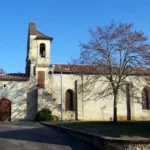
L'église est mentionnée (tout comme la paroisse de Pujols) entre la fin du XIIe et le début du XIIIe siècle.
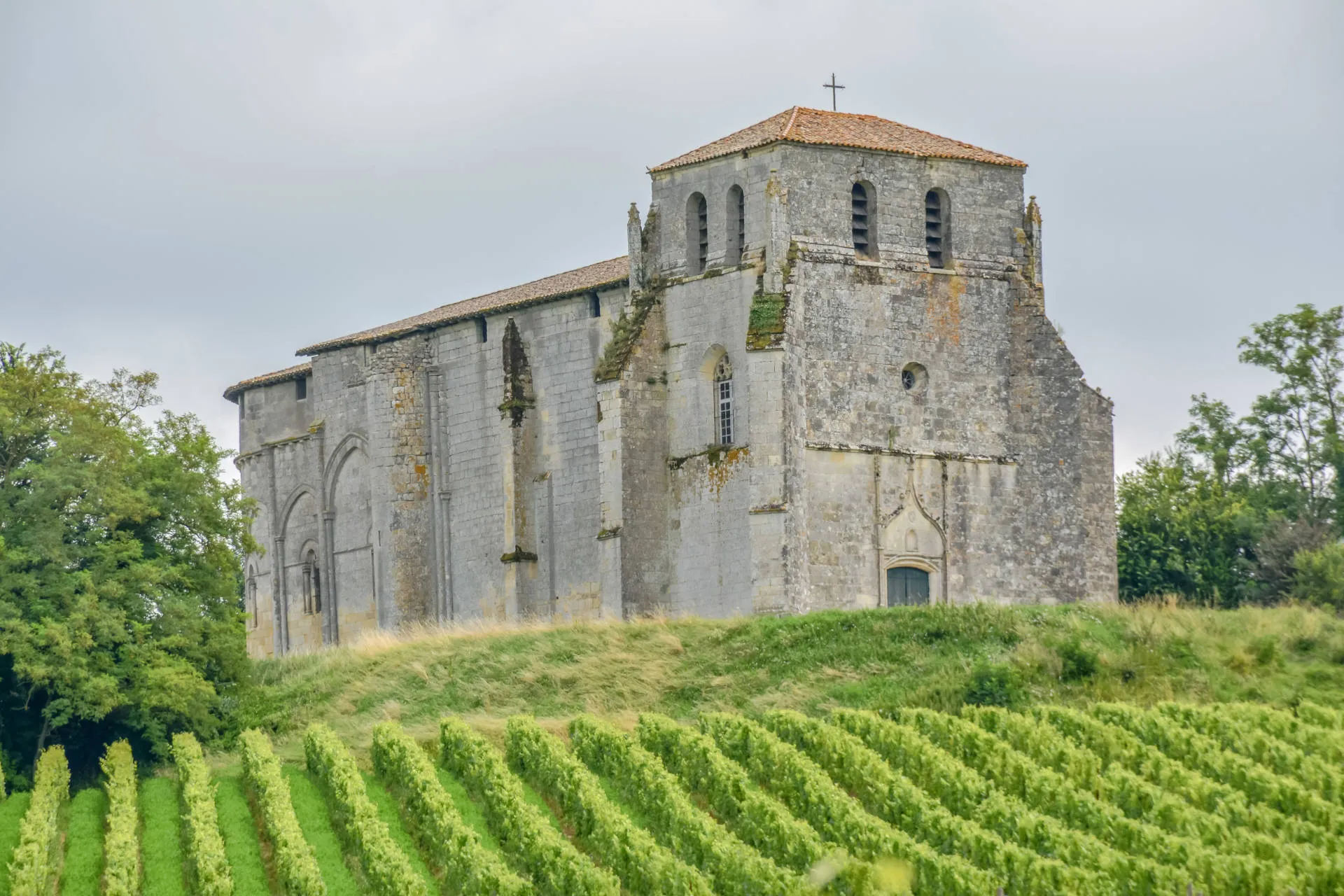
L'édifice, qui est fortifié, possède une abside voûtée en cul-de-four (datant de la fin du XIIe siècle et qui correspond au roman tardif).
Au XVIe siècle, une nef unique composée de quatre travées est reprise et voûtée (avec donc des voûtes sur croisée d'ogives). L'entrée sud, la chapelle sud et la façade sont de la même époque.
Au XIXe siècle, des dommages au niveau des murs nord et sud contraignent à restaurer l'édifice : les arcs doubleaux sont alors réparés, le sommet de l'abside est reconstruit et des tirants de fer sont posés.
L'église possède aussi des éléments remarquables comme : sa façade occidentale et son portail (du XVIe siècle), une clef de voûte qui représente une scène de l'Annonciation, ou encore un sarcophage (d'époque mérovingienne).
English
The church is mentioned (as is the parish of Pujols) between the end of the 12th and the beginning of the 13th century.
The building, which is fortified, has a vaulted apse in cul-de-four (dating from the end of the 12th century and which corresponds to the late Romanesque).
In the 16th century, a single nave with four bays was rebuilt and vaulted (with cross vaults). The southern entrance, the southern chapel and the façade are from the same period.
In the 19th century, damage to the north and south walls forced the restoration of the building: the double arches were repaired, the top of the apse was rebuilt and iron tie rods were installed.
The church also has remarkable elements such as: its western façade and its portal (from the 16th century), a keystone representing a scene of the Annunciation, or a sarcophagus (from the Merovingian period).
Deutsch
Die Kirche wird (ebenso wie die Pfarrei Pujols) zwischen dem Ende des 12. und dem Anfang des 13. Jahrhunderts erwähnt.
Das Gebäude ist befestigt und besitzt eine Apsis mit einem Kreuzgewölbe (aus dem späten 12. Jahrhundert, das der Spätromanik entspricht).
Im 16. Jahrhundert wurde ein einziges, aus vier Jochen bestehendes Schiff übernommen und gewölbt (also mit Kreuzgewölben). Der Südeingang, die Südkapelle und die Fassade stammen aus derselben Zeit.
Im 19. Jahrhundert zwingen Schäden an der Nord- und Südmauer zur Restaurierung des Gebäudes: Die Doppelbögen werden repariert, die Spitze der Apsis wird wieder aufgebaut und eiserne Zugstangen werden angebracht.
Jahrhundert, ein Schlussstein, der eine Szene der Verkündigung darstellt, und ein Sarkophag (aus der Merowingerzeit).
Dutch
De kerk wordt genoemd (evenals de parochie Pujols) tussen het einde van de 12e en het begin van de 13e eeuw.
Het gebouw, dat versterkt is, heeft een gewelfde apsis (daterend uit het einde van de 12e eeuw en overeenkomend met het laat-Romaans).
In de 16e eeuw werd een enkel schip van vier traveeën herbouwd en voorzien van kruisgewelven. De zuidelijke ingang, de zuidelijke kapel en de voorgevel zijn uit dezelfde periode.
In de 19e eeuw dwong schade aan de noord- en zuidmuur tot restauratie van het gebouw: de dubbele bogen werden hersteld, de top van de apsis werd herbouwd en er werden ijzeren trekstangen aangebracht.
De kerk heeft ook enkele opmerkelijke elementen zoals: de westelijke gevel en het portaal (uit de 16e eeuw), een sluitsteen die een scène van de Annunciatie voorstelt, en een sarcofaag (uit de Merovingische periode).
Español
La iglesia se menciona (al igual que la parroquia de Pujols) entre finales del siglo XII y principios del XIII.
El edificio, fortificado, tiene un ábside abovedado (de finales del siglo XII y correspondiente al románico tardío).
En el siglo XVI se reconstruyó una sola nave de cuatro tramos y se abovedó (con bóvedas de crucería). La entrada sur, la capilla sur y la fachada son de la misma época.
En el siglo XIX, los daños en los muros norte y sur obligaron a restaurar el edificio: se repararon los arcos dobles, se reconstruyó la parte superior del ábside y se instalaron tirantes de hierro.
La iglesia también posee elementos notables como: su fachada occidental y su portal (del siglo XVI), una clave de bóveda que representa una escena de la Anunciación y un sarcófago (de la época merovingia).
Italiano
La chiesa è menzionata (così come la parrocchia di Pujols) tra la fine del XII e l'inizio del XIII secolo.
L'edificio, fortificato, presenta un'abside a volta (risalente alla fine del XII secolo e corrispondente al tardo romanico).
Nel XVI secolo fu ricostruita un'unica navata di quattro campate con volte a crociera. L'ingresso meridionale, la cappella meridionale e la facciata sono dello stesso periodo.
Nel XIX secolo, i danni alle pareti nord e sud costrinsero a un restauro dell'edificio: furono riparati i doppi archi, fu ricostruita la parte superiore dell'abside e furono installati tiranti in ferro.
La chiesa possiede anche elementi notevoli come: la facciata occidentale e il portale (del XVI secolo), una chiave di volta che rappresenta una scena dell'Annunciazione e un sarcofago (del periodo merovingio).
Dans le vignoble - Isolé - A la campagne - Dans le village
Classement: Monument Historique
Le Bourg, 33350 Pujols
Crédits: Emmanuel Gaye - Office de Tourisme Castillon-Pujols
Licence
Licence