Badhus – Kaysersberg Vignoble
Description
English
Deutsch
Dutch
Español
Italiano
Description
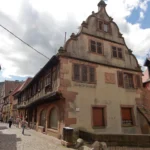
Ce bâtiment emblématique et immanquable à Kaysersberg était à l’origine une auberge et un office à gourmet. Sa position stratégique au centre de la ville, à côté du pont fortifié, lui valut le nom d’hostellerie du pont. L’endroit était incontournable. En effet, c’était le lieu d’action du gourmet de la ville, un fonctionnaire municipal dont la fonction était d'aiguiller les acheteurs de vin dans leur dégustation. Il se faisait l’intermédiaire entre les viticulteurs et les acheteurs, car à cette époque il n’était pas possible d’acheter directement auprès du producteur. Jusqu’en 1872, l’hostellerie était un réel pôle de convergence autour du vin. A partir de cette date, le bâtiment changea de fonction pour devenir les bains municipaux, ce qui lui donna d’ailleurs son nom actuel Bad-Hus, “la maison des bains” en alsacien. Aujourd’hui, le Badhus est un lieu dédié aux réunions et expositions temporaires.
English
This emblematic and unmissable building in Kaysersberg was originally an inn and a gourmet office. Its strategic position in the center of the town, next to the fortified bridge, earned it the name "Hostellerie du pont". The place was unavoidable. Indeed, it was the place of action of the city's gourmet, a municipal official whose function was to guide wine buyers in their tasting. He was the intermediary between the wine growers and the buyers, because at that time it was not possible to buy directly from the producer. Until 1872, the hostelry was a real focal point for wine. From this date on, the building changed its function to become the municipal baths, which gave it its current name Bad-Hus, "the house of the baths" in Alsatian. Today, the Badhus is a place dedicated to meetings and temporary exhibitions.
Deutsch
Dieses symbolträchtige und in Kaysersberg nicht zu übersehende Gebäude war ursprünglich ein Gasthaus und ein Gourmetbüro. Seine strategische Lage im Zentrum der Stadt, neben der befestigten Brücke, brachte ihm den Namen "Hostellerie du pont" ein. Der Ort war nicht zu übersehen. Denn hier war der Wirkungsort des Stadtgourmets, eines städtischen Beamten, dessen Aufgabe es war, Weinkäufer bei der Weinprobe zu beraten. Er fungierte als Vermittler zwischen den Winzern und den Käufern, da es zu dieser Zeit nicht möglich war, direkt beim Erzeuger zu kaufen. Bis 1872 war die Hostellerie ein echter Knotenpunkt rund um den Wein. Ab diesem Zeitpunkt änderte das Gebäude seine Funktion und wurde zum städtischen Bad, was ihm auch seinen heutigen Namen Bad-Hus, "das Badehaus" auf Elsässisch, gab. Heute ist das Badhus ein Ort, der für Tagungen und temporäre Ausstellungen genutzt wird.
Dutch
Dit emblematische en niet te missen gebouw in Kaysersberg was oorspronkelijk een herberg en een gastronomisch kantoor. Door zijn strategische ligging in het centrum van de stad, naast de versterkte brug, kreeg het de naam "hostellerie du pont". De plaats was een must. In feite was het de plaats van handeling van de fijnproever van de stad, een gemeenteambtenaar die tot taak had de wijnkopers te begeleiden bij hun proeverij. Hij trad op als tussenpersoon tussen de wijnbouwers en de kopers, omdat het in die tijd niet mogelijk was rechtstreeks van de producent te kopen. Tot 1872 was de herberg een echt brandpunt voor wijn. Vanaf die tijd veranderde het gebouw van functie en werd het de gemeentelijke badplaats, waardoor het zijn huidige naam Bad-Hus kreeg, "het huis van de baden" in het Elzassisch. Tegenwoordig is het Badhus een plaats voor vergaderingen en tijdelijke tentoonstellingen.
Español
Este emblemático e ineludible edificio de Kaysersberg fue originalmente una posada y una oficina gastronómica. Su posición estratégica en el centro de la ciudad, junto al puente fortificado, le valió el nombre de "Hostellerie du Pont". El lugar era imprescindible. Era el lugar de actuación del gastrónomo de la ciudad, un funcionario municipal cuya función era guiar a los compradores de vino en su degustación. Actuaba como intermediario entre los viticultores y los compradores, ya que en aquella época no era posible comprar directamente al productor. Hasta 1872, la hospedería fue un auténtico foco de atracción para el vino. A partir de entonces, el edificio se utilizó como casa de baños municipal, por lo que ahora se llama Bad-Hus, que significa "casa de baños" en alsaciano. Hoy en día, el Badhus es un lugar de encuentro y de exposiciones temporales.
Italiano
Questo emblematico e imperdibile edificio di Kaysersberg era in origine una locanda e un ufficio gastronomico. La sua posizione strategica nel centro della città, accanto al ponte fortificato, le ha fatto guadagnare il nome di "Hostellerie du Pont". Il posto era imperdibile. Infatti, era il luogo d'azione del gastronomo della città, un funzionario comunale la cui funzione era quella di guidare gli acquirenti di vino nella loro degustazione. Egli fungeva da intermediario tra i viticoltori e gli acquirenti, poiché all'epoca non era possibile acquistare direttamente dal produttore. Fino al 1872, l'osteria era un vero e proprio punto di riferimento per il vino. Da quel momento in poi, l'edificio fu utilizzato come stabilimento balneare comunale, motivo per cui oggi si chiama Bad-Hus, che in alsaziano significa "bagno". Oggi il Badhus è una sede di incontri e mostre temporanee.
103 Rue du Général De Gaulle, 68240 Kaysersberg Vignoble