ROU-MARSON
Description
English
Deutsch
Dutch
Español
Italiano
Description
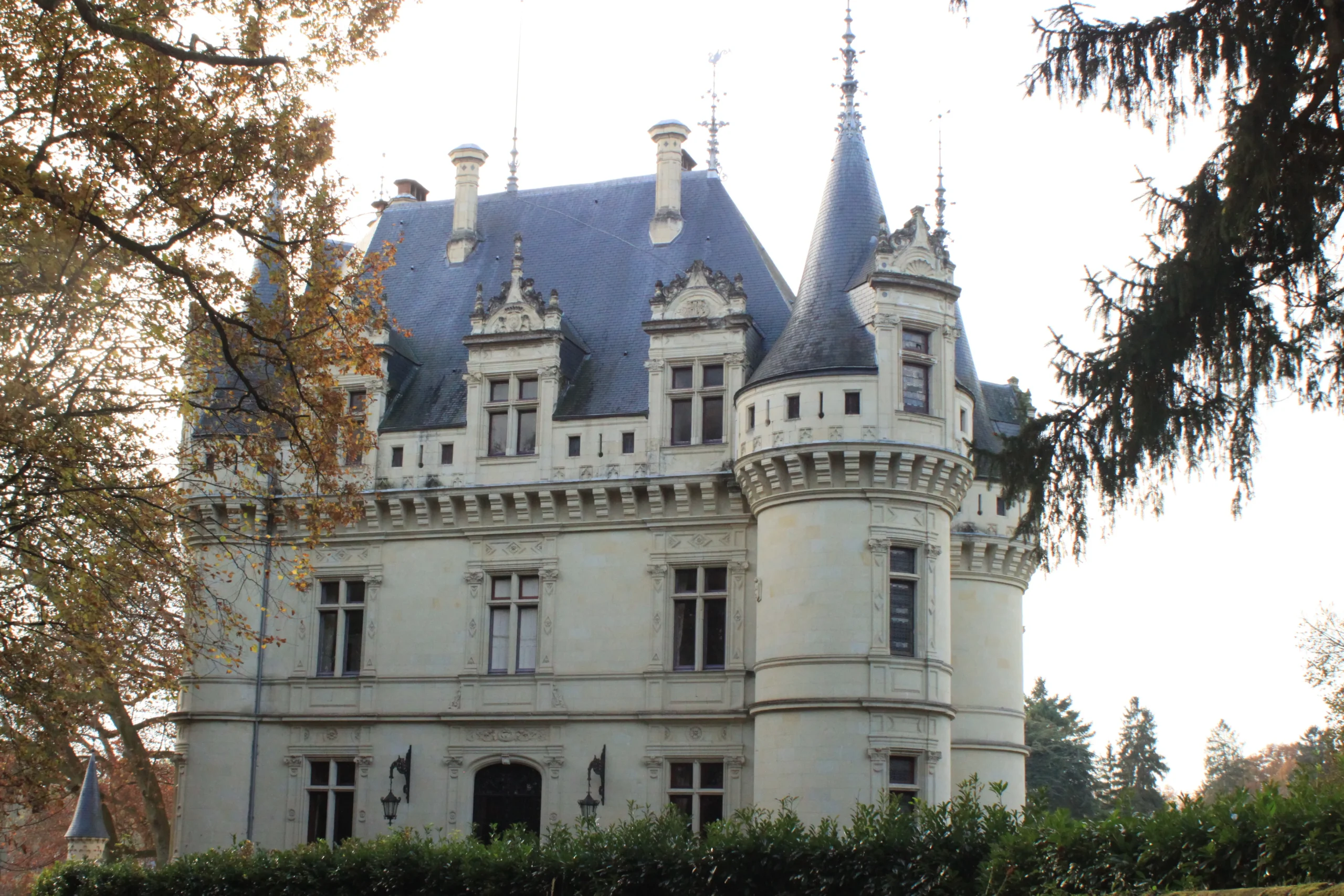
La commune de Rou-Marson résulte de la fusion de trois villages : Rou, Riou et Marson, réunis par ordonnance royale en 1846. Connue comme « Capitale de la Fouée », Rou-Marson recèle un patrimoine tant historique que naturel : églises romanes, château néo-renaissance, habitats troglodytiques, lavoirs, sentier botanique et milieux aquatiques riches en biodiversité… Situés le long de l’ancienne voie romaine menant de Saumur à Doué-la-Fontaine, les deux villages de Rou et Riou ont la même étymologie : leur nom vient du latin rivus, « ruisseau », sans doute à cause de la proximité de plusieurs petits cours d'eau. Marson doit probablement son nom à son étang : l’antique racine linguistique marr, désignant une étendue d'eau. Au Moyen-âge, chacun des trois villages possédait son château seigneurial. Il n’en subsiste rien à Rou, une tour partiellement en ruines à Riou. Le château de Marson, de style néo-renaissance, a été reconstruit au XIXème siècle sur les bases de l'ancienne forteresse médiévale. Le bâtiment, réplique miniature du château d'Azay-le-Rideau, est l’œuvre de l'architecte Charles Joly Leterme. Dans les années 1930, une piscine Art Déco, ornée de mosaïques, a pris place dans le parc du château. Les petites églises romanes de Rou (église Saint-Sulpice) et de Marson (église Sainte-Croix) présentent une architecture à la fois rustique et harmonieuse. Elles sont toutes deux dotées d’un simple clocher-mur. À Rou-Marson l’eau est reine et les lavoirs sont baptisés fontaines. Chaque village possède la sienne : la fontaine de Rou, la fontaine de Balloire à Riou et la fontaine de Godebert à Marson. Ces zones humides abritent une végétation très riche, présentée sur les panneaux du sentier botanique de la commune. Un circuit de randonnée de 8 km permet également de découvrir les charmes secrets de ce village. Autour de l’étang de Marson se succèdent roselières, chênaies et clairières. Celles-ci procurent le gîte et le couvert à une belle diversité d’espèces animales et végétales, dont certaines sont aujourd’hui protégées. Ce milieu naturel offre aussi un lieu stratégique de reproduction pour les amphibiens. Un crapauduc a ainsi été réalisé afin de permettre aux batraciens de traverser sans danger la route qui longe l’étang, lors de leur migration annuelle pour se reproduire.
English
The commune of Rou-Marson is the result of the merger of three villages: Rou, Riou and Marson, united by royal decree in 1846. Known as the "Capital of the Fouée", Rou-Marson conceals a historical as well as a natural heritage: Romanesque churches, neo-renaissance castle, troglodytic dwellings, wash houses, botanical path and aquatic environments rich in biodiversity.. Located along the ancient Roman road leading from Saumur to Doué-la-Fontaine, the two villages of Rou and Riou have the same etymology: their name comes from the Latin rivus, "stream", probably because of the proximity of several small rivers. Marson probably owes its name to its pond : the ancient linguistic root marr, designating a stretch of water In the Middle Ages, each of the three villages had its own castle. There is nothing left in Rou, a tower partially in ruins in Riou. The castle of Marson, of neo-renaissance style, was rebuilt in the XIXth century on the bases of the old medieval fortress. The building, a miniature replica of the castle of Azay-le-Rideau, is the work of the architect Charles Joly Leterme. In the 1930s, an Art Deco swimming pool, decorated with mosaics, was built in the park of the castle The small Romanesque churches of Rou (Saint-Sulpice church) and Marson (Sainte-Croix church) present a rustic and harmonious architecture. They are both equipped with a simple bell tower-wall. In Rou-Marson, water is king and the wash houses are called fountains. Each village has its own: the fountain of Rou, the fountain of Balloire in Riou and the fountain of Godebert in Marson. These wetlands shelter a very rich vegetation, presented on the panels of the botanical path of the commune. An 8 km hiking trail also allows you to discover the secret charms of this village. Around the pond of Marson, reed beds, oak groves and clearings follow one another. These provide shelter and food for a wide variety of animal and plant species, some of which are protected today. This natural environment also offers a strategic breeding ground for amphibians. A toadstool was built to allow the amphibians to cross the road along the pond without danger during their annual migration to reproduce.
Deutsch
Die Gemeinde Rou-Marson entstand aus dem Zusammenschluss der drei Dörfer Rou, Riou und Marson, die 1846 durch königliche Verordnung zusammengelegt wurden. Rou-Marson ist als "Hauptstadt der Fouée" bekannt und birgt sowohl ein historisches als auch ein natürliches Erbe: romanische Kirchen, ein Neorenaissance-Schloss, Höhlenwohnungen, Waschhäuser, einen botanischen Pfad und artenreiche Wasserlandschaften.. Die beiden Dörfer Rou und Riou liegen an der alten Römerstraße, die von Saumur nach Doué-la-Fontaine führte, und haben die gleiche Etymologie: Ihre Namen stammen vom lateinischen Wort rivus, "Bach", ab, was wahrscheinlich auf die Nähe mehrerer kleiner Wasserläufe zurückzuführen ist. Marson verdankt seinen Namen wahrscheinlich seinem Teich: die antike Sprachwurzel marr, die eine Wasserfläche bezeichnet Im Mittelalter besaß jedes der drei Dörfer eine herrschaftliche Burg. In Rou ist nichts davon erhalten geblieben, in Riou ein teilweise verfallener Turm. Das Schloss von Marson im Stil der Neorenaissance wurde im 19. Jahrhundert auf den Grundmauern der alten mittelalterlichen Festung wiederaufgebaut. Das Gebäude, eine Miniaturnachbildung des Schlosses Azay-le-Rideau, wurde von dem Architekten Charles Joly Leterme entworfen. In den 1930er Jahren wurde im Schlosspark ein mit Mosaiken verziertes Art-déco-Schwimmbad errichtet Die kleinen romanischen Kirchen in Rou (Kirche Saint-Sulpice) und Marson (Kirche Sainte-Croix) weisen eine rustikale und harmonische Architektur auf. Beide verfügen über einen einfachen Glockenturm mit Mauer. In Rou-Marson ist das Wasser König und die Waschplätze werden Brunnen genannt. Jedes Dorf hat seine eigene: die Fontaine de Rou, die Fontaine de Balloire in Riou und die Fontaine de Godebert in Marson. Diese Feuchtgebiete beherbergen eine sehr reiche Vegetation, die auf den Tafeln des botanischen Pfades der Gemeinde vorgestellt wird. Auf einem 8 km langen Wanderweg können Sie außerdem die geheimen Reize des Dorfes entdecken. Rund um den Teich von Marson reihen sich Schilfgürtel, Eichenwälder und Lichtungen aneinander. Diese bieten einer Vielzahl von Tier- und Pflanzenarten, von denen einige heute unter Naturschutz stehen, Unterkunft und Nahrung. Diese natürliche Umgebung ist auch ein strategischer Ort für die Fortpflanzung von Amphibien. Eine Krötenleitung wurde gebaut, damit die Amphibien auf ihrer jährlichen Wanderung zur Fortpflanzung die Straße entlang des Teiches gefahrlos überqueren können.
Dutch
De gemeente Rou-Marson is het resultaat van de fusie van drie dorpen: Rou, Riou en Marson, samengebracht bij koninklijk besluit in 1846. Rou-Marson, bekend als de "Hoofdstad van de Fouée", heeft zowel een historisch als natuurlijk erfgoed: Romaanse kerken, neorenaissance kasteel, trogloditische woningen, washuizen, botanisch pad en aquatische omgevingen rijk aan biodiversiteit.. Gelegen langs de oude Romeinse weg van Saumur naar Doué-la-Fontaine, hebben de twee dorpen Rou en Riou dezelfde etymologie: hun namen komen van het Latijnse rivus, "stroom", waarschijnlijk vanwege de nabijheid van verschillende kleine rivieren. Marson dankt zijn naam waarschijnlijk aan zijn vijver: de oude taalkundige wortel marr, die water betekent In de middeleeuwen had elk van de drie dorpen een kasteel. Er is niets van over in Rou, en een gedeeltelijk verwoeste toren in Riou. Het kasteel van Marson, in neorenaissancestijl, werd in de 19e eeuw herbouwd op de fundamenten van het oude middeleeuwse fort. Het gebouw, een miniatuurreplica van het kasteel van Azay-le-Rideau, werd ontworpen door de architect Charles Joly Leterme. In de jaren 1930 werd in het park van het kasteel een Art Deco zwembad gebouwd, versierd met mozaïeken De kleine Romaanse kerken van Rou (Saint-Sulpice kerk) en Marson (Sainte-Croix kerk) hebben een rustieke en harmonieuze architectuur. Ze hebben allebei een eenvoudige klokkentoren. In Rou-Marson is water koning en worden de wasplaatsen fonteinen genoemd. Elk dorp heeft zijn eigen fontein: de fontein van Rou, de fontein van Balloire in Riou en de fontein van Godebert in Marson. Deze wetlands herbergen een rijkdom aan vegetatie, die wordt gepresenteerd op de panelen van het botanische pad in de gemeente. Via een wandelroute van 8 km kunt u ook de geheime charmes van dit dorp ontdekken. Rond de vijver van Marson volgen rietvelden, eikenbossen en open plekken elkaar op. Deze bieden onderdak en voedsel voor een grote verscheidenheid aan dier- en plantensoorten, waarvan sommige nu beschermd zijn. Deze natuurlijke omgeving vormt ook een strategische broedplaats voor amfibieën. Er is een paddenpoel aangelegd zodat de amfibieën tijdens hun jaarlijkse trek om zich voort te planten zonder gevaar de weg langs de vijver kunnen oversteken.
Español
El municipio de Rou-Marson es el resultado de la fusión de tres pueblos: Rou, Riou y Marson, reunidos por decreto real en 1846. Conocida como la "Capital del Fouée", Rou-Marson posee un patrimonio tanto histórico como natural: iglesias románicas, castillo neorrenacentista, viviendas trogloditas, lavaderos, sendero botánico y entornos acuáticos ricos en biodiversidad.. Situados a lo largo de la antigua calzada romana que llevaba de Saumur a Doué-la-Fontaine, los dos pueblos de Rou y Riou tienen la misma etimología: sus nombres provienen del latín rivus, "arroyo", probablemente por la proximidad de varios pequeños ríos. Marson debe probablemente su nombre a su estanque: la antigua raíz lingüística marr, que significa masa de agua En la Edad Media, cada uno de los tres pueblos tenía un castillo. No queda nada de ella en Rou, y una torre parcialmente arruinada en Riou. El castillo de Marson, de estilo neorrenacentista, fue reconstruido en el siglo XIX sobre las bases de la antigua fortaleza medieval. El edificio, una réplica en miniatura del castillo de Azay-le-Rideau, fue diseñado por el arquitecto Charles Joly Leterme. En la década de 1930 se construyó en el parque del castillo una piscina Art Decó, decorada con mosaicos Las pequeñas iglesias románicas de Rou (iglesia de Saint-Sulpice) y Marson (iglesia de Sainte-Croix) tienen una arquitectura rústica y armoniosa. Ambos tienen un sencillo campanario. En Rou-Marson, el agua es el rey y los lavaderos se llaman fuentes. Cada pueblo tiene su propia fuente: la fuente de Rou, la fuente de Balloire en Riou y la fuente de Godebert en Marson. Estos humedales albergan una gran riqueza vegetal, que se presenta en los paneles del sendero botánico del municipio. Una ruta de senderismo de 8 km también permite descubrir los encantos secretos de este pueblo. Alrededor del estanque de Marson se suceden cañaverales, robledales y claros. Estas proporcionan refugio y alimento a una gran variedad de especies animales y vegetales, algunas de las cuales están ahora protegidas. Este entorno natural también es un lugar estratégico para la cría de anfibios. Se ha construido una sartén para que los anfibios puedan cruzar la carretera junto al estanque sin peligro durante su migración anual para reproducirse.
Italiano
Il comune di Rou-Marson è il risultato della fusione di tre villaggi: Rou, Riou e Marson, riuniti per decreto reale nel 1846. Conosciuta come la "Capitale della Fouée", Rou-Marson possiede un patrimonio storico e naturale: chiese romaniche, castello neorinascimentale, abitazioni trogloditiche, lavatoi, sentiero botanico e ambienti acquatici ricchi di biodiversità.. Situati lungo l'antica strada romana che conduceva da Saumur a Doué-la-Fontaine, i due villaggi di Rou e Riou hanno la stessa etimologia: i loro nomi derivano dal latino rivus, "ruscello", probabilmente per la vicinanza di diversi piccoli fiumi. Marson deve probabilmente il suo nome al suo stagno: l'antica radice linguistica marr, che significa corpo d'acqua Nel Medioevo, ognuno dei tre villaggi aveva un castello. Non ne rimane nulla a Rou e una torre parzialmente rovinata a Riou. Il castello di Marson, di stile neorinascimentale, è stato ricostruito nel XIX secolo sulle basi dell'antica fortezza medievale. L'edificio, una replica in miniatura del castello di Azay-le-Rideau, è stato progettato dall'architetto Charles Joly Leterme. Negli anni '30, nel parco del castello fu costruita una piscina in stile Art Déco, decorata con mosaici Le piccole chiese romaniche di Rou (chiesa di Saint-Sulpice) e Marson (chiesa di Sainte-Croix) hanno un'architettura rustica e armoniosa. Entrambi hanno un semplice campanile. A Rou-Marson l'acqua la fa da padrona e i lavatoi si chiamano fontane. Ogni villaggio ha la sua fontana: la fontana di Rou, la fontana di Balloire a Riou e la fontana di Godebert a Marson. Queste zone umide ospitano una ricca vegetazione, presentata sui pannelli del sentiero botanico del comune. Un sentiero escursionistico di 8 km permette inoltre di scoprire il fascino segreto di questo villaggio. Intorno allo stagno di Marson si susseguono canneti, querceti e radure. Questi forniscono riparo e cibo a un'ampia varietà di specie animali e vegetali, alcune delle quali sono ora protette. Questo ambiente naturale è anche un luogo strategico per la riproduzione degli anfibi. Per consentire agli anfibi di attraversare senza pericoli la strada che costeggia lo stagno durante la loro migrazione annuale per riprodursi, è stato costruito uno sgabello per rospi.