Prieuré du Bois-d'Allonne – Allonne
Description
English
Deutsch
Dutch
Español
Italiano
Description
Propriété privée.
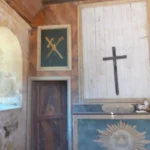
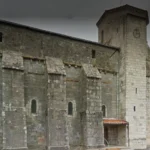
Ce prieuré fut fondé au 12e siècle par Guillaume IV l'Archevêque, seigneur de Parthenay. Vers la fin du 16e siècle, il subit les troubles et les dilapidations dûs aux guerres de Religion. En 1769, les mesures conventuelles furent éteintes et les revenus du prieuré appliqués au séminaire de Saint-Charles de Poitiers. Les chapelles grandmontaines comportent une nef sans transept ni collatéraux. Aucune fenêtre latérale n'éclaire celle-ci. Le choeur de cette chapelle est de facture gothique, en hémicycle à l'intérieur et à cinq pans à l'extérieur. Septs arcs en plein cintre, portés par huit colonnettes avec chapiteaux à décor de feuille d'eau, reçoivent la poussée des voûtains. La chapelle s'ouvre par une porte de type limousin, comportant trois voussures en chanfrein dans les retraits desquelles sont logés deux tores.
English
Private property.
This priory was founded in the 12th century by William IV the Archbishop, Lord of Parthenay. Towards the end of the 16th century, it suffered the troubles and squandering due to the Wars of Religion. In 1769, the conventual measures were extinguished and the income of the priory applied to the seminary of Saint-Charles de Poitiers. The grandmontain chapels have a nave without transept or collaterals. There are no side windows to illuminate the nave. The choir of this chapel is of Gothic style, with a hemicycle inside and five sides on the outside. Seven semicircular arches, supported by eight small columns with capitals decorated with water leaves, receive the thrust of the vaults. The chapel opens through a Limousin-style door with three chamfered arches in the recesses of which two toroids are housed.
Deutsch
In Privatbesitz befindlich.
Dieses Priorat wurde im 12. Jahrhundert von Wilhelm IV. dem Erzbischof, dem Herrn von Parthenay, gegründet. Gegen Ende des 16. Jahrhunderts litt es unter den durch die Religionskriege verursachten Unruhen und Verschleuderungen. Im Jahr 1769 wurden die Klostermaßnahmen eingestellt und die Einkünfte des Priorats dem Seminar von Saint-Charles in Poitiers zugeführt. Die Kapellen der Grandmontaines bestehen aus einem Kirchenschiff ohne Querschiff oder Seitenschiffe. Kein Seitenfenster erhellt dieses. Der Chor dieser Kapelle ist gotisch, innen halbkreisförmig und außen fünfseitig. Sieben Rundbögen, die von acht Säulchen mit Kapitellen mit Wasserblattdekor getragen werden, nehmen den Schub der Gewölbe auf. Die Kapelle öffnet sich durch eine Tür im Limousin-Stil mit drei abgeschrägten Gewölben, in deren Rücksprüngen zwei Tori untergebracht sind.
Dutch
Privé eigendom.
Deze priorij werd in de 12e eeuw gesticht door Willem IV de aartsbisschop, heer van Parthenay. Tegen het einde van de 16e eeuw kreeg het te maken met problemen en verval als gevolg van de godsdienstoorlogen. In 1769 werden de kloostermaatregelen opgeheven en werden de inkomsten van de priorij aangewend voor het seminarie van Saint-Charles de Poitiers. De Grandmontane kapellen hebben een schip zonder dwarsschip of zijbeuken. Er zijn geen zijramen in het schip. Het koor van deze kapel is van gotische constructie, halfrond aan de binnenkant en vijfhoekig aan de buitenkant. Zeven ronde bogen, ondersteund door acht kolommen met kapitelen versierd met waterbladeren, ondersteunen de gewelven. De kapel opent met een deur van het Limousin-type, bestaande uit drie afgeschuinde bogen in de nissen waarvan zich twee torusvensters bevinden.
Español
Propiedad privada.
Este priorato fue fundado en el siglo XII por el arzobispo Guillermo IV, señor de Parthenay. Hacia finales del siglo XVI, sufrió problemas y dilapidaciones debido a las Guerras de Religión. En 1769, las medidas conventuales se extinguieron y los ingresos del priorato se aplicaron al seminario de Saint-Charles de Poitiers. Las capillas granmontinas tienen una nave sin crucero ni pasillos laterales. No hay ventanas laterales en la nave. El coro de esta capilla es de construcción gótica, semicircular en el interior y de cinco lados en el exterior. Siete arcos de medio punto, sostenidos por ocho columnas con capiteles decorados con hojas de agua, sostienen las bóvedas. La capilla se abre con una puerta de tipo lemosín, compuesta por tres arcos achaflanados en cuyos huecos hay dos ventanas en forma de toro.
Italiano
Proprietà privata.
Questo priorato fu fondato nel XII secolo da Guglielmo IV arcivescovo, signore di Parthenay. Verso la fine del XVI secolo, soffrì di problemi e di fatiscenza a causa delle Guerre di Religione. Nel 1769, le misure conventuali furono estinte e le entrate del priorato furono destinate al seminario di Saint-Charles de Poitiers. Le cappelle grandmontane hanno una navata centrale senza transetto né navate laterali. Nella navata non ci sono finestre laterali. Il coro di questa cappella è di costruzione gotica, semicircolare all'interno e a cinque lati all'esterno. Sette archi a tutto sesto, sostenuti da otto colonne con capitelli decorati da foglie d'acqua, sorreggono le volte. La cappella si apre con una porta di tipo limosino, composta da tre archi smussati nelle cui rientranze si trovano due finestre a toro.