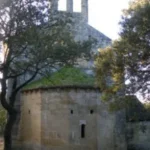
Musée de Calès
Description
English
Deutsch
Dutch
Español
Italiano
Description
Deux salles au rez-de-chaussée :
– 1ère salle : archéologie, explications données sur le site Calès, site troglodytique avec de la céramique trouvée sur le site ainsi que des objets trouvés dans l'église St-Denis de Calès lors des sondages effectués.
– 2ème salle : archéologie et exposition. Archéologie : les chapelles St-Jean et Ste-Marie, deux chapelles en ruine dans lesquelles ont été trouvés des éléments d'un temple romain, de nombreux ex-voto, un graphito de bâteau. Exposition : l'exploitation de la résine, seule commune dans le département après la 1ère guerre mondiale, à prélever la résine des pins, à la transformer sur place et à l'exporter. Le télégraphe Chape, explications et maquettes. Le fameux, platane d'orient planté lors de la construction du nouveau château vers à la fin du XVIème siècle.
Surface de l'exposition permanente : 60
English
Two rooms on the ground floor
– 1st room: archaeology, explanations given on the Calès site, troglodytic site with ceramics found on the site as well as objects found in the church of St-Denis de Calès during soundings
– 2nd room: archaeology and exhibition. Archaeology: the chapels of St-Jean and Ste-Marie, two ruined chapels in which were found elements of a Roman temple, numerous ex-voto, a boat graphito Exhibition: the exploitation of the resin, the only commune in the department after the 1st World War to take resin from the pines, transform it on site and export it. The telegraph Screed, explanations and models. The famous, oriental plane tree planted during the construction of the new castle towards the end of the 16th century.
Surface of the permanent exhibition : 60
Deutsch
Zwei Räume im Erdgeschoss
– 1. Raum: Archäologie, Erklärungen zum Standort Calès, Höhlenstandort mit Keramik, die am Standort gefunden wurde, sowie Objekten, die bei Sondierungen in der Kirche St-Denis in Calès gefunden wurden
– 2. Raum: Archäologie und Ausstellung. Archäologie: Kapellen St-Jean und St-Marie, zwei verfallene Kapellen, in denen Teile eines römischen Tempels, zahlreiche Votivgaben und ein Schiffsgraphito gefunden wurden Ausstellung: Harzgewinnung, einzige Gemeinde im Departement nach dem 1. Weltkrieg, die das Harz der Kiefern entnimmt, es vor Ort verarbeitet und exportiert. Der Telegraf Chape, Erklärungen und Modelle. Die berühmte, orientalische Platane, die beim Bau des neuen Schlosses gegen Ende des 16. Jahrhunderts gepflanzt wurde.
Fläche der Dauerausstellung: 60
Dutch
Twee kamers op de begane grond
– 1e zaal: archeologie, uitleg over de site van Calès, een troglodytische site met keramiek die op de site is gevonden en voorwerpen die tijdens onderzoeken in de kerk van St-Denis de Calès zijn gevonden
– 2e zaal: archeologie en tentoonstelling. Archeologie: de kapellen van Sint Jan en Sint Maria, twee ruïnes waarin elementen van een Romeinse tempel zijn gevonden, talrijke ex-voto's, een bootgrafito Tentoonstelling: de exploitatie van hars, de enige gemeente in het departement na de Eerste Wereldoorlog die hars uit pijnbomen haalt, ter plaatse bewerkt en uitvoert. De Chape telegraaf, uitleg en modellen. De beroemde oosterse plataan, geplant tijdens de bouw van het nieuwe kasteel aan het einde van de 16e eeuw.
Oppervlakte van de permanente tentoonstelling: 60
Español
Dos habitaciones en la planta baja
– 1ª sala: arqueología, explicaciones sobre el yacimiento de Calès, un yacimiento troglodita con cerámicas encontradas en el lugar así como objetos encontrados en la iglesia de St-Denis de Calès durante las prospecciones
– 2ª sala: arqueología y exposición. Arqueología: las capillas de San Juan y Santa María, dos capillas en ruinas en las que se encontraron elementos de un templo romano, numerosos exvotos, un grafito de barco Exposición: la explotación de la resina, único municipio del departamento después de la Primera Guerra Mundial que extrae la resina de los pinos, la transforma in situ y la exporta. El telégrafo Chape, explicaciones y modelos. El famoso plátano oriental plantado durante la construcción del nuevo castillo a finales del siglo XVI.
Superficie de la exposición permanente: 60
Italiano
Due camere al piano terra
– prima sala: archeologia, spiegazioni sul sito di Calès, un sito trogloditico con ceramiche rinvenute sul posto e oggetti trovati nella chiesa di St-Denis de Calès durante i sondaggi
– 2a sala: archeologia ed esposizione. Archeologia: le cappelle di San Giovanni e di Santa Maria, due cappelle in rovina in cui sono stati rinvenuti elementi di un tempio romano, numerosi ex-voto, un grafito di barca Mostra: lo sfruttamento della resina, l'unico comune del dipartimento dopo la prima guerra mondiale a prelevare la resina dai pini, a trasformarla sul posto e a esportarla. Il telegrafo Chape, spiegazioni e modelli. Il famoso platano orientale piantato durante la costruzione del nuovo castello alla fine del XVI secolo.
Superficie della mostra permanente: 60
Dans le village
Clientèle: Groupes
Equipements: Parking - Documentation - plan - Parking autocar - Parking à proximité
Place Du Cabaret, 13113 Lamanon

Crédits: Mairie de Lamanon