Monument de la 37ème division britannique – Monchy-le-Preux
Description
English
Deutsch
Dutch
Español
Italiano
Description
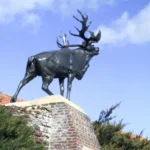
Sur un piédestal, 3 soldats britanniques reconnaissables à leurs casques en forme de « plat à barbe » sont adossés et au repos, l’arme à terre. Inaugurée en 1921, cette œuvre de Lady Feodora Gleichen, soeur d’un ancien commandant de cette unité et première femme admise à la Royal Society of British Sculptors, rend hommage « à la mémoire des officiers et soldats de la 37ème division d’infanterie anglaise qui sont tombés durant la grande guerre 1915-1918 ». Les hommes de la division, créée en 1915 dans le cadre de la réorganisation de l’Armée Impériale britannique par Lord Kitchener, se sont illustrés dans la prise de Monchy-le-Preux, en avril 1917. Situé sur une hauteur dominant d’un côté la Scarpe et de l’autre la route d’Arras à Cambrai, protégé par deux collines, le village occupe une position stratégique. Les Allemands qui le tiennent depuis octobre 1914 ont puissamment fortifié « le verrou de Monchy », en en faisant un élément fort de la ligne Hindenburg. Ces fantassins qui ont fait sauter le " verrou de Monchy ". L’attaque britannique devant Arras est lancée le 9 avril, alors que le climat est brusquement devenu hivernal. Dans ces conditions, la progression s’avère difficile et la poursuite de l’assaut est remise au 11 avril, laissant ainsi aux Allemands le temps de se réorganiser. Ce 11 avril, voilà la neige qui tombe. La 37ème division appuyée par six tanks s’ébranle malgré tout. Mais les artilleurs sont en retard et, quand ils ouvrent le feu, ils touchent leur propre infanterie, mettant hors de service un des chars. Les soldats britanniques prennent cependant position dans Monchy. Le village n’est libéré totalement que le 14 avril grâce à l’exploit d’une poignée de combattants de Terre-Neuve qui parviennent à contenir une contre-attaque allemande. Le monument au Caribou, près de l’église, rend hommage à leur héroïsme. Monchy-le-Preux rasée est reprise par les Allemands lors de leur offensive du printemps 1918, avant d’être définitivement délivrée en août par les Canadiens. A l’automne 1918, la 37ème division libérera la ville de Caudry qui dédiera à ses libérateurs après la guerre un bas-relief de son monument aux morts.
English
On a pedestal, 3 British soldiers, recognizable by their helmets in the shape of a "bearded dish", are leaning back and resting, their weapons on the ground. Inaugurated in 1921, this work by Lady Feodora Gleichen, sister of a former commander of this unit and the first woman to be admitted to the Royal Society of British Sculptors, pays tribute "to the memory of the officers and men of the 37th British Infantry Division who fell in the Great War of 1915-1918". The men of the division, created in 1915 as part of Lord Kitchener?s reorganization of the British Imperial Army, distinguished themselves in the capture of Monchy-le-Preux in April 1917. Situated on a hill overlooking the Scarpe on one side and the road from Arras to Cambrai on the other, and protected by two hills, the village occupies a strategic position. The Germans, who had held it since October 1914, had strongly fortified the "Monchy Lock", making it a strong element of the Hindenburg Line. The infantrymen who blew up the "Bolt of Monchy". The British attack on Arras was launched on April 9, when the weather suddenly turned wintry. In these conditions, progress proved difficult, and the assault was postponed until April 11th, giving the Germans time to reorganize. On April 11th, the snow began to fall. The 37th Division, supported by six tanks, set off in spite of everything. But the artillerymen were late, and when they opened fire, they hit their own infantry, disabling one of the tanks. The British soldiers nevertheless took up position in Monchy. The village was not fully liberated until April 14, when a handful of Newfoundland fighters held off a German counter-attack. The Caribou monument near the church pays tribute to their heroism. Monchy-le-Preux was razed to the ground and recaptured by the Germans during their spring offensive in 1918, before being definitively liberated by the Canadians in August. In autumn 1918, the 37th Division liberated the town of Caudry, which dedicated a bas-relief on its war memorial to its liberators after the war.
Deutsch
Auf einem Podest stehen drei britische Soldaten, die an ihren Helmen in Form von "Barttellern" zu erkennen sind, und ruhen mit der Waffe auf dem Boden. Das 1921 eingeweihte Werk von Lady Feodora Gleichen, der Schwester eines ehemaligen Kommandanten dieser Einheit und ersten Frau, die in die Royal Society of British Sculptors aufgenommen wurde, ehrt "das Andenken an die Offiziere und Soldaten der 37. englischen Infanteriedivision, die während des Großen Krieges 1915-1918 gefallen sind". Die Männer der Division, die 1915 im Rahmen der Reorganisation der britischen kaiserlichen Armee durch Lord Kitchener aufgestellt wurde, zeichneten sich bei der Einnahme von Monchy-le-Preux im April 1917 aus. Das Dorf liegt auf einer Anhöhe, die auf der einen Seite die Scarpe und auf der anderen Seite die Straße von Arras nach Cambrai überragt, und wird von zwei Hügeln geschützt. Die Deutschen, die es seit Oktober 1914 hielten, hatten den "Riegel von Monchy" stark befestigt und zu einem starken Element der Hindenburg-Linie gemacht. Diese Infanteristen, die den "Riegel von Monchy" sprengten. Der britische Angriff auf Arras begann am 9. April, als das Klima plötzlich winterlich wurde. Unter diesen Bedingungen war das Vorankommen schwierig und die Fortsetzung des Angriffs wurde auf den 11. April verschoben, um den Deutschen Zeit zu geben, sich neu zu organisieren. Am 11. April begann es zu schneien. Die 37. Division, die von sechs Panzern unterstützt wurde, setzte sich trotzdem in Bewegung. Die Artillerie kam jedoch zu spät und als sie das Feuer eröffnete, traf sie ihre eigene Infanterie und setzte einen der Panzer außer Gefecht. Die britischen Soldaten nahmen jedoch in Monchy Stellung. Das Dorf wird erst am 14. April vollständig befreit, dank der Heldentat einer Handvoll Kämpfer aus Neufundland, die es schaffen, einen deutschen Gegenangriff einzudämmen. Das Caribou-Denkmal in der Nähe der Kirche erinnert an ihren Heldenmut. Das dem Erdboden gleichgemachte Monchy-le-Preux wurde von den Deutschen während ihrer Frühjahrsoffensive 1918 zurückerobert, bevor es im August endgültig von den Kanadiern befreit wurde. Im Herbst 1918 befreite die 37. Division die Stadt Caudry, die ihren Befreiern nach dem Krieg ein Basrelief auf ihrem Kriegerdenkmal widmete.
Dutch
Op een sokkel leunen 3 Britse soldaten, herkenbaar aan hun helmen in de vorm van een "bebaarde schotel", tegen de grond met hun wapens in rust. Dit werk van Lady Feodora Gleichen, zus van een voormalig commandant van de eenheid en de eerste vrouw die werd toegelaten tot de Royal Society of British Sculptors, werd in 1921 ingehuldigd en is een eerbetoon aan "de nagedachtenis van de officieren en mannen van de 37e Britse Infanteriedivisie die in de Grote Oorlog van 1915-1918 zijn gesneuveld". De mannen van de divisie, die in 1915 werd opgericht als onderdeel van de reorganisatie van het Britse keizerlijke leger door Lord Kitchener, onderscheidden zich bij de inname van Monchy-le-Preux in april 1917. Het dorp ligt op een heuvel die aan de ene kant over de Scarpe uitkijkt en aan de andere kant over de weg van Arras naar Cambrai en wordt door twee heuvels beschermd. De Duitsers, die het sinds oktober 1914 in handen hadden, hadden de 'sluis van Monchy' sterk versterkt, waardoor het een sterk element van de Hindenburglinie werd. De infanteristen die de sluis van Monchy opbliezen. De Britse aanval op Arras werd ingezet op 9 april, toen het weer plotseling winters werd. In deze omstandigheden bleek vooruitgang moeilijk en de aanval werd uitgesteld tot 11 april, om de Duitsers de tijd te geven zich te reorganiseren. Op 11 april begon de sneeuw te vallen. De 37ste Divisie, gesteund door zes tanks, ging ondanks alles op weg. Maar de artilleristen waren te laat en toen ze het vuur openden, raakten ze hun eigen infanterie, waardoor één van de tanks uitgeschakeld werd. De Britse soldaten namen niettemin hun posities in Monchy in. Het dorp werd pas op 14 april volledig bevrijd, toen een handvol Newfoundland soldaten een Duitse tegenaanval afsloegen. Het Caribou-monument bij de kerk eert hun heldenmoed. Monchy-le-Preux, dat met de grond gelijk gemaakt was, werd door de Duitsers heroverd tijdens hun lenteoffensief in 1918, voordat het in augustus definitief bevrijd werd door de Canadezen. In de herfst van 1918 bevrijdde de 37ste Divisie de stad Caudry, waar na de oorlog een bas-reliëf op het oorlogsmonument werd gewijd aan de bevrijders.
Español
Sobre un pedestal, 3 soldados británicos, reconocibles por sus cascos en forma de "plato barbudo", se apoyan en el suelo, con sus armas en reposo. Inaugurada en 1921, esta obra de Lady Feodora Gleichen, hermana de un antiguo comandante de la unidad y primera mujer admitida en la Real Sociedad de Escultores Británicos, rinde homenaje a "la memoria de los oficiales y hombres de la 37ª División de Infantería Británica caídos en la Gran Guerra de 1915-1918". Los hombres de la división, creada en 1915 como parte de la reorganización del Ejército Imperial Británico llevada a cabo por Lord Kitchener, se distinguieron en la toma de Monchy-le-Preux en abril de 1917. Situado en una colina que domina la Scarpe por un lado y la carretera de Arras a Cambrai por el otro, y protegido por dos colinas, el pueblo ocupa una posición estratégica. Los alemanes, que la tenían en su poder desde octubre de 1914, habían fortificado fuertemente la "Esclusa de Monchy", convirtiéndola en un fuerte elemento de la Línea Hindenburg. Los soldados de infantería que volaron la Esclusa de Monchy. El ataque británico a Arras se inició el 9 de abril, cuando el tiempo se volvió repentinamente invernal. En estas condiciones, el avance resultó difícil y el asalto se pospuso hasta el 11 de abril, dando tiempo a los alemanes para reorganizarse. El 11 de abril empezó a nevar. La 37ª División, apoyada por seis carros de combate, se puso en marcha a pesar de todo. Pero los artilleros llegaron tarde y, cuando abrieron fuego, alcanzaron a su propia infantería, inutilizando uno de los tanques. A pesar de todo, los soldados británicos tomaron posiciones en Monchy. El pueblo no fue totalmente liberado hasta el 14 de abril, cuando un puñado de soldados de Terranova contuvo un contraataque alemán. El monumento Caribou, cerca de la iglesia, rinde homenaje a su heroísmo. Monchy-le-Preux, que había sido arrasada, fue retomada por los alemanes durante su ofensiva de primavera de 1918, antes de ser liberada definitivamente por los canadienses en agosto. En otoño de 1918, la 37ª División liberó la ciudad de Caudry, que después de la guerra dedicó a sus libertadores un bajorrelieve en su memorial de guerra.
Italiano
Su un piedistallo, 3 soldati britannici, riconoscibili dagli elmetti a forma di "piatto barbuto", sono appoggiati al suolo, con le armi a riposo. Inaugurata nel 1921, quest'opera di Lady Feodora Gleichen, sorella di un ex comandante dell'unità e prima donna ad essere ammessa alla Royal Society of British Sculptors, rende omaggio "alla memoria degli ufficiali e degli uomini della 37ª Divisione di Fanteria britannica caduti nella Grande Guerra del 1915-1918". Gli uomini della divisione, creata nel 1915 nell'ambito della riorganizzazione dell'esercito imperiale britannico da parte di Lord Kitchener, si distinsero nella cattura di Monchy-le-Preux nell'aprile del 1917. Situato su una collina che domina la Scarpe da un lato e la strada da Arras a Cambrai dall'altro, e protetto da due colline, il villaggio occupa una posizione strategica. I tedeschi, che lo detenevano dall'ottobre 1914, avevano fortificato fortemente la "chiusa di Monchy", rendendolo un elemento forte della Linea Hindenburg. I fanti che fecero saltare la chiusa di Monchy. L'attacco britannico ad Arras fu sferrato il 9 aprile, quando il tempo divenne improvvisamente invernale. In queste condizioni, i progressi si rivelarono difficili e l'assalto fu rimandato all'11 aprile, per dare ai tedeschi il tempo di riorganizzarsi. L'11 aprile iniziò a nevicare. La 37ª Divisione, sostenuta da sei carri armati, partì nonostante tutto. Ma gli artiglieri erano in ritardo e, quando aprirono il fuoco, colpirono la loro stessa fanteria, mettendo fuori uso uno dei carri armati. I soldati britannici presero comunque posizione a Monchy. Il villaggio fu completamente liberato solo il 14 aprile, quando un manipolo di soldati di Terranova respinse un contrattacco tedesco. Il monumento ai Caribù, vicino alla chiesa, rende omaggio al loro eroismo. Monchy-le-Preux, che era stata rasa al suolo, fu ripresa dai tedeschi durante l'offensiva di primavera del 1918, prima di essere definitivamente liberata dai canadesi in agosto. Nell'autunno del 1918, la 37ª Divisione liberò la città di Caudry, che dopo la guerra dedicò ai suoi liberatori un bassorilievo sul suo monumento ai caduti.
rue du Tilleul, 62118 Monchy-le-Preux