Maison Folie Hospice d'Havré – Tourcoing
Description
English
Deutsch
Dutch
Español
Italiano
Description
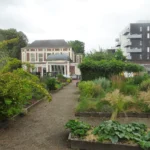
L’histoire de l’Hospice d'Havré remonte au XIIIème siècle lorsque Mahaut de Guînes, comtesse de Saint-Pol, fait don d’un manoir pour accueillir les déshérités. Confié par la suite à une communauté de religieuses, elles maintiendront l’accueil des orphelins et personnes âgées avant de se consacrer à l’enseignement des jeunes filles. Une autre congrégation se chargera alors de la gestion de l’hospice et ce n’est qu’en 1998 que le site perd sa fonction initiale. Transformé en « Maison Folie » à l’occasion de « Lille 2004, Capitale Européenne de la Culture », le site devient un lieu d’accueil pour quantité de manifestations culturelles. Les spectacles, concerts, expositions ou débats et rencontres avec écrivains et artistes s’enchaînent et font renaître l’Hospice d’Havré. Un jardin d’inspiration Renaissance avec bassins et carrés thématiques de plantes médicinales et tinctoriales ajoute au charme de l’endroit.
English
The history of the Hospice d'Havre goes back to the 13th century when Mahaut de Guînes, Countess of Saint-Pol, donated a manor house to take in the destitute. Later entrusted to a community of nuns, they maintained the reception of orphans and elderly people before devoting themselves to the teaching of young girls. Another congregation then took over the management of the hospice and it was not until 1998 that the site lost its initial function. Transformed into a "Maison Folie" on the occasion of "Lille 2004, European Capital of Culture", the site becomes a place of welcome for many cultural events. Shows, concerts, exhibitions or debates and meetings with writers and artists follow one another and bring the Hospice d'Havre back to life. A Renaissance-inspired garden with ponds and thematic squares of medicinal and tinctorial plants adds to the charm of the place.
Deutsch
Die Geschichte des Hospice d'Havré geht auf das 13. Jahrhundert zurück, als Mahaut de Guînes, die Gräfin von Saint-Pol, ein Herrenhaus stiftete, um Bedürftige aufzunehmen. Später wurde das Haus einer Nonnengemeinschaft anvertraut, die sich zunächst um Waisen und ältere Menschen kümmerte, bevor sie sich der Ausbildung von Mädchen widmete. Eine andere Kongregation übernahm die Leitung des Hospizes und erst 1998 verlor das Gebäude seine ursprüngliche Funktion. Im Rahmen der Veranstaltung "Lille 2004, Europäische Kulturhauptstadt" wurde das Gebäude in ein "Maison Folie" umgewandelt und diente als Veranstaltungsort für eine Vielzahl von Kulturveranstaltungen. Aufführungen, Konzerte, Ausstellungen oder Debatten und Treffen mit Schriftstellern und Künstlern reihen sich aneinander und lassen das Hospice d'Havré wieder aufleben. Ein von der Renaissance inspirierter Garten mit Teichen und Themenfeldern mit Heil- und Färbepflanzen trägt zum Charme des Ortes bei.
Dutch
De geschiedenis van het Hospice d'Havré gaat terug tot de 13e eeuw, toen Mahaut de Guînes, gravin van Saint-Pol, een landhuis schonk voor de opvang van behoeftigen. Later werd het toevertrouwd aan een gemeenschap van nonnen die weeskinderen en bejaarden bleven opvangen, alvorens zich te wijden aan het onderwijs van jonge meisjes. Vervolgens nam een andere congregatie het beheer van het hospitium over en pas in 1998 verloor het zijn oorspronkelijke functie. Ter gelegenheid van "Lille 2004, Culturele Hoofdstad van Europa" werd de site omgevormd tot een "Maison Folie" en werden er talrijke culturele evenementen georganiseerd. Shows, concerten, tentoonstellingen of debatten en ontmoetingen met schrijvers en kunstenaars volgen elkaar op en brengen het Hospice d'Havré weer tot leven. Een op de renaissance geïnspireerde tuin met vijvers en thematische pleinen met geneeskrachtige en geneeskrachtige planten draagt bij tot de charme van de plek.
Español
La historia del Hospicio de Havré se remonta al siglo XIII, cuando Mahaut de Guînes, condesa de Saint-Pol, donó una casa solariega para acoger a los indigentes. Más tarde se confió a una comunidad de monjas que siguieron acogiendo a huérfanos y ancianos antes de dedicarse a la enseñanza de las jóvenes. A continuación, otra congregación se hizo cargo de la gestión del hospicio y hubo que esperar hasta 1998 para que el lugar perdiera su función inicial. Transformado en "Maison Folie" con motivo de "Lille 2004, Capital Europea de la Cultura", el recinto se convirtió en sede de numerosos actos culturales. Espectáculos, conciertos, exposiciones o debates y encuentros con escritores y artistas se suceden y devuelven la vida al Hospice d'Havré. Un jardín de inspiración renacentista con estanques y plazas temáticas de plantas medicinales y tintóreas añade encanto al lugar.
Italiano
La storia dell'Hospice d'Havré risale al XIII secolo, quando Mahaut de Guînes, contessa di Saint-Pol, donò un maniero per accogliere gli indigenti. In seguito fu affidato a una comunità di suore che continuarono ad accogliere orfani e anziani prima di dedicarsi all'insegnamento alle ragazze. Un'altra congregazione ha poi assunto la gestione dell'ospizio e solo nel 1998 il sito ha perso la sua funzione iniziale. Trasformato in "Maison Folie" in occasione di "Lille 2004, capitale europea della cultura", il sito è diventato sede di numerosi eventi culturali. Spettacoli, concerti, mostre, dibattiti e incontri con scrittori e artisti si susseguono e riportano in vita l'Hospice d'Havré. Un giardino di ispirazione rinascimentale con stagni e piazze tematiche di piante medicinali e tintorie aggiunge fascino al luogo.
100 rue de Tournai, 59200 Tourcoing