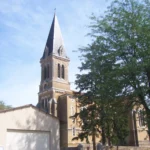
Le Doyenné de Saint-Hippolyte – Bonnay-Saint-Ythaire
Description
English
Deutsch
Dutch
Español
Italiano
Description
Cette église romane, dont l’existence est attestée vers l’an 1000, était le siège d’un doyenné de l’abbaye de Cluny, Au XIIIe siècle, elle a été fortifiée pour affirmer le pouvoir de l’abbaye sur le territoire. Sa restauration est en cours, avec l’association « Le renouveau de Saint-Hippolyte ». Site candidat UNESCO
English
This Romanesque church, whose existence is attested to around the year 1000, was the seat of a deanery of the Abbey of Cluny. In the 13th century, it was fortified to assert the power of the Abbey over the territory. Its restoration is underway, with the association "Le renouveau de Saint-Hippolyte". UNESCO candidate site
Deutsch
Diese romanische Kirche, deren Existenz um das Jahr 1000 belegt ist, war der Sitz eines Dekanats der Abtei von Cluny. Im 13. Jahrhundert wurde sie befestigt, um die Macht der Abtei über das Gebiet zu bekräftigen. Die Restaurierung wird derzeit von der Vereinigung "Le renouveau de Saint-Hippolyte" (Erneuerung von Saint-Hippolyte) durchgeführt. UNESCO-Kandidatenstätte
Dutch
Deze Romaanse kerk, waarvan het bestaan wordt aangetoond rond het jaar 1000, was de zetel van een dekenaat van de abdij van Cluny. In de 13e eeuw werd ze versterkt om de macht van de abdij over het grondgebied te bevestigen. Het wordt momenteel gerestaureerd door de vereniging "Le renouveau de Saint-Hippolyte". UNESCO kandidaat site
Español
Esta iglesia románica, cuya existencia está atestiguada hacia el año 1000, fue sede de un decanato de la abadía de Cluny. En el siglo XIII, fue fortificada para afirmar el poder de la abadía sobre el territorio. Su restauración está en curso, con la asociación "Le renouveau de Saint-Hippolyte". Sitio candidato a la UNESCO
Italiano
Questa chiesa romanica, la cui esistenza è attestata intorno all'anno 1000, era la sede di un decanato dell'Abbazia di Cluny. Nel XIII secolo fu fortificata per affermare il potere dell'Abbazia sul territorio. Il suo restauro è in corso, con l'associazione "Le renouveau de Saint-Hippolyte". Sito candidato all'UNESCO
Roman
Saint Hippolyte, 71460 Bonnay-Saint-Ythaire