La Carrière de Mollets – Doux
Description
English
Deutsch
Dutch
Español
Italiano
Description
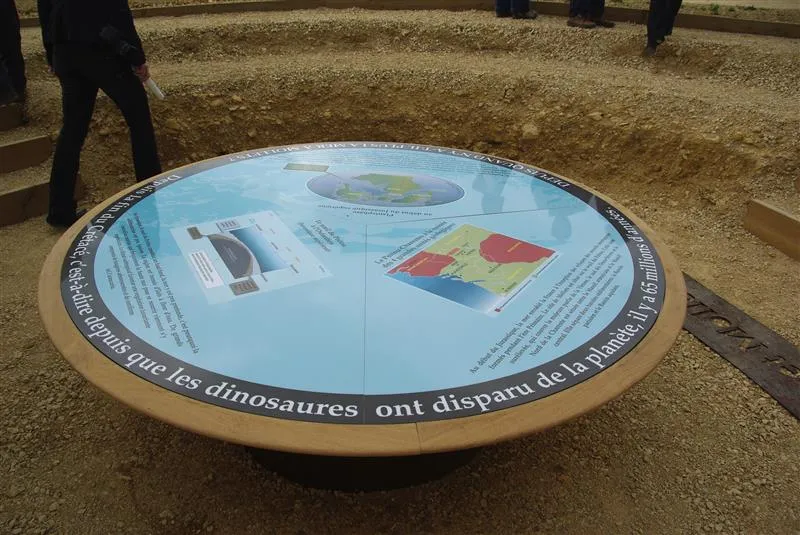
La carrière est d'accès libre et gratuit, toute l'année. Un parcours ponctué de panneaux d'interprétation permet une découverte en autonomie.
La carrière de Mollets présente un intérêt historique et scientifique fondamental en Poitou-Charentes. Témoin de l'activité humaine passée, la carrière à ciel ouvert de Mollets était exploitée pour ses pierres calcaires et alimentait un four à chaux construit à proximité. Si l'activité a cessé dans les années 1950, l'ancienne carrière présente toujours un intérêt scientifique. Le front de taille expose trois formations géologiques successives du Jurassique soit près de 15 millions d'années d'enregistrements sédimentaires.
Le site est également classé Espace Naturel Sensible (ENS).
Des visites gratuites et commentées sont programmées chaque année (voir programmation de L'Homme et la Pierre) ou sur rendez-vous toute l'année.
English
The quarry is open all year round, free of charge. A trail punctuated by interpretation panels allows visitors to explore the quarry on their own.
The Mollets quarry is of fundamental historical and scientific interest in the Poitou-Charentes region. A testimony to past human activity, the Mollets open-cast quarry was mined for its limestone and fed a lime kiln built nearby. Although activity ceased in the 1950s, the old quarry is still of scientific interest. The quarry face exposes three successive Jurassic geological formations, representing almost 15 million years of sedimentary records.
The site is also classified as a Sensitive Natural Area (ENS).
Free guided tours are scheduled every year (see L'Homme et la Pierre program) or by appointment all year round.
Deutsch
Der Steinbruch ist das ganze Jahr über frei zugänglich und kostenlos. Ein mit Interpretationstafeln gespickter Rundgang ermöglicht eine selbstständige Entdeckung.
Der Steinbruch von Mollets ist von grundlegendem historischen und wissenschaftlichen Interesse für die Region Poitou-Charentes. Der Tagebau von Mollets ist ein Zeugnis vergangener menschlicher Aktivitäten. Er wurde wegen seiner Kalksteine abgebaut und versorgte einen in der Nähe errichteten Kalkofen. Obwohl die Aktivität in den 1950er Jahren eingestellt wurde, ist der alte Steinbruch noch immer von wissenschaftlichem Interesse. Die Abbaufront zeigt drei aufeinanderfolgende geologische Formationen aus der Jurazeit, d. h. fast 15 Millionen Jahre an Sedimentaufzeichnungen.
Die Stätte ist auch als Espace Naturel Sensible (ENS) klassifiziert.
Jedes Jahr werden kostenlose Besuche mit Führung angeboten (siehe Programm L'Homme et la
Dutch
De toegang tot de groeve is het hele jaar door gratis. Bezoekers kunnen de steengroeve op eigen houtje verkennen via een pad met informatiepanelen.
De steengroeve van Mollets is van fundamenteel historisch en wetenschappelijk belang in de regio Poitou-Charentes. De dagbouwgroeve van Mollets, een bewijs van menselijke activiteit in het verleden, werd gedolven voor zijn kalksteen en voedde een kalkoven die in de buurt werd gebouwd. Hoewel de activiteiten in de jaren 1950 werden gestaakt, is de oude steengroeve nog steeds van wetenschappelijk belang. De voorkant van de groeve laat drie opeenvolgende geologische formaties uit de Jura zien, die bijna 15 miljoen jaar aan sedimentaire gegevens vertegenwoordigen.
De site is ook geclassificeerd als kwetsbaar natuurgebied (ENS).
Er worden elk jaar gratis rondleidingen georganiseerd (zie het programma L'Homme et la Pierre) of op afspraak het hel
Español
El acceso a la cantera es gratuito todo el año. Un sendero salpicado de paneles de interpretación permite a los visitantes explorar la cantera por su cuenta.
La cantera de Mollets tiene un interés histórico y científico fundamental en la región de Poitou-Charentes. Testimonio de la actividad humana en el pasado, la cantera a cielo abierto de Mollets se explotaba por su piedra caliza y alimentaba un horno de cal construido en las proximidades. Aunque la actividad cesó en la década de 1950, la antigua cantera sigue teniendo interés científico. El frente de la cantera expone tres formaciones geológicas sucesivas del Jurásico, que representan casi 15 millones de años de registros sedimentarios.
El yacimiento también está clasificado como Espacio Natural Sensible (ENS).
Todos los años se organizan visitas guiadas gratuitas (véase el programa L'Homme et la Pierre) o con cita previa durante
Italiano
L'accesso alla cava è libero tutto l'anno. Un sentiero punteggiato da pannelli interpretativi permette ai visitatori di esplorare la cava da soli.
La cava di Mollets è di fondamentale interesse storico e scientifico nella regione Poitou-Charentes. Testimonianza dell'attività umana del passato, la cava a cielo aperto di Mollets veniva estratta per il suo calcare e alimentava una fornace di calce costruita nelle vicinanze. Sebbene l'attività sia cessata negli anni '50, la vecchia cava è ancora di interesse scientifico. Il fronte della cava espone tre formazioni geologiche successive del periodo giurassico, che rappresentano quasi 15 milioni di anni di documentazione sedimentaria.
Il sito è anche classificato come Area Naturale Sensibile (ENS).
Ogni anno vengono organizzate visite guidate gratuite (vedi programma L'Homme et la Pierre) o su prenotazione durante tutto l'anno.