Eglise Saint-Martial de Saint-Martial – Saint-Martial
Description
English
Deutsch
Dutch
Español
Italiano
Description
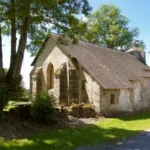
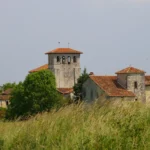
L'église, originellement romane, a été remaniée au XIVème siècle, puis additionnée d'un bas-côté gothique au XVIème siècle. Le clocher-pignon possède une cloche datée de 1718. Le cimetière cerne toujours l'édifice dans la disposition ancestrale de la paroisse rurale. Le portail d'entrée du XIIème possède des chapiteaux historiés représentant notamment l'adoration des mages et les femmes sages Zelimi et Salomé lavant l'Enfant Jésus.
English
The church, originally Romanesque, was rebuilt in the 14th century, then a Gothic aisle was added in the 16th century. The gabled bell tower has a bell dated 1718. The cemetery still surrounds the building in the ancestral layout of the rural parish. The 12th century entrance portal has historiated capitals representing the adoration of the Magi and the wise women Zelimi and Salome washing the Child Jesus.
Deutsch
Die ursprünglich romanische Kirche wurde im 14. Jahrhundert umgebaut und im 16. Jahrhundert um ein gotisches Seitenschiff erweitert. Der Glockenturm mit Giebel besitzt eine Glocke aus dem Jahr 1718. Der Friedhof umgibt das Gebäude noch immer in der althergebrachten Anordnung der Landpfarrei. Das Eingangsportal aus dem 12. Jahrhundert besitzt historisierende Kapitelle, die unter anderem die Anbetung der Heiligen Drei Könige und die weisen Frauen Zelimi und Salome, die das Jesuskind waschen, darstellen.
Dutch
De oorspronkelijk romaanse kerk werd in de 14e eeuw verbouwd en in de 16e eeuw werd een gotische zijbeuk toegevoegd. De klokkentoren heeft een klok uit 1718. De begraafplaats ligt nog steeds rondom het gebouw in de voorouderlijke indeling van de landelijke parochie. Het 12e-eeuwse ingangsportaal heeft geschilderde kapitelen die de aanbidding van de Wijzen voorstellen en de wijze vrouwen Zelimi en Salome die het Kindje Jezus wassen.
Español
La iglesia, originalmente románica, fue remodelada en el siglo XIV y se le añadió una nave gótica en el siglo XVI. El campanario a dos aguas tiene una campana fechada en 1718. El cementerio sigue rodeando el edificio en la disposición ancestral de la parroquia rural. El portal de entrada, del siglo XII, tiene capiteles historiados que representan la adoración de los Reyes Magos y a las sabias Zelimi y Salomé lavando al Niño Jesús.
Italiano
La chiesa, originariamente romanica, fu rimaneggiata nel XIV secolo e nel XVI secolo fu aggiunta una navata gotica. Il campanile a capanna ha una campana del 1718. Il cimitero circonda ancora l'edificio secondo l'impianto ancestrale della parrocchia rurale. Il portale d'ingresso del XII secolo presenta capitelli istoriati che rappresentano l'adorazione dei Magi e le sagge Zelimi e Salomè che lavano il Bambino Gesù.