EGLISE SAINT-FRÉZAL – CHAULHAC – Chaulhac
Description
English
Deutsch
Dutch
Español
Italiano
Description
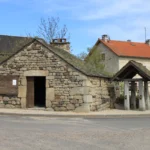
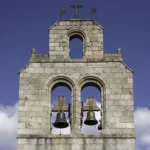
Construite au milieu du XIIe siècle, l’église romane Saint-Frézal de Chaulhac a subi plusieurs transformations et adjonctions au cours des siècles suivants. Si au XVIe siècle, elle se dote d’un magnifique portail au larmier décoré, au XIXe siècle sortent de terre les chapelles latérales et se dresse un clocher-peigne à quatre baies. Sur la lignée de ses voisines, l’église de Chaulhac est exclusivement construite en pierre de granite.
À l’intérieur, la sobriété romane règne même si l’on trouve un décor de chapiteaux sculptés de motifs végétaux ou de figures humaines.
Au niveau du chevet, se trouve une croix en granite représentant une Vierge à l’Enfant à l’avers ainsi qu’un Christ en croix au revers.
English
Built in the middle of the 12th century, the Romanesque church of Saint-Frézal de Chaulhac underwent several transformations and additions over the following centuries. If in the 16th century, it is endowed with a magnificent portal with a decorated drip tray, in the 19th century the side chapels come out of the ground and stands a bell-tower with four bays. Following in the footsteps of its neighbours, the church of Chaulhac is built exclusively in granite stone.
Inside, the Romanesque sobriety reigns even if one finds a decoration of capitals carved with plant motifs or human figures.
At the level of the chevet, there is a granite cross representing a Virgin and Child on the obverse and a Christ on the cross on the reverse.
Deutsch
Die romanische Kirche Saint-Frézal de Chaulhac wurde Mitte des 12. Jahrhunderts erbaut und in den folgenden Jahrhunderten mehrfach umgebaut und erweitert. Im 16. Jahrhundert erhielt sie ein wunderschönes Portal mit verzierter Traufe, im 19. Jahrhundert wurden die Seitenkapellen gebaut und der Glockenturm mit vier Buchten errichtet. Die Kirche von Chaulhac ist wie ihre Nachbarkirchen ausschließlich aus Granitstein gebaut.
Im Inneren herrscht romanische Schlichtheit vor, auch wenn die Kapitelle mit Pflanzenmotiven oder menschlichen Figuren verziert sind.
Am Kopfende befindet sich ein Granitkreuz, das auf der Vorderseite eine Jungfrau mit Kind und auf der Rückseite einen Christus am Kreuz zeigt.
Dutch
De Romaanse kerk van Saint-Frézal de Chaulhac, gebouwd in het midden van de 12e eeuw, onderging in de daaropvolgende eeuwen verschillende transformaties en toevoegingen. In de 16e eeuw kreeg het een prachtig portaal met een versierde dakrand, en in de 19e eeuw werden de zijkapellen toegevoegd en werd een klokkentoren met vier traveeën gebouwd. In navolging van haar buren is de kerk van Chaulhac uitsluitend uit granietsteen opgetrokken.
Binnen heerst de romaanse soberheid, ook al zijn er kapitelen gebeeldhouwd met plantenmotieven of menselijke figuren.
Op het chevet staat een granieten kruis dat op de voorkant een Maagd en kind voorstelt en op de achterkant een Christus aan het kruis.
Español
Construida a mediados del siglo XII, la iglesia románica de Saint-Frézal de Chaulhac sufrió varias transformaciones y ampliaciones a lo largo de los siglos siguientes. En el siglo XVI se le dotó de una magnífica portada con un alero decorado, y en el siglo XIX se añadieron las capillas laterales y se construyó un campanario de cuatro cuerpos. Siguiendo los pasos de sus vecinos, la iglesia de Chaulhac está construida exclusivamente en piedra de granito.
En el interior reina la sobriedad románica, aunque haya capiteles esculpidos con motivos vegetales o figuras humanas.
En la cabecera hay una cruz de granito que representa a una Virgen con el Niño en el anverso y a un Cristo en la cruz en el reverso.
Italiano
Costruita a metà del XII secolo, la chiesa romanica di Saint-Frézal de Chaulhac ha subito diverse trasformazioni e aggiunte nei secoli successivi. Nel XVI secolo fu dotato di un magnifico portale con grondaia decorata e nel XIX secolo furono aggiunte le cappelle laterali e fu costruito un campanile a quattro campate. Seguendo le orme dei suoi vicini, la chiesa di Chaulhac è costruita esclusivamente in pietra di granito.
All'interno regna la sobrietà romanica, anche se vi è una decorazione di capitelli scolpiti con motivi vegetali o figure umane.
Sul chevet si trova una croce di granito che rappresenta una Vergine e un Bambino sul dritto e un Cristo in croce sul rovescio.
Roman
, 48140 Chaulhac

Crédits: Julien Massonniere