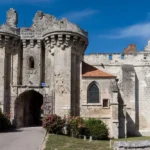
CHATEAU DE CADEILHAC – Muret
Description
English
Deutsch
Dutch
Español
Italiano
Description
Château reconstruit vers 1750 par François d'Abolin, ancien apothicaire du roi de Naples, au centre d'un domaine agricole. Autour du logis se trouvent les dépendances et les communs agricoles, vaste ensemble de bâtiments composé autour d'une avant-cour et d'une cour. Vestiges d'un parc avec vivier et grandes allées d'arbres. La chapelle contient un retable avec toile peinte. Ce château et ses dépendances constituent un bel exemple de grand domaine agricole tels qu'il s'en construisait dans la région au 17e siècle. (Sources : Monuments Historiques)
English
Château rebuilt around 1750 by François d'Abolin, former apothecary to the King of Naples, at the center of an agricultural estate. Surrounding the dwelling are the outbuildings and agricultural outbuildings, a vast complex of buildings built around a forecourt and courtyard. Remains of a park with fishpond and long avenues of trees. The chapel contains an altarpiece with painted canvas. This château and its outbuildings are a fine example of the large agricultural estates built in the region in the 17th century. (Sources: Monuments Historiques)
Deutsch
Das Schloss wurde um 1750 von François d'Abolin, einem ehemaligen Apotheker des Königs von Neapel, inmitten eines landwirtschaftlichen Anwesens wiederaufgebaut. Um das Wohnhaus herum befinden sich die Nebengebäude und die landwirtschaftlichen Nutzflächen, ein großer Gebäudekomplex, der sich um einen Vorhof und einen Hof gruppiert. Überreste eines Parks mit Fischteich und großen Baumalleen. Die Kapelle enthält ein Altarbild mit bemalter Leinwand. Das Schloss und seine Nebengebäude sind ein schönes Beispiel für ein großes landwirtschaftliches Anwesen, wie es in der Region im 17. Jahrhundert gebaut wurde. (Quellen: Monuments Historiques)
Dutch
Kasteel herbouwd rond 1750 door François d'Abolin, voormalig apotheker van de koning van Napels, in het centrum van een agrarisch landgoed. Rondom de woning liggen de bijgebouwen en de agrarische bijgebouwen, een uitgestrekt complex van gebouwen gebouwd rond een voorplein en binnenplaats. Overblijfselen van een park met een visvijver en grote bomenlanen. De kapel bevat een altaarstuk met een beschilderd doek. Dit kasteel en de bijgebouwen zijn een mooi voorbeeld van de grote landbouwlandgoederen die in de 17e eeuw in de regio werden gebouwd. (Bronnen: Historische monumenten)
Español
Castillo reconstruido hacia 1750 por François d'Abolin, antiguo boticario del rey de Nápoles, en el centro de una finca agrícola. Alrededor de la vivienda se encuentran los edificios anexos y las dependencias agrícolas, un vasto complejo de edificios construidos alrededor de un patio delantero y un patio interior. Restos de un parque con estanque y grandes avenidas de árboles. La capilla contiene un retablo con un lienzo pintado. Este castillo y sus dependencias son un buen ejemplo de las grandes propiedades agrícolas que se construyeron en la región en el siglo XVII. (Fuente: Monuments Historiques)
Italiano
Castello ricostruito intorno al 1750 da François d'Abolin, ex speziale del re di Napoli, al centro di una tenuta agricola. Intorno alla dimora si trovano gli annessi e le pertinenze agricole, un vasto complesso di edifici costruiti intorno a un piazzale e a un cortile. Resti di un parco con peschiera e grandi viali di alberi. La cappella contiene una pala d'altare con una tela dipinta. Questo castello e i suoi annessi sono un bell'esempio delle grandi proprietà agricole costruite nella regione nel XVII secolo. (Fonti: Monumenti storici)
Avenue du Pic du Ger, 31600 Muret