Chapelle Notre Dame (Abbaye de Langonnet) – Langonnet
Description
English
Deutsch
Dutch
Español
Italiano
Description
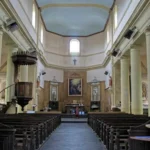
Après leur arrivée en 1858, le premier souci des missionnaires spiritains fut de restaurer le précédent édifice qui avait été fondé au XIIIème siècle. Le style adopté fut une imitation du baroque ou "rococco". Ce style cherche à frapper l'imagination par des effets de masse (colonnes, grandes statues), par la richesse et l'exubérance du décor (foisonnement de dessins, de dorures…). On peut y découvrir un gisant de saint Maurice (une brève biographie est déposée à côté de la sculpture funéraire couchée), un vitrail rappelant des miracles attribués à saint Maurice, et un gisant de saint Octave sous le maître-autel.
English
After their arrival in 1858, the first concern of the Spiritan missionaries was to restore the previous building, which had been founded in the 13th century. The style adopted was an imitation of the Baroque or "rococco". This style seeks to capture the imagination with its mass effects (columns, large statues) and rich, exuberant decor (abundance of drawings, gilding, etc.). The church features a recumbent statue of Saint Maurice (a brief biography is placed next to the recumbent funerary sculpture), a stained-glass window depicting miracles attributed to Saint Maurice, and a recumbent statue of Saint Octavian under the high altar.
Deutsch
Kulturelles Erbe
Dutch
Cultureel erfgoed
Español
Patrimonio cultural
Italiano
Dopo il loro arrivo nel 1858, la prima preoccupazione dei missionari spiritani fu quella di restaurare l'edificio precedente, fondato nel XIII secolo. Lo stile adottato fu un'imitazione del barocco o "rococco". Questo stile cerca di catturare l'immaginazione attraverso i suoi effetti di massa (colonne, grandi statue) e la ricchezza e l'esuberanza della decorazione (abbondanza di disegni, dorature, ecc.). La statua supina di San Maurizio (una breve biografia è posta accanto alla scultura funeraria supina), una vetrata che ricorda i miracoli attribuiti a San Maurizio e una statua supina di Sant'Ottaviano sotto l'altare maggiore.
L'Abbaye de Langonnet, 56630 Langonnet