TEMPLE DU COLLET DE DEZE – Le Collet-de-Dèze
Description
English
Deutsch
Dutch
Español
Italiano
Description
"La construction du temple a commencé en 1646, ce qui en fait le plus ancien temple de France. Les habitants en font donation à la marquise de Portes pour prouver leur soumission à la royauté. Celle-ci obtient de Louis XIV que le temple ne soit pas détruit. Durant la répression du protestantisme, le temple sert de dépôt d'armes aux troupes royales et tombe progressivement en ruine. Durant le 18e siècle, il sert de remise puis de grange. C'est le seul temple ayant survécu à la Révocation. A la Révolution, le temple est confisqué et vendu comme bien national. Les habitants le rachètent, le restaurent et le culte peut à nouveau y être célébré en 1803.
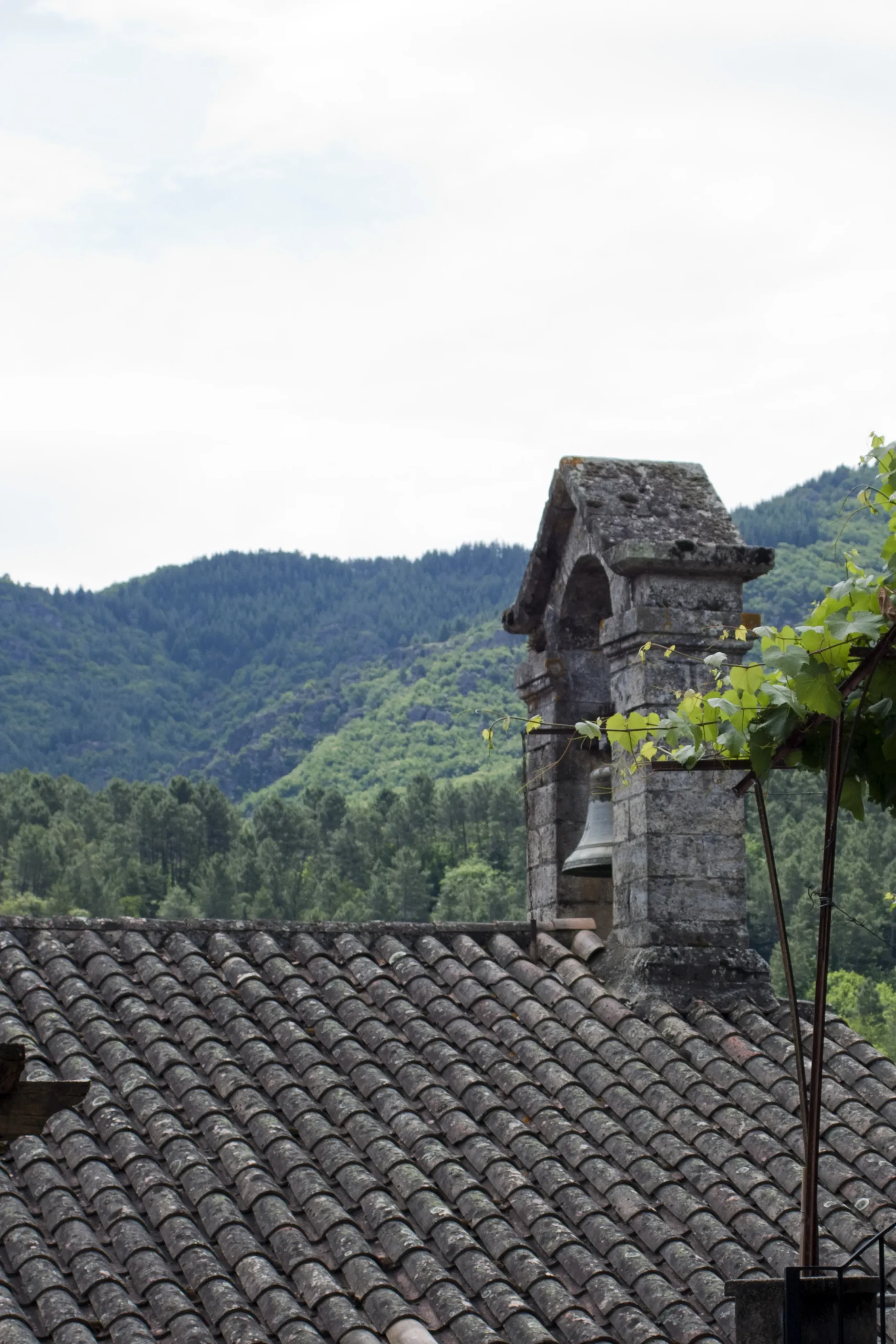
L'édifice est en pierres maçonnées de taille irrégulière et couvert d'une charpente à solives apparentes soutenue par un grand arceau de pierres appareillées en plein cintre. L'accès se fait par un escalier à trois volées".
Informations issues de la base Mérimée
English
"The construction of the temple began in 1646, which makes it the oldest temple in France. The inhabitants donated it to the Marquise de Portes to prove their submission to royalty. The latter obtained from Louis XIV that the temple not be destroyed. During the repression of Protestantism, the temple was used as an arms depot for the royal troops and gradually fell into ruin. During the 18th century, it was used as a shed and then as a barn. It is the only temple to have survived the Revocation. During the Revolution, the temple was confiscated and sold as national property. The inhabitants bought it back, restored it and worship could once again be held there in 1803.
The building is made of irregularly sized stonework and covered with a framework of visible joists supported by a large arch of stonework in the form of a semicircular arch. Access is via a three-flight staircase".
Information from the Mérimée database
Deutsch
"Mit dem Bau des Tempels wurde 1646 begonnen, womit er der älteste Tempel Frankreichs ist. Die Einwohner stifteten ihn der Marquise de Portes, um ihre Unterwerfung unter das Königtum zu beweisen. Diese erreichte bei Ludwig XIV., dass der Tempel nicht zerstört wurde. Während der Unterdrückung des Protestantismus diente der Tempel den königlichen Truppen als Waffenlager und verfiel nach und nach. Im 18. Jahrhundert wurde er als Schuppen und später als Scheune genutzt. Er ist der einzige Tempel, der die Revokation überlebt hat. Während der Revolution wurde der Tempel beschlagnahmt und als Nationalgut verkauft. Die Einwohner kauften ihn zurück, restaurierten ihn und 1803 konnte dort wieder Gottesdienst gefeiert werden.
Das Gebäude besteht aus gemauerten Steinen von unregelmäßiger Größe und wird von einem Dachstuhl mit sichtbaren Balken bedeckt, der von einem großen Bogen aus behauenen Steinen mit Rundbogen gestützt wird. Der Zugang erfolgt über eine dreiläufige Treppe".
Informationen aus der Datenbank Mérimée
Dutch
"De bouw van de tempel begon in 1646 en is daarmee de oudste tempel van Frankrijk. De inwoners schonken het aan de markiezin van Portes om hun onderwerping aan het koningschap te bewijzen. Deze verkreeg van Lodewijk XIV dat de tempel niet werd vernietigd. Tijdens de onderdrukking van het protestantisme werd de tempel gebruikt als wapendepot voor de koninklijke troepen en raakte hij geleidelijk in verval. In de 18e eeuw werd het gebruikt als schuur en daarna als stal. Het is de enige tempel die de herroeping heeft overleefd. Tijdens de Revolutie werd de tempel in beslag genomen en verkocht als nationaal bezit. De inwoners kochten het terug, restaureerden het en in 1803 konden er weer godsdiensten worden gehouden.
Het gebouw bestaat uit onregelmatig gehakt steenwerk en wordt overdekt door een raamwerk met zichtbare balken, ondersteund door een grote stenen boog in de vorm van een halfronde boog. Toegang is via een trap met drie verdiepingen".
Informatie uit de Mérimée-databank
Español
"La construcción del templo comenzó en 1646, lo que lo convierte en el templo más antiguo de Francia. Los habitantes la donaron a la marquesa de Portes para demostrar su sumisión a la realeza. Este último obtuvo de Luis XIV que el templo no fuera destruido. Durante la represión del protestantismo, el templo fue utilizado como depósito de armas para las tropas reales y poco a poco fue cayendo en la ruina. Durante el siglo XVIII, se utilizó como cobertizo y luego como granero. Es el único templo que ha sobrevivido a la Revocación. Durante la Revolución, el templo fue confiscado y vendido como propiedad nacional. Los habitantes la recompraron, la restauraron y el culto pudo volver a celebrarse allí en 1803.
El edificio es de piedra cortada irregularmente y está cubierto por un entramado con viguetas visibles que se apoya en un gran arco de cantería en forma de arco de medio punto. El acceso es a través de una escalera de tres pisos".
Información de la base de datos Mérimée
Italiano
"La costruzione del tempio è iniziata nel 1646, il che lo rende il tempio più antico di Francia. Gli abitanti lo donarono alla marchesa di Portes per dimostrare la loro sottomissione alla regalità. Quest'ultimo ottenne da Luigi XIV che il tempio non venisse distrutto. Durante la repressione del protestantesimo, il tempio fu utilizzato come deposito di armi per le truppe reali e cadde gradualmente in rovina. Nel corso del XVIII secolo è stato utilizzato come rimessa e poi come fienile. È l'unico tempio sopravvissuto alla revoca. Durante la Rivoluzione, il tempio fu confiscato e venduto come proprietà nazionale. Gli abitanti lo riacquistarono, lo restaurarono e nel 1803 vi si poté nuovamente celebrare il culto.
L'edificio è realizzato in pietrame di taglio irregolare ed è coperto da un'intelaiatura con travetti a vista sostenuti da un grande arco di pietra a forma di arco semicircolare. L'accesso avviene tramite una scala a tre rampe".
Informazioni tratte dalla banca dati Mérimée
, 48160 Le Collet-de-Dèze
Crédits: ©