L'ÎLOT DE LA HALLE
Description
English
Deutsch
Dutch
Español
Italiano
Description
XIIIe- XIXe siècle
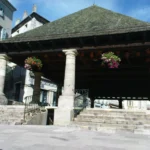
Lieu d’échanges, de stockage et de production, bénéficiant de nombreux privilèges, la halle est édifiée sous le règne du comte Thiébault II (1239-1291) pour canaliser les flux commerciaux de la ville. Au XVIe siècle, le duc réglemente les constructions afin d’harmoniser le bâti, jusqu’alors hétéroclite. Des constructions en pierre viennent entourer la halle, composée de galeries à arcades s’ouvrant sur une cour centrale. La morphologie actuelle de l’îlot n’a guère changé depuis le début du XIXe siècle, suite à un incendie qui a ravagé les galeries et les constructions situées du côté de la rue des Ducs de Bar.
La fonction économique et commerciale de la halle se double rapidement d’une fonction judiciaire. Le rôle de la halle devient si important, qu’elle finit par donner son nom à toute la ville haute. Une belle demeure de style baroque, probablement la maison du portier de la halle, témoigne aujourd’hui de l’importance qu’a eu cet endroit. L’îlot se composait de la halle, de l’ancienne halle des bouchers, des boutiques et des habitations, mais aussi de l’auditoire ou palais de justice, d’une potence pour l’exécution des peines capitales, d’un beffroi, du four banal appartenant au seigneur où les habitants avaient obligation de venir cuire leur pain.
La pierre remplace progressivement le bois dès 1542 lorsque le duc Antoine autorise les commerçants à bâtir autour de la halle. La cour centrale, pavée, est délimitée par une série de galeries à arcades. L’îlot est profondément transformé à la suite d’un violent incendie en 1788. La halle se compose désormais d’une seule galerie dans la partie est. En 1817, l’ensemble connaît encore des modifications, notamment l’obstruction des arcades donnant place Saint-Pierre, dont les traces sont encore visibles. Coeur économique de la cité, la halle voit son monopole économique contesté au fur et à mesure du développement de la ville basse. En 1821, elle perd définitivement sa vocation commerciale et connaît alors plusieurs affectations avant d’être vendue en lots à des particuliers au début du XXe siècle.
English
13th-19th century
A place for trade, storage and production, benefiting from numerous privileges, the hall was built during the reign of Count Thiébault II (1239-1291) to channel the city's trade flows. In the 16th century, the duke regulated the constructions in order to harmonise the hitherto heterogeneous buildings. Stone constructions surround the hall, composed of arcaded galleries opening onto a central courtyard. The current morphology of the island has hardly changed since the beginning of the 19th century, following a fire that devastated the galleries and buildings located on the side of the Rue des Ducs de Bar.
The economic and commercial function of the hall was soon coupled with a judicial function. The role of the hall became so important that it eventually gave its name to the entire upper town. A beautiful Baroque residence, probably the house of the gatekeeper of the market hall, bears witness today to the importance of this place. The islet consisted of the market hall, the former butchers' hall, shops and houses, but also the auditorium or courthouse, a gallows for the execution of capital punishment, a belfry, and the common oven belonging to the lord where the inhabitants were obliged to come and bake their bread.
Stone gradually replaced wood as early as 1542 when Duke Antoine authorized the merchants to build around the hall. The central courtyard, paved, is delimited by a series of arcaded galleries. The islet was profoundly transformed following a violent fire in 1788. The hall now consists of a single gallery in the eastern part. In 1817, the whole complex underwent further modifications, in particular the obstruction of the arcades leading to the Place Saint-Pierre, traces of which are still visible. As the economic heart of the city, the hall saw its economic monopoly challenged as the lower town developed. In 1821, it definitively lost its commercial vocation and was then used for several purposes before being sold in lots to private individuals at the beginning of the 20th century.
Deutsch
13. bis 19. Jahrhundert
Als Ort des Handels, der Lagerung und der Produktion, der zahlreiche Privilegien genoss, wurde die Markthalle unter der Herrschaft des Grafen Thiébault II (1239-1291) errichtet, um die Handelsströme der Stadt zu kanalisieren. Im 16. Jahrhundert regulierte der Herzog die Bautätigkeit, um die bis dahin uneinheitliche Bebauung zu harmonisieren. Die Halle wurde von Steinbauten umgeben und bestand aus Arkadengalerien, die sich zu einem zentralen Hof hin öffneten. Die heutige Morphologie des Blocks hat sich seit Anfang des 19. Jahrhunderts kaum verändert, nachdem ein Brand die Galerien und Gebäude auf der Seite der Rue des Ducs de Bar vernichtet hatte.
Die wirtschaftliche und kommerzielle Funktion der Halle wurde schnell durch eine gerichtliche Funktion ergänzt. Die Rolle der Halle wurde so wichtig, dass sie schließlich der gesamten Oberstadt ihren Namen gab. Ein schönes Haus im Barockstil, wahrscheinlich das Haus des Hallenportiers, zeugt heute von der Bedeutung, die dieser Ort einst hatte. Die Insel bestand aus der Markthalle, der ehemaligen Metzgerhalle, Geschäften und Wohnungen, aber auch aus dem Auditorium oder Justizpalast, einem Galgen zur Vollstreckung von Todesstrafen, einem Glockenturm und dem dem Grundherrn gehörenden Bannofen, zu dem die Einwohner kommen mussten, um ihr Brot zu backen.
Ab 1542, als Herzog Antoine den Händlern erlaubte, um die Markthalle herum zu bauen, wurde das Holz allmählich durch Stein ersetzt. Der zentrale, gepflasterte Hof wird von einer Reihe von Arkadengalerien begrenzt. Nach einem heftigen Brand im Jahr 1788 wurde die Insel grundlegend umgestaltet. Die Halle besteht nun aus einer einzigen Galerie im östlichen Teil. Im Jahr 1817 wurden weitere Veränderungen vorgenommen, insbesondere die Arkaden zur Place Saint-Pierre hin, deren Spuren noch sichtbar sind. Als wirtschaftliches Herz der Stadt wurde der Markthalle mit der Entwicklung der Unterstadt ihr wirtschaftliches Monopol streitig gemacht. Im Jahr 1821 verlor sie endgültig ihren kommerziellen Zweck und wurde in der Folgezeit verschiedenen Zwecken zugeführt, bevor sie Anfang des 20. Jahrhunderts in Losen an Privatpersonen verkauft wurde.
Dutch
13e – 19e eeuw
De markthal, een plaats van handel, opslag en productie die talrijke privileges geniet, werd gebouwd onder het bewind van graaf Thiébault II (1239-1291) om de handelsstromen van de stad te kanaliseren. In de 16e eeuw regelde de hertog de bouw om de tot dan toe heterogene gebouwen te harmoniseren. Stenen gebouwen omringen de markthal, die bestaat uit galerijen met bogen die uitkomen op een centrale binnenplaats. De huidige morfologie van het blok is nauwelijks veranderd sinds het begin van de 19e eeuw, na een brand die de galerijen en gebouwen aan de Rue des Ducs de Bar verwoestte.
De economische en commerciële functie van de hal werd al snel gekoppeld aan een gerechtelijke functie. De rol van de hal werd zo belangrijk dat hij uiteindelijk zijn naam gaf aan de hele bovenstad. Een prachtig barok huis, waarschijnlijk het huis van de portier, getuigt van het belang van deze plaats. Het eiland bestond uit de markthal, de oude slagerij, winkels en huizen, maar ook de aula of het gerechtsgebouw, een galg voor de uitvoering van de doodvonnissen, een belfort, en de banale oven van de heer waar de inwoners verplicht hun brood moesten bakken.
Steen verving geleidelijk het hout vanaf 1542, toen hertog Antoine de kooplieden toestemming gaf om rond de markt te bouwen. De centrale geplaveide binnenplaats wordt begrensd door een reeks galerijen met bogen. Het eiland werd ingrijpend veranderd na een hevige brand in 1788. De zaal bestaat nu uit een enkele galerij in het oostelijk deel. In 1817 onderging het complex verdere wijzigingen, met name het blokkeren van de arcades die uitkijken op het Sint-Pietersplein, waarvan de sporen nog zichtbaar zijn. Het economische hart van de stad, de markthal, zag zijn economisch monopolie op de proef gesteld naarmate de benedenstad zich ontwikkelde. In 1821 verloor het definitief zijn commerciële bestemming en werd het voor verschillende doeleinden gebruikt voordat het aan het begin van de 20e eeuw in percelen werd verkocht aan particulieren.
Español
Siglo XIII – XIX
Lugar de comercio, de almacenamiento y de producción, que goza de numerosos privilegios, el mercado fue construido bajo el reinado del conde Thiébault II (1239-1291) para canalizar los flujos comerciales de la ciudad. En el siglo XVI, el duque reguló la construcción para armonizar los edificios, hasta entonces heterogéneos. Los edificios de piedra rodean el vestíbulo del mercado, compuesto por galerías porticadas que se abren a un patio central. La morfología actual de la manzana apenas ha cambiado desde principios del siglo XIX, tras un incendio que destruyó las galerías y los edificios situados en la calle de los Duques de Bar.
A la función económica y comercial de la sala se sumó pronto una función judicial. El papel de la sala llegó a ser tan importante que acabó dando nombre a toda la ciudad alta. Una hermosa casa barroca, probablemente la casa del portero de la sala, atestigua la importancia de este lugar. La isla estaba formada por el mercado, la antigua carnicería, las tiendas y las casas, pero también por el auditorio o palacio de justicia, una horca para la ejecución de las penas capitales, un campanario y el banal horno del señor donde los habitantes estaban obligados a cocer el pan.
La piedra fue sustituyendo a la madera a partir de 1542, cuando el duque Antoine autorizó a los comerciantes a construir alrededor del mercado. El patio central pavimentado está delimitado por una serie de galerías porticadas. La isla se transformó radicalmente tras un violento incendio en 1788. La sala consta ahora de una sola galería en la parte oriental. En 1817, el complejo sufrió nuevas modificaciones, en particular el bloqueo de las arcadas que dan a la plaza Saint-Pierre, cuyos vestigios aún son visibles. El corazón económico de la ciudad, el mercado, vio desafiado su monopolio económico a medida que se desarrollaba la ciudad baja. En 1821, perdió definitivamente su vocación comercial y se utilizó para diversos fines antes de ser vendida en lotes a particulares a principios del siglo XX.
Italiano
Dal 13° al 19° secolo
Luogo di commercio, di stoccaggio e di produzione, beneficiando di numerosi privilegi, la sala del mercato fu costruita sotto il regno del conte Thiébault II (1239-1291) per incanalare i flussi commerciali della città. Nel XVI secolo, il duca regolamentò l'edilizia per armonizzare gli edifici fino ad allora eterogenei. Gli edifici in pietra circondano la sala del mercato, composta da gallerie porticate che si aprono su un cortile centrale. L'attuale morfologia dell'isolato non è praticamente cambiata dall'inizio del XIX secolo, in seguito a un incendio che distrusse le gallerie e gli edifici situati in Rue des Ducs de Bar.
La funzione economica e commerciale della sala fu presto affiancata da una funzione giudiziaria. Il ruolo della sala divenne così importante da dare il nome all'intera città alta. Una bella casa barocca, probabilmente la casa del portinaio, testimonia l'importanza di questo luogo. L'isola era costituita dalla sala del mercato, dall'antica macelleria, da botteghe e case, ma anche dall'auditorium o tribunale, da un patibolo per l'esecuzione delle sentenze capitali, da un campanile e dal banale forno di proprietà del signore dove gli abitanti erano obbligati a cuocere il pane.
La pietra sostituì gradualmente il legno a partire dal 1542, quando il duca Antoine autorizzò i mercanti a costruire intorno al mercato. Il cortile centrale pavimentato è delimitato da una serie di gallerie porticate. L'isola fu radicalmente trasformata dopo un violento incendio nel 1788. La sala è ora costituita da un'unica galleria nella parte orientale. Nel 1817 il complesso subì ulteriori modifiche, in particolare il blocco delle arcate che si affacciano su Place Saint-Pierre, le cui tracce sono ancora visibili. Cuore economico della città, la sala del mercato vide il suo monopolio economico messo in discussione dallo sviluppo della città bassa. Nel 1821 perse definitivamente la sua vocazione commerciale e fu utilizzato per diversi scopi prima di essere venduto in lotti a privati all'inizio del XX secolo.
place de la Halle, 55000 Bar-le-Duc