Fort Saint-Jean – Marseille 2e Arrondissement
Description
English
Deutsch
Dutch
Español
Italiano
Description
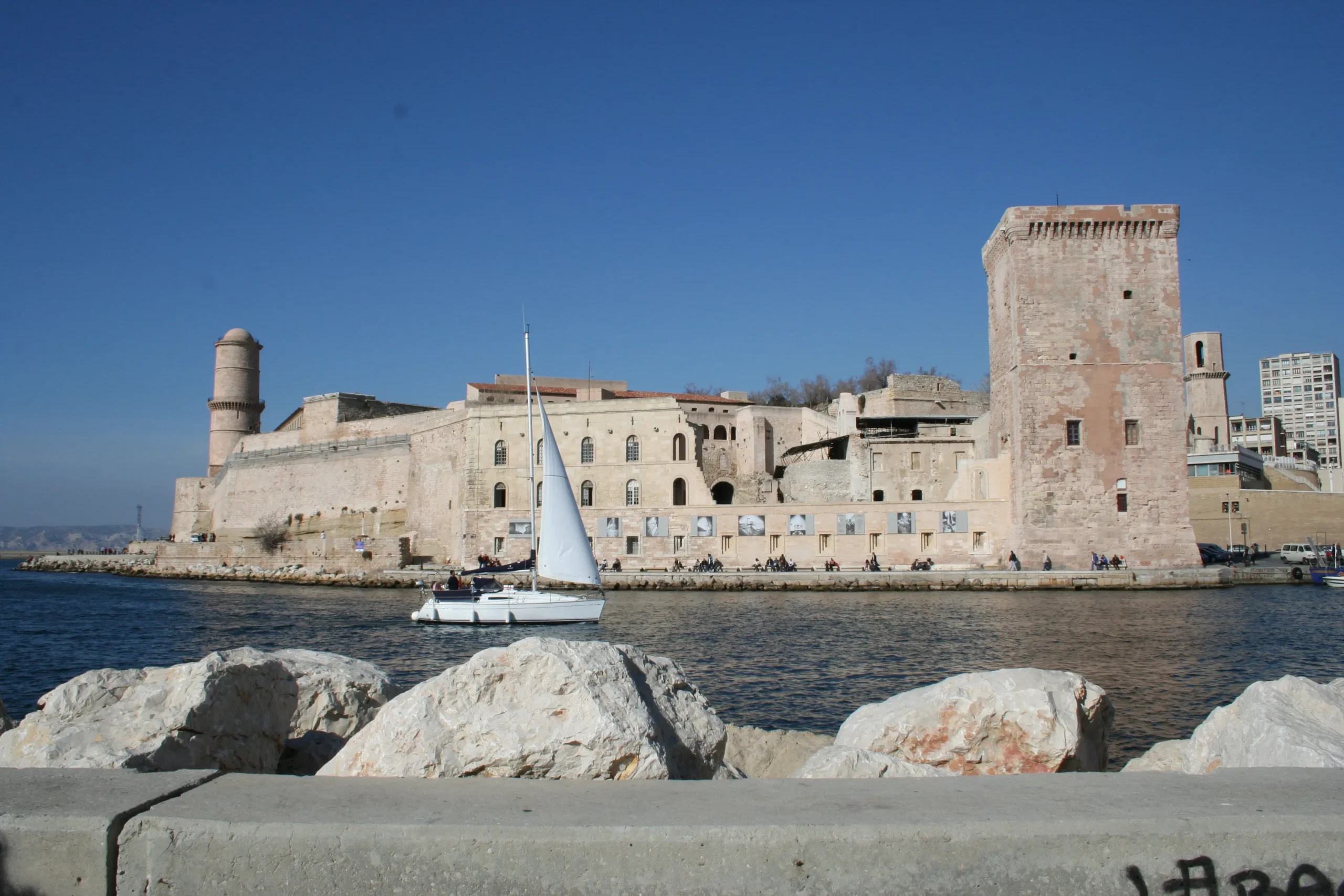
La Tour Carrée est construite par le roi René, Comte de Provence, au XVe siècle. La tour du Fanal, bâtie en 1644, signalait l'entrée du port. Louis XIV, au XVIIe siècle sépare le fort de son quartier en creusant une large tranchée, et tient ainsi les Marseillais en respect en bâtissant de l'autre côté l'entrée du port, le fort St. Nicolas.
Le fort fait partie intégrante du MuCEM : son accès sera réouvert lors de l'inauguration du musée.
"Les salles voutées abritées dans les entrailles de pierre du fort Saint-Jean, monument historique du XIIe siècle, proposeront des galeries d'exposition sur les thèmes de la fête et des spectacles. Une opportunité unique d'aborder de façon ludique des faits révélateurs de l'évolution des sociétés, en Méditerranée tout particulièrement. Dans cet espace public, les visiteurs pourront également déambuler dans un jardin méditerranéen suspendu sur les hauteurs du fort et s'émerveiller du magnifique panorama offert sur la mer." site Internet www.mucem.org
English
The Tour Carrée was built by King René, Count of Provence, in the 15th century. The Fanal tower, built in 1644, signaled the entrance to the port. Louis XIV, in the 17th century, separated the fort from its neighborhood by digging a large trench, and thus kept the Marseillais in check by building the entrance to the port on the other side, Fort St. Nicolas.
The fort is an integral part of the MuCEM: its access will be reopened at the time of the museum's inauguration.
"The vaulted rooms housed in the stone bowels of Fort St. Jean, a 12th century historical monument, will offer exhibition galleries on the themes of celebration and entertainment. A unique opportunity to approach in a playful way facts revealing the evolution of societies, especially in the Mediterranean. In this public space, visitors will also be able to stroll through a Mediterranean garden suspended on the heights of the fort and marvel at the magnificent panorama offered over the sea." website www.mucem.org
Deutsch
Der 1644 erbaute Tour du Fanal signalisierte die Einfahrt zum Hafen. Ludwig XIV. trennte im 17. Jahrhundert das Fort durch einen breiten Graben von seinem Stadtteil und hielt so die Marseiller in Schach, indem er auf der anderen Seite die Hafeneinfahrt, das Fort St. Nicolas, errichtete.
Das Fort ist ein integraler Bestandteil des MuCEM: Sein Zugang wird bei der Eröffnung des Museums wieder geöffnet.
"Die Gewölberäume, die in den steinernen Eingeweiden des Forts Saint-Jean, einem historischen Monument aus dem 12. Jahrhundert, untergebracht sind, werden Ausstellungsgalerien zu den Themen Fest und Spektakel bieten. Eine einzigartige Gelegenheit, sich auf spielerische Weise mit Fakten zu beschäftigen, die Aufschluss über die Entwicklung der Gesellschaften, insbesondere im Mittelmeerraum, geben. In diesem öffentlichen Raum können die Besucher auch durch einen mediterranen Garten auf den Höhen des Forts schlendern und den herrlichen Blick auf das Meer genießen." Website www.mucem.org
Dutch
De Tour Carrée werd gebouwd door koning René, graaf van de Provence, in de 15e eeuw. De Fanal toren, gebouwd in 1644, markeerde de ingang van de haven. Lodewijk XIV, in de 17e eeuw, scheidde het fort van zijn wijk door een brede gracht te graven, en hield zo de Marseillais in toom door de ingang van de haven aan de andere kant te bouwen, Fort St
Het fort maakt integraal deel uit van het MuCEM: bij de opening van het museum zal het opnieuw toegankelijk zijn.
"In de gewelfde zalen die zijn ondergebracht in de stenen ingewanden van Fort St. Jean, een historisch monument uit de 12e eeuw, zullen tentoonstellingszalen worden ingericht rond de thema's festiviteiten en voorstellingen. Dit is een unieke gelegenheid om op een speelse manier feiten aan te pakken die de evolutie van samenlevingen, met name in het Middellandse-Zeegebied, onthullen. In deze openbare ruimte zullen de bezoekers ook kunnen wandelen door een mediterrane tuin die op de hoogten van het fort is opgehangen en zich kunnen vergapen aan het prachtige panorama van de zee." website www.mucem.org
Español
La Tour Carrée fue construida por el rey René, conde de Provenza, en el siglo XV. La torre del Fanal, construida en 1644, marcaba la entrada al puerto. Luis XIV, en el siglo XVII, separó el fuerte de su distrito cavando una amplia trinchera, y así mantuvo a raya a los marselleses construyendo la entrada al puerto por el otro lado, el fuerte San Nicolás.
El fuerte es parte integrante del MuCEM: el acceso a él se reabrirá en la inauguración del museo.
" Las salas abovedadas alojadas en las entrañas de piedra del Fuerte de San Juan, monumento histórico del siglo XII, ofrecerán galerías de exposición sobre los temas de las fiestas y los espectáculos. Se trata de una oportunidad única para abordar, de forma lúdica, hechos que revelan la evolución de las sociedades, especialmente en el Mediterráneo. En este espacio público, los visitantes también podrán pasear por un jardín mediterráneo suspendido en las alturas del fuerte y maravillarse con el magnífico panorama que ofrece el mar". página web www.mucem.org
Italiano
La Tour Carrée fu costruita dal re René, conte di Provenza, nel XV secolo. La torre Fanal, costruita nel 1644, segnava l'ingresso del porto. Nel XVII secolo, Luigi XIV separò il forte dai suoi dintorni scavando un'ampia trincea, in modo da tenere a bada i marsigliesi costruendo dall'altra parte il Forte St. Nicolas, l'ingresso del porto.
Il forte è parte integrante del MuCEM e il suo accesso sarà riaperto quando il museo sarà inaugurato.
"Le sale a volta ospitate nelle viscere di pietra del Forte Saint-Jean, monumento storico del XII secolo, ospiteranno gallerie espositive sui temi della festa e del divertimento. Si tratta di un'occasione unica per gettare uno sguardo giocoso sugli eventi che rivelano l'evoluzione delle società, in particolare nel Mediterraneo". In questo spazio pubblico, i visitatori potranno anche passeggiare in un giardino mediterraneo sospeso sulle alture del forte e ammirare il magnifico panorama del mare". sito web www.mucem.org
Classique
Quai du Port, 13002 Marseille 2e Arrondissement
Crédits: SB Office de Tourisme Marseille