Exposition à ciel ouvert à Brommat – Brommat
Description
English
Deutsch
Dutch
Español
Italiano
Description
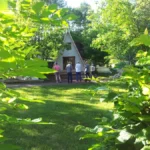
Profitez de l'agréable jardin du château pour découvrir l'exposition à ciel ouvert : toute l'épopée de la construction des barrages hydroélectriques de Brommat et de Sarrans.
En 1934, le barrage-usine hydroélectrique de Sarrans constituait le plus important chantier et le plus gros complexe hydroélectrique d'Europe. Elle alimentait 15% de la population française. Aujourd'hui, l'aménagement hydroélectrique de Sarrans fait partie des 15 sites de production EDF qui composent la chaîne hydroélectrique Lot-Truyère. Un peu d'histoire…
La Maison Forte : au XVIème siècle, les protestants se sont emparés du “fort” de Brommat. C'est la première mention de ce “château”. Il s'agirait en fait d'un prieuré appartenant à l'abbaye de Conques, érigé au XVème siècle. Au XVIIIème siècle, la bâtisse menace ruine. Louis XV autorise la démolition d'une partie du prieuré à la condition de sauvegarder un bâtiment pour le logement des fermiers et de la récolte. C'est cette construction que l'on peut voir aujourd'hui à côté de l'église.
Panneaux d'information, théâtre de verdure, jeux d'eau, tables de pique-nique et parking vous permettent de passer un agréable moment. Le jardin est accessible aux personnes à mobilité réduite.
English
Take advantage of the pleasant garden of the castle to discover the open-air exhibition: the whole epic of the construction of the hydroelectric dams of Brommat and Sarrans.
In 1934, the hydroelectric dam-factory of Sarrans was the most important construction site and the biggest hydroelectric complex in Europe. It supplied 15% of the French population. Today, the Sarrans hydroelectric scheme is one of the 15 EDF production sites that make up the Lot-Truyère hydroelectric chain. A little history..
La Maison Forte : in the 16th century, the Protestants took over the "fort" of Brommat. This is the first mention of this "castle". It would in fact be a priory belonging to the abbey of Conques, built in the 15th century. In the 18th century, the building was in danger of ruin. Louis XV authorized the demolition of part of the priory on the condition that a building be saved to house the farmers and the harvest. It is this building that can be seen today next to the church
Information panels, a green theatre, water games, picnic tables and a car park make for a pleasant stay. The garden is accessible to people with reduced mobility.
Deutsch
Nutzen Sie den angenehmen Garten des Schlosses, um die Freiluftausstellung zu entdecken: das ganze Epos des Baus der Wasserkraftwerke von Brommat und Sarrans.
1934 war die Staudamm-Wasserkraftanlage von Sarrans die größte Baustelle und der größte Wasserkraftkomplex Europas. Sie versorgte 15% der französischen Bevölkerung mit Strom. Heute gehört die Wasserkraftanlage von Sarrans zu den 15 EDF-Produktionsstätten, die die Wasserkraftkette Lot-Truyère bilden. Ein wenig Geschichte..
La Maison Forte: Im 16. Jahrhundert eroberten die Protestanten das "Fort" von Brommat. Dies ist die erste Erwähnung dieser "Festung". Tatsächlich soll es sich um ein Priorat gehandelt haben, das zur Abtei von Conques gehörte und im 15. Jahrhundert errichtet wurde. Im 18. Jahrhundert drohte das Gebäude zu verfallen. Ludwig XV. genehmigte den Abriss eines Teils des Priorats unter der Bedingung, dass ein Gebäude für die Unterbringung der Bauern und der Ernte erhalten blieb. Dieses Gebäude ist heute neben der Kirche zu sehen
Informationstafeln, ein grünes Theater, Wasserspiele, Picknicktische und Parkplätze sorgen dafür, dass Sie eine angenehme Zeit verbringen können. Der Garten ist für Menschen mit eingeschränkter Mobilität zugänglich.
Dutch
Profiteer van de aangename tuin van het kasteel om de openluchttentoonstelling te ontdekken: het hele epos van de bouw van de waterkrachtcentrales van Brommat en Sarrans.
In 1934 was de waterkrachtcentrale van Sarrans de belangrijkste bouwplaats en het grootste waterkrachtcomplex van Europa. Het leverde 15% van de Franse bevolking. Tegenwoordig is de waterkrachtcentrale van Sarrans een van de 15 productielocaties van EDF die samen de waterkrachtketen van Lot-Truyère vormen. Een beetje geschiedenis..
La Maison Forte: in de 16e eeuw namen de protestanten het "fort" van Brommat over. Dit is de eerste vermelding van dit "kasteel". Het was namelijk een priorij van de abdij van Conques, gebouwd in de 15e eeuw. In de 18e eeuw dreigde het gebouw te vervallen. Lodewijk XV stond de afbraak van een deel van de priorij toe, op voorwaarde dat een gebouw zou worden gespaard om de boeren en de oogst te huisvesten. Het is dit gebouw dat vandaag de dag naast de kerk te zien is
Informatiepanelen, een groen theater, waterspelen, picknicktafels en een parkeerplaats zorgen voor een aangenaam verblijf. De tuin is toegankelijk voor personen met beperkte mobiliteit.
Español
Aproveche el agradable jardín del castillo para descubrir la exposición al aire libre: toda la epopeya de la construcción de las presas hidroeléctricas de Brommat y Sarrans.
En 1934, la presa-fábrica hidroeléctrica de Sarrans era la obra más importante y el mayor complejo hidroeléctrico de Europa. Abastece al 15% de la población francesa. Hoy en día, la central hidroeléctrica de Sarrans es uno de los 15 centros de producción de EDF que componen la cadena hidroeléctrica del Lot-Truyère. ¿Un poco de historia?
La Maison Forte: en el siglo XVI, los protestantes tomaron el fuerte de Brommat. Esta es la primera mención de este "castillo". En realidad, era un priorato perteneciente a la abadía de Conques, construido en el siglo XV. En el siglo XVIII, el edificio estaba en peligro de ruina. Luis XV autorizó la demolición de una parte del priorato a condición de que se salvara un edificio para albergar a los campesinos y la cosecha. Es este edificio el que se puede ver hoy en día junto a la iglesia
Los paneles informativos, el teatro verde, los juegos de agua, las mesas de picnic y el aparcamiento hacen que la estancia sea agradable. El jardín es accesible para personas con movilidad reducida.
Italiano
Approfittate del piacevole giardino del castello per scoprire la mostra all'aperto: l'intera epopea della costruzione delle dighe idroelettriche di Brommat e Sarrans.
Nel 1934, la diga-fabbrica idroelettrica di Sarrans era il più importante cantiere e il più grande complesso idroelettrico d'Europa. Riforniva il 15% della popolazione francese. Oggi l'impianto idroelettrico di Sarrans è uno dei 15 siti di produzione EDF che compongono la catena idroelettrica del Lot-Truyère. Un po' di storia?
La Maison Forte: nel XVI secolo, i protestanti si impadronirono del forte di Brommat. Questa è la prima menzione di questo "castello". Si trattava infatti di un priorato appartenente all'abbazia di Conques, costruito nel XV secolo. Nel XVIII secolo l'edificio era in pericolo di rovina. Luigi XV autorizzò la demolizione di una parte del priorato a condizione di salvare un edificio per ospitare i contadini e il raccolto. Questo edificio è visibile oggi accanto alla chiesa
Pannelli informativi, un teatro verde, giochi d'acqua, tavoli da picnic e un parcheggio rendono piacevole il soggiorno. Il giardino è accessibile alle persone con mobilità ridotta.
Histoire - Industrie
Jardin du château de Brommat, 12600 Brommat

Crédits: Office de Tourisme en Aubrac