Eglise Saint-Pierre et Saint-Paul de Ligny-Le-Châtel – Ligny-le-Châtel
My Tourisme > Sites Culturels > Eglise Saint-Pierre et Saint-Paul de Ligny-Le-Châtel – Ligny-le-Châtel
Description
English
Deutsch
Dutch
Español
Italiano
Description
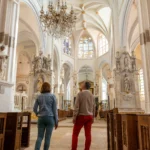
L’église actuelle St Pierre et St Paul de Ligny-le-Châtel date du début du XVIe siècle (XIIe pour la partie la plus ancienne). L’église eut à subir les nombreux événements dramatiques que connut la ville (pillages et incendies) et fut transformée à plusieurs époques. A la fin du XVe siècle, les Linéens voulurent agrandir leur église et s’adressèrent au chapitre de la cathédrale de Langres. Les chanoines hésitèrent longtemps mais finalement, en 1539, un accord finit par être conclu avec les habitants de Ligny qui s’engagèrent à construire les chapelles. Le 27 août 1554, la première pierre fut posée. La construction du choeur dura jusqu’en 1610 ou 1624. Un aussi long délai s’explique par les difficultés financières des familles qui s’étaient engagées dans la construction des chapelles (l’incendie de 1611 ruina tous les habitants). Il se peut aussi que, les générations se succédant, l’enthousiasme initial se soit refroidi.
English
The present church of St Peter and St Paul of Ligny-le-Châtel dates from the beginning of the 16th century (12th century for the oldest part) The church had to undergo the many dramatic events that the town experienced (looting and fires) and was transformed at several times. At the end of the 15th century, the people of Liné wanted to enlarge their church and approached the chapter of Langres cathedral. The canons hesitated for a long time but finally, in 1539, an agreement was reached with the inhabitants of Ligny who agreed to build the chapels. On August 27, 1554, the first stone was laid. The construction of the choir lasted until 1610 or 1624. Such a long delay can be explained by the financial difficulties of the families who had committed themselves to the construction of the chapels (the fire of 1611 ruined all the inhabitants). It is also possible that the initial enthusiasm cooled down with the passing generations.
Deutsch
Die heutige Kirche St Pierre et St Paul in Ligny-le-Châtel stammt aus dem frühen 16. Jahrhundert (12. Jahrhundert für den ältesten Teil). Die Kirche musste die vielen dramatischen Ereignisse, die die Stadt erlebte (Plünderungen und Brände), über sich ergehen lassen und wurde in mehreren Epochen umgebaut. Ende des 15. Jahrhunderts wollten die Linéens ihre Kirche vergrößern und wandten sich an das Kapitel der Kathedrale von Langres. Die Domherren zögerten lange, aber schließlich kam es 1539 zu einer Einigung mit den Einwohnern von Ligny, die sich zum Bau der Kapellen verpflichteten. Am 27. August 1554 wurde der Grundstein gelegt. Der Bau des Chors dauerte bis 1610 oder 1624. Eine so lange Zeitspanne lässt sich durch die finanziellen Schwierigkeiten der Familien erklären, die sich für den Bau der Kapellen engagiert hatten (der Brand von 1611 ruinierte alle Bewohner). Es könnte auch sein, dass der anfängliche Enthusiasmus durch die aufeinanderfolgenden Generationen abgekühlt war.
Dutch
De huidige kerk van Sint-Petrus en Sint-Paulus in Ligny-le-Châtel dateert uit het begin van de 16e eeuw (het oudste deel is uit de 12e eeuw) De kerk heeft de vele dramatische gebeurtenissen in de stad (plunderingen en branden) moeten doorstaan en is herhaaldelijk veranderd. Aan het eind van de 15e eeuw wilden de inwoners van Liné hun kerk uitbreiden en benaderden zij het kapittel van de kathedraal van Langres. De kanunniken aarzelden lang, maar uiteindelijk werd in 1539 een akkoord bereikt met de inwoners van Ligny, die ermee instemden de kapellen te bouwen. Op 27 augustus 1554 werd de eerste steen gelegd. De bouw van het koor duurde tot 1610 of 1624. Zo'n lange vertraging kan worden verklaard door de financiële moeilijkheden van de families die zich hadden ingezet voor de bouw van de kapellen (de brand van 1611 ruïneerde alle bewoners). Het is ook mogelijk dat het aanvankelijke enthousiasme met elke opeenvolgende generatie afkoelde.
Español
La actual iglesia de San Pedro y San Pablo de Ligny-le-Châtel data de principios del siglo XVI (la parte más antigua es del siglo XII) La iglesia tuvo que soportar los numerosos acontecimientos dramáticos que vivió la ciudad (saqueos e incendios) y se transformó en varias ocasiones. A finales del siglo XV, los habitantes de Liné quisieron ampliar su iglesia y se dirigieron al cabildo de la catedral de Langres. Los canónigos dudaron durante mucho tiempo, pero finalmente, en 1539, se llegó a un acuerdo con los habitantes de Ligny que aceptaron construir las capillas. El 27 de agosto de 1554 se colocó la primera piedra. La construcción del coro duró hasta 1610 o 1624. Este largo retraso se explica por las dificultades financieras de las familias que se habían comprometido a construir las capillas (el incendio de 1611 arruinó a todos los habitantes). También es posible que el entusiasmo inicial se haya enfriado con el paso de las generaciones.
Italiano
L'attuale chiesa di San Pietro e Paolo a Ligny-le-Châtel risale all'inizio del XVI secolo (la parte più antica è del XII secolo) La chiesa ha dovuto sopportare i numerosi eventi drammatici che la città ha vissuto (saccheggi e incendi) ed è stata trasformata in più occasioni. Alla fine del XV secolo, gli abitanti di Liné volevano ingrandire la loro chiesa e si rivolsero al capitolo della cattedrale di Langres. I canonici esitarono a lungo, ma alla fine, nel 1539, fu raggiunto un accordo con gli abitanti di Ligny che accettarono di costruire le cappelle. Il 27 agosto 1554 fu posta la prima pietra. La costruzione del coro durò fino al 1610 o 1624. Questo lungo ritardo si spiega con le difficoltà finanziarie delle famiglie che si erano impegnate nella costruzione delle cappelle (l'incendio del 1611 rovinò tutti gli abitanti). È anche possibile che l'entusiasmo iniziale si sia raffreddato con il passare delle generazioni.