Eglise Saint-Martin – Caupenne
Description
English
Deutsch
Dutch
Español
Italiano
Description
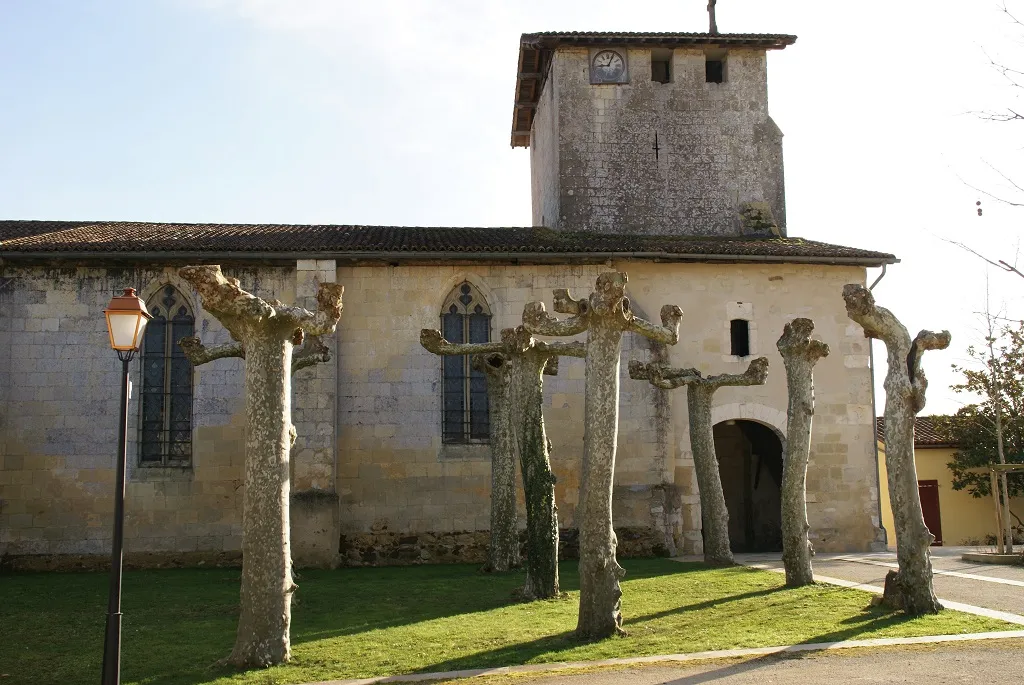
De l’église construite au XIIe siècle, seule subsiste aujourd’hui l’abside et quelques éléments du décor comme le cul-de-four, le berceau du chœur et deux chapiteaux derrière le retable. La nef est complétée par une tour au XIVe siècle. Au siècle suivant, l’église est encore agrandie. Au XVIIe siècle, un porche est ajouté au nord de la tour. Les notables s'y font enterrer. Douze éléments du mobilier de l’église sont protégés au titre des Monuments Historiques. Dans la nef se distingue un lustre en bois, ce rare et luxueux luminaire date du XVIIIe siècle. Remarquez aussi les boiseries entourant tout l'édifice. Fait de trois marbres différents, l’imposant maître-autel, du XVIIIe siècle, est un bel exemple du style rocaille. L’ensemble est réalisé par les frères Mazzetti, sculpteurs italiens bénéficiant alors d’une grande renommée.
English
Of the church built in the 12th century, only the apse and some elements of the decoration remain today, such as the cul-de-four, the choir's cradle and two capitals behind the altarpiece. The nave was completed with a tower in the 14th century. In the following century, the church was enlarged again. In the 17th century, a porch was added to the north of the tower. Notables were buried there. Twelve elements of the church's furniture are protected as Historic Monuments. In the nave, a wooden chandelier stands out, this rare and luxurious light fixture dates from the 18th century. Notice also the woodwork surrounding the whole building. Made of three different marbles, the imposing high altar, from the 18th century, is a beautiful example of the rocaille style. It was made by the Mazzetti brothers, Italian sculptors of great renown at the time.
Deutsch
Von der im 12. Jahrhundert erbauten Kirche sind heute nur noch die Apsis und einige Dekorelemente wie der Cul-de-four, die Wiege des Chors und zwei Kapitelle hinter dem Altarraum erhalten. Das Kirchenschiff wurde im 14. Jahrhundert durch einen Turm ergänzt. Im darauffolgenden Jahrhundert wurde die Kirche weiter vergrößert. Im 17. Jahrhundert wird nördlich des Turms eine Vorhalle hinzugefügt. Die Honoratioren lassen sich dort beerdigen. Zwölf Teile des Kirchenmobiliars sind als historische Monumente geschützt. Im Kirchenschiff sticht ein hölzerner Kronleuchter hervor. Diese seltene und luxuriöse Leuchte stammt aus dem 18. Jahrhundert. Beachten Sie auch die Holzvertäfelung, die das gesamte Gebäude umgibt. Der imposante Hochaltar aus drei verschiedenen Marmorarten aus dem 18. Jahrhundert ist ein schönes Beispiel für den Rokokostil. Jahrhundert. Das Ganze wurde von den Brüdern Mazzetti gesch
Dutch
Van de in de 12e eeuw gebouwde kerk zijn vandaag alleen de apsis en enkele elementen van de versiering overgebleven, zoals de cul-de-four, het tongewelf van het koor en twee kapitelen achter het altaarstuk. In de 14e eeuw werd een toren aan het schip toegevoegd. In de volgende eeuw werd de kerk verder uitgebreid. In de 17e eeuw werd ten noorden van de toren een portiek toegevoegd. Notabelen werden er begraven. Twaalf meubelstukken in de kerk zijn beschermd als Historisch Monument. In het middenschip valt een houten kroonluchter op; deze zeldzame en luxueuze verlichting dateert uit de 18e eeuw. Let ook op het houtwerk rond het hele gebouw. Het imposante 18e-eeuwse hoogaltaar, gemaakt van drie verschillende soorten marmer, is een mooi voorbeeld van de rococostijl. Het werd gemaakt door de gebroeders Mazzetti, Italiaanse beeldhouwers van grote faam in die tijd.
Español
De la iglesia construida en el siglo XII, sólo se conservan hoy el ábside y algunos elementos de la decoración, como el cul-de-four, la cuna del coro y dos capiteles detrás del retablo. En el siglo XIV, se añadió una torre a la nave. En el siglo siguiente, la iglesia se amplió aún más. En el siglo XVII se añadió un porche al norte de la torre. Allí fueron enterradas personas notables. Doce elementos del mobiliario de la iglesia están protegidos como Monumentos Históricos. En la nave hay una araña de madera, una rara y lujosa luminaria que data del siglo XVIII. Obsérvese también la carpintería que rodea todo el edificio. El imponente altar mayor del siglo XVIII, realizado en tres mármoles diferentes, es un buen ejemplo del estilo rococó. Fue realizada por los hermanos Mazzetti, reconocidos escultores italianos de la época.
Italiano
Della chiesa costruita nel XII secolo rimangono oggi solo l'abside e alcuni elementi della decorazione, come il cul-de-four, la culla del coro e due capitelli dietro la pala d'altare. Nel XIV secolo fu aggiunta una torre alla navata centrale. Nel secolo successivo la chiesa fu ulteriormente ampliata. Nel XVII secolo fu aggiunto un portico a nord della torre. Vi sono stati sepolti personaggi illustri. Dodici arredi della chiesa sono tutelati come monumenti storici. Nella navata centrale si trova un lampadario in legno, un'illuminazione rara e lussuosa che risale al XVIII secolo. Da notare anche la boiserie che circonda l'intero edificio. L'imponente altare maggiore del XVIII secolo, realizzato con tre marmi diversi, è un bell'esempio di stile rococò. È stata realizzata dai fratelli Mazzetti, rinomati scultori italiani dell'epoca.
Dans le village
Classement: Monument Historique
, 40250 Caupenne
Crédits: Office de Tourisme Terres de Chalosse
Licence
Licence