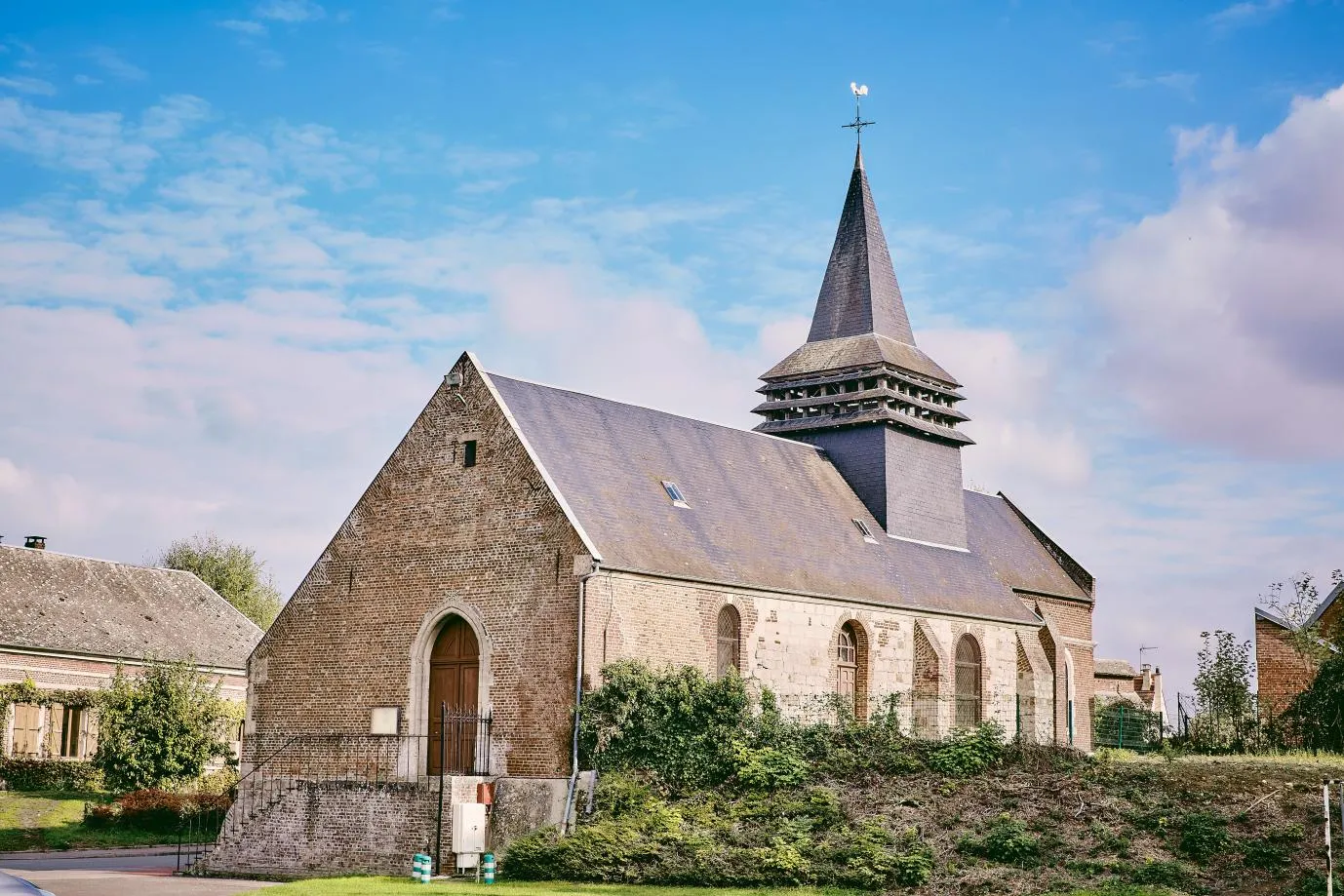
Eglise Saint-Martin – Ugny-le-Gay
Description
English
Deutsch
Dutch
Español
Italiano
Description
Église du XIVe qui à l’origine était une ancienne chapelle du château féodal qui se trouvait en face de la mairie actuelle. Détruite en partie au cours de la Première Guerre Mondiale, elle sera reconstruite en 1923. Il y a une verrière non signée qui représente le Calvaire du Christ. Elle fut posée vers 1928 ou 1929. L’église possède aussi un statuaire intéressant.
English
Church of the XIVth century which was originally a former chapel of the feudal castle which was in front of the current town hall. Partly destroyed during the First World War, it was rebuilt in 1923. There is an unsigned stained glass window representing the Calvary of Christ. It was installed around 1928 or 1929. The church also has an interesting statuary.
Deutsch
Kirche aus dem 14. Jahrhundert, die ursprünglich eine alte Kapelle der feudalen Burg war, die sich gegenüber dem heutigen Rathaus befand. Während des Ersten Weltkriegs wurde sie teilweise zerstört und 1923 wieder aufgebaut. Es gibt ein unsigniertes Glasfenster, das den Kalvarienberg Christi darstellt. Es wurde um 1928 oder 1929 angebracht. Die Kirche verfügt außerdem über ein interessantes Statuarium.
Dutch
14e-eeuwse kerk die oorspronkelijk een voormalige kapel was van het feodale kasteel dat tegenover het huidige stadhuis stond. Gedeeltelijk verwoest tijdens de Eerste Wereldoorlog, werd het herbouwd in 1923. Er is een ongesigneerd glas-in-loodraam dat de kruisiging van Christus voorstelt. Het werd geïnstalleerd rond 1928 of 1929. De kerk heeft ook een interessant standbeeld.
Español
La iglesia data del siglo XIV y originalmente era una antigua capilla del castillo feudal, que se encontraba frente al actual ayuntamiento. Fue parcialmente destruido durante la Primera Guerra Mundial y reconstruido en 1923. Hay una vidriera sin firmar que representa el Calvario de Cristo. Se instaló alrededor de 1928 o 1929. La iglesia también cuenta con una interesante estatuaria.
Italiano
La chiesa risale al XIV secolo e in origine era un'antica cappella del castello feudale, che sorgeva di fronte all'attuale municipio. Fu parzialmente distrutto durante la Prima Guerra Mondiale e ricostruito nel 1923. C'è una vetrata non firmata che rappresenta il Calvario di Cristo. È stato installato intorno al 1928 o 1929. La chiesa presenta anche un'interessante statuaria.
place de l'église, 02300 Ugny-le-Gay
Crédits: Jerome Halatre - OT Coeur de Picard


