Eglise Saint-Maixent de Niort – Niort
Description
English
Deutsch
Dutch
Español
Italiano
Description
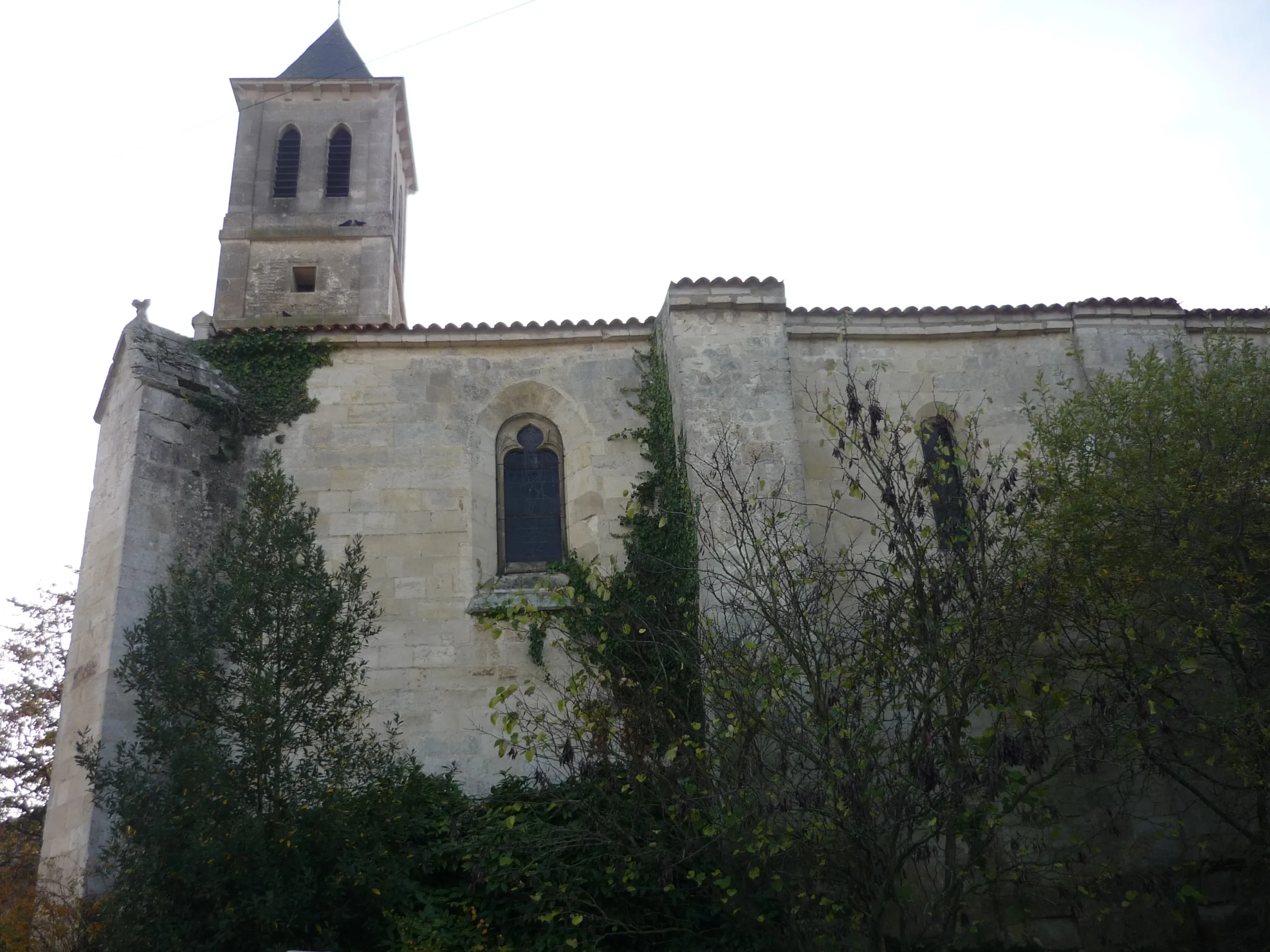
Bâti à flanc de coteau, l’édifice roman relève de l'abbaye de St-Maixent et appartient à l'archiprêtré d'Exoudun jusqu'à la Révolution française.
Ravagé lors des guerres de Religion, restauré partiellement au XVIIè s., il est agrandi à la fin du XVIIIè s. suite à l'augmentation du nombre de catholiques en proportion de la diminution du nombre de protestants. Les voûtes d'origine s'écroulent au cours des travaux, à cause de l'incompétence de l'entrepreneur Fillon, au dire de la paroisse, accusé d'avoir entreposé sur le toit des matériaux pour s'éviter la peine et les frais de les descendre et remonter et d'avoir enlevé les pierres de la base d'un pilier. De 7 à 800 tuiles ont été retirées des décombres ! Sa nef unique est aujourd'hui charpentée.
La statue du clocher, restauré en 1857, représente saint Maixent logé dans une niche à dais néogothique et foulant la fée serpente Mélusine.
English
Built on a hillside, the Romanesque building falls under the abbey of St-Maixent and belongs to the archpriesthood of Exoudun until the French Revolution.
Ravaged during the Wars of Religion, partially restored in the 17th century, it was enlarged at the end of the 18th century. following the increase in the number of Catholics in proportion to the decrease in the number of Protestants. The original vaults collapsed during the work, due to the incompetence of the contractor Fillon, according to the parish, accused of storing materials on the roof to avoid the pain and expense of lowering and raising them and removing the stones from the base of a pillar. From 7 to 800 tiles were removed from the rubble! Its unique nave is today built.
The statue of the bell tower, restored in 1857, depicts Saint Maixent housed in a neogothic dais niche and trampling the fairy snake Mélusine.
Deutsch
Das an einem Hang errichtete romanische Gebäude unterstand der Abtei von St-Maixent und gehörte bis zur Französischen Revolution zum Erzpriestertum Exoudun.
Jh. teilweise restauriert und Ende des 18. Jh. vergrößert, nachdem die Zahl der Katholiken im Verhältnis zur sinkenden Zahl der Protestanten gestiegen war. Die ursprünglichen Gewölbe stürzten während der Bauarbeiten aufgrund der Inkompetenz des Bauunternehmers Fillon ein, der von der Gemeinde beschuldigt wurde, Material auf dem Dach gelagert zu haben, um sich die Mühe und die Kosten zu ersparen, es hinunter- und hinaufzutragen, und die Steine von der Basis eines Pfeilers entfernt zu haben. Aus den Trümmern wurden zwischen 7 und 800 Dachziegel entfernt! Sein einziges Kirchenschiff ist heute gezimmert
Die Statue auf dem 1857 restaurierten Glockenturm stellt den Heiligen Maixent dar, der in einer Nische mit neogotischem Baldachin unte
Dutch
Het op een heuvel gebouwde Romaanse gebouw maakte deel uit van de abdij van St-Maixent en behoorde tot de Franse Revolutie tot het aartspriesterambt van Exoudun.
Verwoest tijdens de godsdienstoorlogen, gedeeltelijk hersteld in de 17e eeuw, werd het aan het eind van de 18e eeuw uitgebreid als gevolg van de toename van het aantal katholieken in verhouding tot de afname van het aantal protestanten. De oorspronkelijke gewelven zijn tijdens de werkzaamheden ingestort, volgens de parochie te wijten aan de onbekwaamheid van aannemer Fillon, die ervan werd beschuldigd materiaal op het dak te hebben opgeslagen om de moeite en de kosten van het afbreken en weer opzetten te vermijden, en de stenen van de voet van een pijler te hebben verwijderd. Tussen de 7 en 800 tegels werden uit het puin gehaald! Het enkele schip is nu ingelijst
Het standbeeld in de klokkentoren, dat in 1857 werd gerestaureerd
Español
Construido en ladera, el edificio románico pertenece a la abadía de St-Maixent y pertenece al archipiélago de Exoudun hasta la Revolución Francesa.
Devastado durante las guerras de Religión, restaurado parcialmente en el siglo XVII, se amplió a finales del siglo XVIII. debido al aumento del número de católicos en proporción a la disminución del número de protestantes. Las bóvedas originales se derrumban durante los trabajos, debido a la incompetencia del empresario Fillon, según la parroquia, acusado de almacenar en el techo materiales para evitar el dolor y los gastos de bajarlos y subir y de retirar las piedras de la base de un pilar. ¡Se han retirado de los escombros entre 7 y 800 baldosas! Su nave única es hoy carpintera.
La estatua del campanario, restaurada en 1857, representa a san Maixent alojado en un nicho neogótico que pisa a la hada serpiente Melusina.
Italiano
Costruito su una collina, l'edificio romanico faceva parte dell'abbazia di St-Maixent e appartenne all'arcipretura di Exoudun fino alla Rivoluzione francese.
Devastata durante le guerre di religione, parzialmente restaurata nel XVII secolo, fu ampliata alla fine del XVIII secolo in seguito all'aumento del numero dei cattolici in proporzione alla diminuzione dei protestanti. Le volte originali sono crollate durante i lavori, a causa dell'incompetenza dell'appaltatore Fillon, secondo la parrocchia, accusato di aver depositato i materiali sul tetto per evitare il problema e le spese di smontarli e rimontarli, e di aver rimosso le pietre dalla base di un pilastro. Dalle macerie sono state rimosse tra le 7 e le 800 piastrelle! La sua navata unica è ora incorniciata
La statua del campanile, restaurata nel 1857, rappresenta Saint Maixent, alloggiato in una nicchia del baldacchino neogotico, che calpesta la fata serpente Mélusine.
Rue du Sableau, 79000 Niort
Crédits: Office de Tourisme de Niort-Marais Poitevin, 2011
Licence
Licence