Abbaye de Saint-Maixent-l'École – Saint-Maixent-l'École
Description
English
Deutsch
Dutch
Español
Italiano
Description
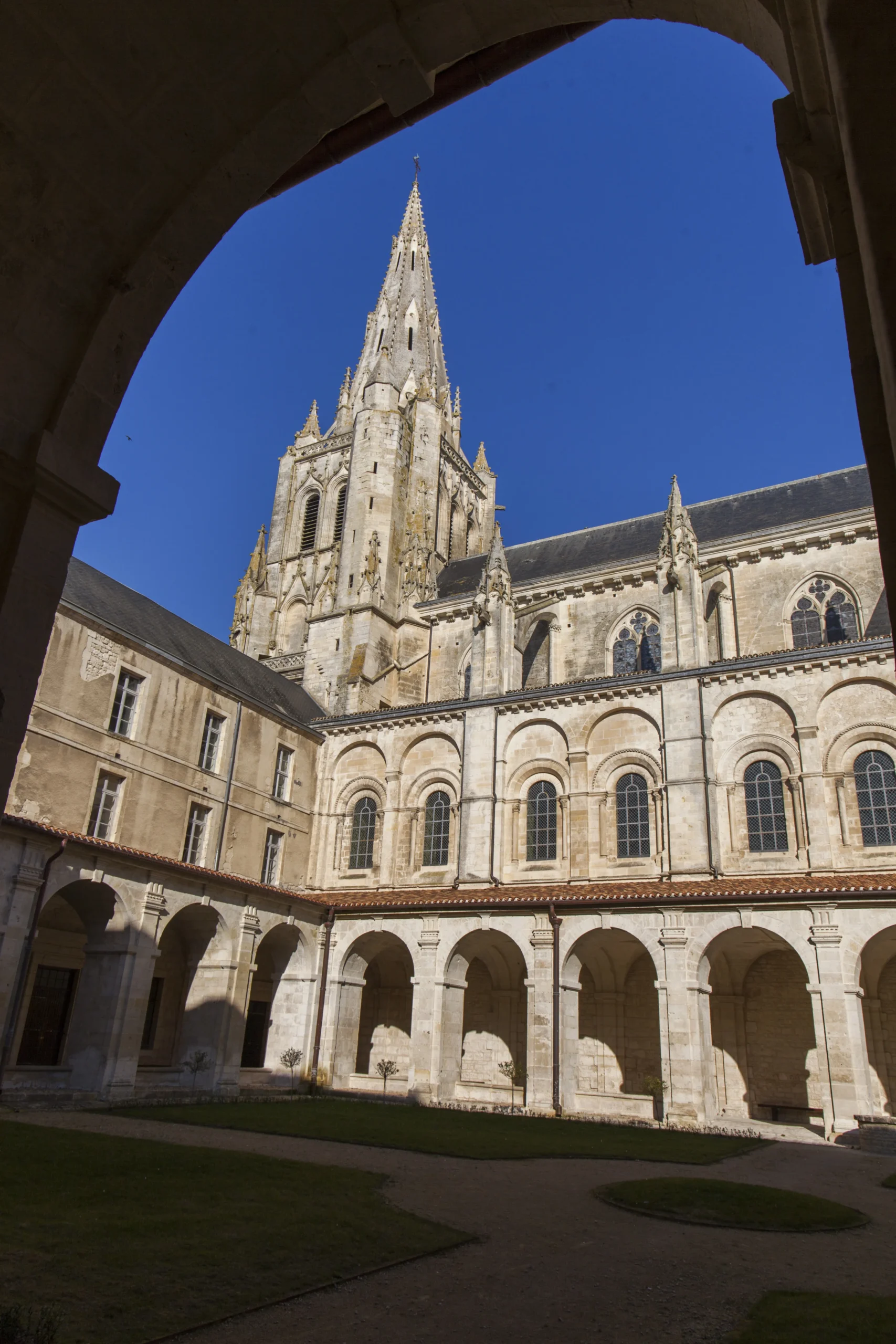
Ouverte au public, l'abbaye héberge plus d'un trésor, à commencer par une certain nombre d'objets mobiliers (retable en pierre, cuve baptismale, monolithique à seize lobes, bénitier roman). Dans l'église abbatiale, on contemplera également le magnifique jubé du XVIIe siècle qui entourait le chœur des moines, dont certains morceaux sont diversement réemployés : boiseries sculptées, confessionnal, chaire, porte classique du jubé (qui est l'actuelle porte d'entrée de la sacristie), stalles. On pourra accéder à la crypte, qui abrite les sarcophages des VIe et VIIe siècles de saint Maixent et de saint Léger. Enfin, on pourra découvrir les toiles ornant les murs de l'abbaye, dont certaines sont classées au titre des Monuments historiques. Aujourd'hui le cloître et la salle capitulaire servent à des expositions et évènements culturels.
English
Open to the public, the abbey houses more than one treasure, starting with a certain number of movable objects (stone tables, monolithic baptismal font with sixteen lobes, Romanesque font). In the abbey church, you can also contemplate the magnificent 17th century rood screen which surrounded the choir of the monks, some parts of which have been reused in various ways: carved woodwork, confessional, pulpit, classic rood screen door (which is the current entrance door of the sacristy), stalls. You can access the crypt, which houses the 6th and 7th century sarcophagi of Saint Maixent and Saint Léger. Finally, we can discover the paintings adorning the walls of the abbey, some of which are classified as Historic Monuments. Today the cloister and the chapter house are used for exhibitions and cultural events.
Deutsch
Die Abtei ist für die Öffentlichkeit zugänglich und beherbergt mehr als einen Schatz, angefangen bei einer Reihe von beweglichen Objekten (Steintische, ein monolithisches Taufbecken mit sechzehn Lappen, ein romanisches Weihwasserbecken). Jahrhundert, der den Chor der Mönche umgab und dessen Teile auf verschiedene Weise wiederverwendet wurden: geschnitzte Holzarbeiten, Beichtstuhl, Kanzel, klassische Tür des Lettners (die heutige Eingangstür zur Sakristei), Chorgestühl. Die Krypta mit den Sarkophagen des Heiligen Maixent und des Heiligen Leger aus dem 6. und 7. Schließlich kann man die Gemälde entdecken, die die Wände der Abtei schmücken und von denen einige als historische Monumente klassifiziert sind. Heute werden der Kreuzgang und der Kapitelsaal für Ausstellungen und kulturelle Veranstaltungen genutzt.
Dutch
De abdij is toegankelijk voor het publiek en herbergt meer dan een schat, te beginnen met een aantal roerende voorwerpen (stenen tafels, een monolithische doopvont met zestien lobben, een romaanse doopvont). In de abdijkerk kan men ook het prachtige oksaal uit de 17e eeuw bekijken dat het monnikenkoor omringde en waarvan sommige op verschillende manieren zijn hergebruikt: houtsnijwerk, biechtstoel, preekstoel, klassieke oksaaldeur (de huidige toegangsdeur tot de sacristie) en koorstoelen. De crypte, waarin zich de 6e en 7e eeuwse sarcofagen van Saint Maixent en Saint Léger bevinden, is toegankelijk. Tot slot kunt u de schilderijen op de muren van de abdij ontdekken, waarvan sommige als Historisch Monument zijn geclassificeerd. Tegenwoordig worden het klooster en de kapittelzaal gebruikt voor tentoonstellingen en culturele evenementen.
Español
La abadía está abierta al público y alberga más de un tesoro, empezando por una serie de objetos muebles (mesas de piedra, una pila bautismal monolítica de dieciséis lóbulos, una pila románica). En la iglesia de la abadía, también se puede contemplar el magnífico biombo del siglo XVII que rodeaba el coro de los monjes, algunos de los cuales han sido reutilizados de diversas formas: carpintería tallada, confesionario, púlpito, puerta clásica del biombo (que es la actual puerta de entrada a la sacristía) y sillería. Se puede acceder a la cripta, que alberga los sarcófagos de San Maixent y San Léger de los siglos VI y VII. Por último, podrá descubrir las pinturas de los muros de la abadía, algunas de las cuales están clasificadas como Monumentos Históricos. En la actualidad, el claustro y la sala capitular se utilizan para exposiciones y actos culturales.
Italiano
Aperta al pubblico, l'abbazia ospita più di un tesoro, a cominciare da alcuni manufatti (pala d'altare in pietra, fonte battesimale, monolite a sedici lobi, fonte romanica). Nella chiesa abbaziale si può anche ammirare il magnifico paravento seicentesco che circondava il coro dei monaci, alcuni pezzi del quale sono stati riutilizzati in vario modo: boiserie intagliata, confessionale, pulpito, porta classica del paravento (che oggi è la porta d'ingresso della sacrestia) e stalli. La cripta ospita i sarcofagi di Saint Maixent e Saint Léger del VI e VII secolo. Infine, si possono scoprire i dipinti che ornano le pareti dell'abbazia, alcuni dei quali sono classificati come Monumenti storici. Oggi il chiostro e la sala capitolare sono utilizzati per mostre ed eventi culturali.