EGLISE SAINT-JEAN-BAPTISTE – Chanac
Description
English
Deutsch
Dutch
Español
Italiano
Description
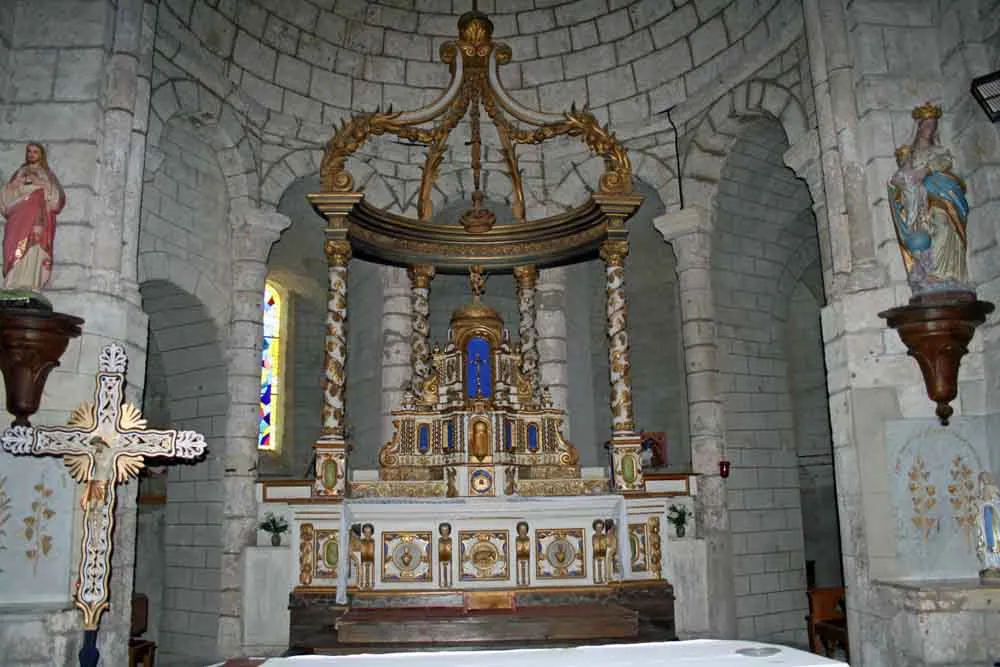
Ancien prieuré bénédictin qui appartient au domaine de l’Evêque. Construit au XIIIe siècle, certainement sous l’épiscopat de Guillaume IV de Peyre. Magnifique maître autel classé au titre des Monuments Historiques en 1924. Selon la tradition, il proviendrait du château de Chanac, de la chapelle disparue des évêques de Mende. Les armoiries du Monseigneur Cruzy de Marcillac (évêque entre 1628-1659) sur le tabernacle en font certainement le commanditaire du tabernacle.
English
Former Benedictine priory belonging to the Bishop's estate. Built in the 13th century, certainly under the episcopate of William IV of Peyre. Magnificent high altar classified as a Historic Monument in 1924. According to the tradition, it would come from the castle of Chanac, from the disappeared chapel of the bishops of Mende. The coat of arms of Monseigneur Cruzy de Marcillac (bishop between 1628-1659) on the tabernacle certainly makes him the patron of the tabernacle.
Deutsch
Ehemaliges Benediktinerpriorat, das zur Domäne des Bischofs gehört. Jahrhundert erbaut, wahrscheinlich unter dem Episkopat von Guillaume IV de Peyre. Wunderschöner Hochaltar, der 1924 als historisches Monument klassifiziert wurde. Der Tradition zufolge soll er aus dem Schloss Chanac stammen, aus der verschwundenen Kapelle der Bischöfe von Mende. Das Wappen von Monsignore Cruzy de Marcillac (Bischof zwischen 1628-1659) auf dem Tabernakel macht ihn sicherlich zum Auftraggeber des Tabernakels.
Dutch
Voormalige benedictijner priorij die tot het domein van de bisschop behoorde. Gebouwd in de 13e eeuw, zeker onder het bisschopsambt van Guillaume IV de Peyre. Het prachtige hoofdaltaar werd in 1924 geklasseerd als Historisch Monument. Volgens de overlevering kwam het uit het Château de Chanac, de verdwenen kapel van de bisschoppen van Mende. Het wapenschild van Monseigneur Cruzy de Marcillac (bisschop tussen 1628 en 1659) op het tabernakel maakt hem zeker tot de opdrachtgever van het tabernakel.
Español
Antiguo priorato benedictino perteneciente al dominio episcopal. Construido en el siglo XIII, seguramente bajo el episcopado de Guillaume IV de Peyre. El magnífico altar mayor fue declarado Monumento Histórico en 1924. Según la tradición, procede del castillo de Chanac, la desaparecida capilla de los obispos de Mende. El escudo de armas de Monseigneur Cruzy de Marcillac (obispo entre 1628 y 1659) en el tabernáculo le convierte sin duda en la persona que encargó el tabernáculo.
Italiano
Ex priorato benedettino appartenente al dominio vescovile. Costruito nel XIII secolo, certamente sotto l'episcopato di Guillaume IV de Peyre. Il magnifico altare maggiore è stato dichiarato monumento storico nel 1924. Secondo la tradizione, proveniva dal Castello di Chanac, la cappella scomparsa dei vescovi di Mende. Lo stemma di Monseigneur Cruzy de Marcillac (vescovo tra il 1628 e il 1659) sul tabernacolo lo rende certamente il committente.
Clientèle: Seniors
, 48230 Chanac
Crédits: OT AGDT


