ÉGLISE SAINT-GOHARD
Description
English
Deutsch
Dutch
Español
Italiano
Description
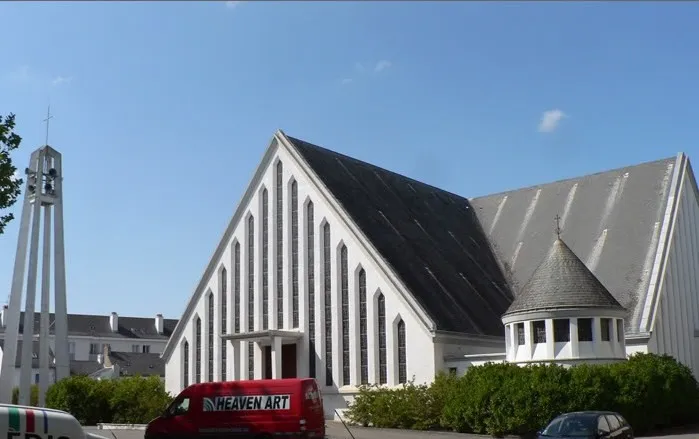
Après sa destruction pendant la Seconde Guerre mondiale, la nouvelle église de Saint-Gohard est totalement reconstruite en 1955 dans un style architectural typique de la Reconstruction environ 800 m plus au nord de son emplacement d'origine. Sa réalisation et son aménagement sont le fruit d'un travail collaboratif entre architectes, ingénieurs et artisans d'art qui l'ont doté de nombreuses œuvres sacrées de grande qualité. Édifiée depuis un plan en forme de croix grecque, elle est composée de 3 nefs identiques et de baies verticales aux vitraux colorés. Grâce aux nouvelles techniques de construction des années 1950, et au béton armé, l'église se caractérise par un vaste espace totalement ouvert dépourvu de tout pilier ou de support porteur au croisement des nefs. Sa couverture très basse en ardoise et ses façades en béton peintes en blanc forment de grands pignons triangulaires qui lui donnent sa signature architecturale si particulière. L'église Saint-Gohard est reconnue au titre du label "Architecture Contemporaine Remarquable" par le Ministère de la Culture anciennement appelé "Patrimoine du XXe siècle".
English
After its destruction during the Second World War, the new church of St. Gohard was completely rebuilt in 1955 in a typical Reconstruction style about 800 m north of its original location. Its construction and furnishings are the result of a collaborative effort between architects, engineers and craftsmen, who provided it with numerous high-quality sacred works. Built on a Greek cross plan, it has three identical naves and vertical bays with coloured stained glass windows. Thanks to the new construction techniques of the 1950s, and to the use of reinforced concrete, the church is characterized by a vast, totally open space with no pillars or load-bearing supports at the crossing of the naves. Its very low slate roof and white painted concrete facades form large triangular gables which give it its particular architectural signature. The Saint-Gohard church has been awarded the label "Remarkable Contemporary Architecture" by the Ministry of Culture, formerly called "20th Century Heritage".
Deutsch
Nach ihrer Zerstörung im Zweiten Weltkrieg wurde die neue Kirche Saint-Gohard 1955 im typischen architektonischen Stil des Wiederaufbaus etwa 800 m nördlich ihres ursprünglichen Standorts vollständig neu errichtet. Ihr Bau und ihre Einrichtung sind das Ergebnis einer Zusammenarbeit von Architekten, Ingenieuren und Kunsthandwerkern, die sie mit zahlreichen hochwertigen sakralen Kunstwerken ausstatteten. Die Kirche wurde in Form eines griechischen Kreuzes errichtet und besteht aus drei identischen Schiffen und vertikalen Fenstern mit bunten Glasfenstern. Dank der neuen Bautechniken der 1950er Jahre und dem Einsatz von Stahlbeton zeichnet sich die Kirche durch einen großen, offenen Raum aus, der an den Kreuzungen der Schiffe keine tragenden Säulen oder Stützen aufweist. Ihr sehr niedriges Schieferdach und die weiß gestrichenen Betonfassaden bilden große dreieckige Giebel, die ihr ihre ganz besondere architektonische Signatur verleihen. Die Kirche Saint-Gohard wurde vom französischen Kulturministerium mit dem Label "Architecture Contemporaine Remarquable" (Bemerkenswerte zeitgenössische Architektur) ausgezeichnet, das früher als "Patrimoine du XXe siècle" (Kulturerbe des 20. Jahrhunderts) bezeichnet wurde.
Dutch
Na de verwoesting tijdens de Tweede Wereldoorlog werd de nieuwe kerk van St. Gohard in 1955 volledig herbouwd in een typische Reconstructionistische bouwstijl ongeveer 800 m verder naar het noorden van de oorspronkelijke locatie. De bouw en de inrichting ervan waren het resultaat van een samenwerking tussen architecten, ingenieurs en ambachtslieden, die het van talrijke sacrale werken van hoge kwaliteit voorzagen. Gebouwd op een Grieks kruisplan, heeft het drie identieke schepen en verticale traveeën met gekleurde glas-in-loodramen. Dankzij de nieuwe bouwtechnieken van de jaren 1950 en het gebruik van gewapend beton wordt de kerk gekenmerkt door een grote, volledig open ruimte zonder pilaren of dragende steunen bij de kruising van de schepen. Het zeer lage leien dak en de witgeschilderde betonnen gevels vormen grote driehoekige gevels die het zijn kenmerkende architectonische signatuur geven. De kerk van Saint-Gohard heeft van het ministerie van Cultuur het label "Opmerkelijke hedendaagse architectuur" gekregen, voorheen "Erfgoed van de 20e eeuw".
Español
Tras su destrucción durante la Segunda Guerra Mundial, la nueva iglesia de San Gohard fue completamente reconstruida en 1955 en un estilo arquitectónico típicamente reconstruccionista, a unos 800 m más al norte de su ubicación original. Su construcción y amueblamiento fueron el resultado de un esfuerzo de colaboración entre arquitectos, ingenieros y artesanos, que lo dotaron de numerosas obras sagradas de gran calidad. Construida en planta de cruz griega, tiene tres naves idénticas y tramos verticales con vidrieras de colores. Gracias a las nuevas técnicas de construcción de los años 50, y al uso del hormigón armado, la iglesia se caracteriza por un amplio espacio totalmente abierto, sin pilares ni soportes de carga en el cruce de las naves. Su tejado de pizarra, muy bajo, y sus fachadas de hormigón pintadas de blanco forman grandes frontones triangulares que le dan su distintivo arquitectónico. La iglesia de Saint-Gohard ha sido galardonada por el Ministerio de Cultura con la etiqueta "Arquitectura contemporánea notable", antes conocida como "Patrimonio del siglo XX".
Italiano
Dopo la sua distruzione durante la Seconda Guerra Mondiale, la nuova chiesa di San Gohard fu completamente ricostruita nel 1955 in un tipico stile architettonico ricostruzionista circa 800 m più a nord rispetto alla sua posizione originale. La sua costruzione e il suo arredamento sono stati il risultato di una collaborazione tra architetti, ingegneri e artigiani, che l'hanno dotata di numerose opere sacre di alta qualità. Costruita su una pianta a croce greca, presenta tre navate identiche e campate verticali con vetrate colorate. Grazie alle nuove tecniche costruttive degli anni Cinquanta e all'uso del cemento armato, la chiesa è caratterizzata da un vasto spazio totalmente aperto, privo di pilastri e supporti portanti all'incrocio delle navate. Il tetto molto basso in ardesia e le facciate in cemento verniciato di bianco formano grandi timpani triangolari che conferiscono all'edificio la sua caratteristica architettonica. La chiesa di Saint-Gohard è stata insignita del marchio "Notevole architettura contemporanea" dal Ministero della Cultura, precedentemente noto come "Patrimonio del XX secolo".