EGLISE DE MAS-SAINT-CHÉLY
Description
English
Deutsch
Dutch
Español
Italiano
Description
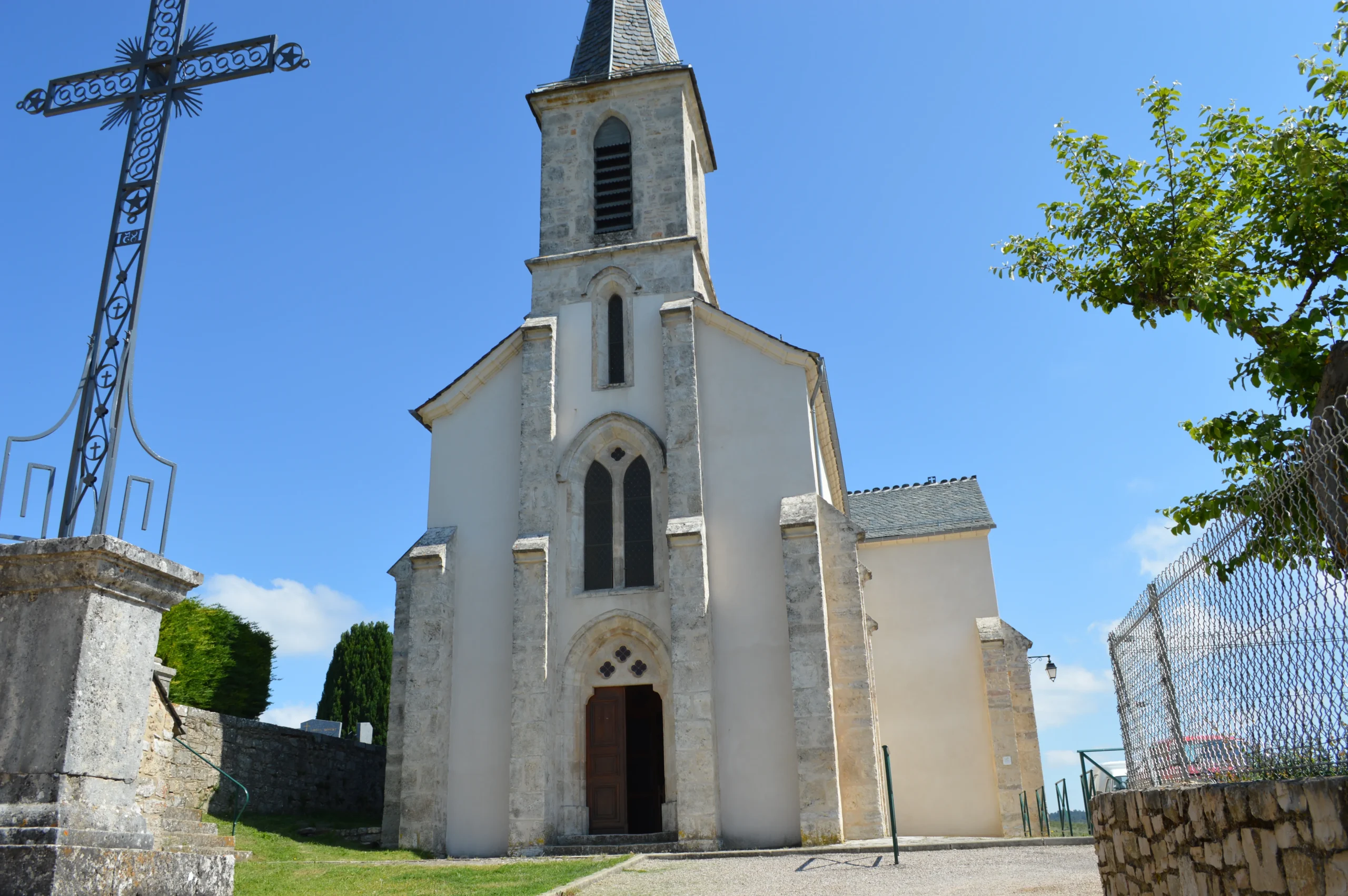
L'église de Mas St-Chély date du XIXe siècle. La taille imposante de l'édifice et son aspect élancé peuvent surprendre dans cet environnement aride du causse Méjean. Il s'agissait de réaffirmer la puissance de l’Église tout en faisant face à l'accroissement démographique. De style néo-gothique, l'église est organisée autour d'un plan en croix latine entièrement voûté d'arêtes. Le clocher-porche, qui constitue sa façade, présente un assemblage horizontal de baies encadrées par des contreforts, le tout se terminant par une flèche. L'église abrite aussi l'une des plus anciennes cloches du diocèse de Mende, datée de 1362 (classée M.H) et qui appartenait à l'origine à la chapelle Saint-Côme située non loin de là. Remarquable par la pureté de sa ligne, elle présente également deux inscriptions. La première, gothique, figure la dédicace de la cloche à saint Martin « MARTINUS VOCOR », (« je m'appelle Martin ») tandis que la seconde, plus récente, indique « J'APPARTIENS A SAINT-COME ».
English
The church of Mas St-Chély dates from the 19th century. The imposing size of the building and its slender aspect may surprise in this arid environment of the Méjean causse. It was a question of reaffirming the power of the Church while facing the demographic growth The neo-Gothic church is organized around a Latin cross plan entirely vaulted with crossbars. The bell tower-porch, which constitutes its facade, presents a horizontal assembly of bays framed by buttresses, the whole ending with a spire The church also houses one of the oldest bells in the diocese of Mende, dated 1362 (classified as a historic monument), which originally belonged to the nearby chapel of Saint-Côme. Remarkable by the purity of its line, it also has two inscriptions. The first, in Gothic style, shows the dedication of the bell to Saint Martin "MARTINUS VOCOR", ("my name is Martin") while the second, more recent, indicates "I BELONG TO SAINT-COME".
Deutsch
Die Kirche von Mas St-Chély stammt aus dem 19. Die imposante Größe des Gebäudes und sein schlankes Aussehen mögen in der kargen Umgebung des Causse Méjean überraschen. Es ging darum, die Macht der Kirche zu bekräftigen und gleichzeitig dem Bevölkerungswachstum entgegenzuwirken. Die Kirche im neugotischen Stil ist um einen Grundriss in Form eines lateinischen Kreuzes herum angeordnet und vollständig mit Kreuzgewölben versehen. Der Glockenturm, der die Fassade bildet, besteht aus einer horizontalen Anordnung von Buchten, die von Strebepfeilern eingerahmt werden und in einer Spitze enden. Die Kirche beherbergt auch eine der ältesten Glocken der Diözese Mende aus dem Jahr 1362 (als M.H. klassifiziert), die ursprünglich zur nahe gelegenen Kapelle Saint-Côme gehörte. Die Glocke ist nicht nur wegen ihrer klaren Linienführung bemerkenswert, sondern auch wegen ihrer zwei Inschriften. Die erste, gotische Inschrift zeigt die Widmung der Glocke an den Heiligen Martin "MARTINUS VOCOR" ("Ich heiße Martin"), während die zweite, neuere Inschrift besagt "I APPARTIENS A SAINT-COME" ("Ich gehöre zu SAINT-COME").
Dutch
De kerk van Mas St-Chély dateert uit de 19e eeuw. De imposante omvang van het gebouw en zijn slanke verschijning kunnen een verrassing zijn in deze dorre omgeving van de Méjean-causse. Het doel was om de macht van de kerk te bevestigen en tegelijkertijd de bevolkingsgroei op te vangen. De kerk, gebouwd in neogotische stijl, is opgebouwd rond een Latijns kruis met een kruisgewelf. De klokkentoren, die de voorgevel vormt, is een horizontaal geheel van traveeën omlijst door steunberen en het geheel eindigt in een spits. In de kerk hangt ook een van de oudste klokken van het bisdom Mende, gedateerd 1362 (geklasseerd als historisch monument), die oorspronkelijk toebehoorde aan de nabijgelegen kapel Saint-Côme. Opvallend zijn de zuivere lijnen en de twee inscripties. De eerste, in gotische stijl, toont de toewijding van de klok aan Sint-Maarten: "MARTINUS VOCOR" ("mijn naam is Martin"), terwijl de tweede, meer recente inscriptie luidt "J'APPARTIENS A SAINT-COME" ("ik behoor toe aan SAINT-COME").
Español
La iglesia del Mas St-Chély data del siglo XIX. El imponente tamaño del edificio y su aspecto esbelto pueden sorprender en este entorno árido de la causse Méjean. El objetivo era reafirmar el poder de la Iglesia y, al mismo tiempo, hacer frente al crecimiento demográfico. Construida en estilo neogótico, la iglesia se organiza en torno a una planta de cruz latina con bóveda de crucería. El campanario-porche, que forma su fachada, es un conjunto horizontal de tramos enmarcados por contrafuertes, el conjunto termina en una aguja. La iglesia alberga también una de las campanas más antiguas de la diócesis de Mende, fechada en 1362 (declarada monumento histórico), que pertenecía originalmente a la cercana capilla de Saint-Côme. Notable por la pureza de sus líneas, presenta también dos inscripciones. La primera, de estilo gótico, representa la dedicatoria de la campana a San Martín: "MARTINUS VOCOR" ("mi nombre es Martín"), mientras que la segunda inscripción, más reciente, reza "J'APPARTIENS A SAINT-COME" ("yo pertenezco a San Martín").
Italiano
La chiesa di Mas St-Chély risale al XIX secolo. Le dimensioni imponenti dell'edificio e il suo aspetto slanciato possono sorprendere in questo ambiente arido della causse Méjean. L'obiettivo era quello di riaffermare il potere della Chiesa e allo stesso tempo di far fronte alla crescita della popolazione. Costruita in stile neogotico, la chiesa è organizzata intorno a una pianta a croce latina con una volta a crociera. Il campanile-portico, che ne costituisce la facciata, è un insieme orizzontale di campate incorniciate da contrafforti, l'insieme termina con una guglia. La chiesa ospita anche una delle campane più antiche della diocesi di Mende, datata 1362 (classificata come monumento storico), che in origine apparteneva alla vicina cappella di Saint-Côme. Notevole per la purezza delle sue linee, presenta anche due iscrizioni. La prima, in stile gotico, raffigura la dedica della campana a San Martino: "MARTINUS VOCOR" ("il mio nome è Martino"), mentre la seconda iscrizione, più recente, recita "J'APPARTIENS A SAINT-COME" ("Io appartengo a SAINT-COME").
Moderne
, 48210 Mas-Saint-Chély
Crédits: Roxane Carrat - Conseil départemental Lozère