Château de Ramstein – Baerenthal
Description
English
Deutsch
Dutch
Español
Italiano
Description
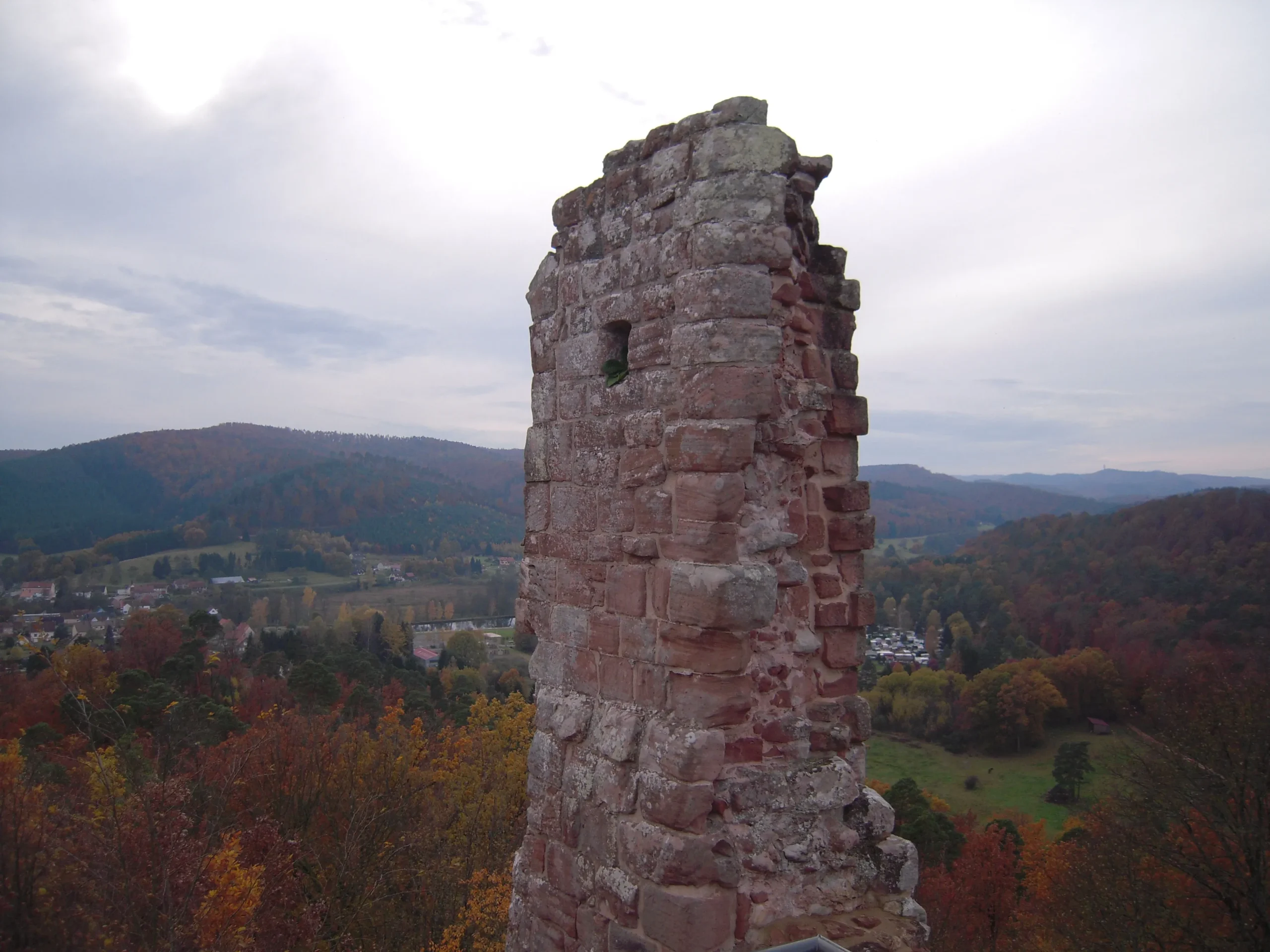
Construit à la fin du 13ème siècle par les sires de Falkenstein à la demande de l'évêque de Strasbourg, le château de Ramstein était destiné à contrôler voire interdire l'accès de la Vallée de la Zinsel. Mais au cours du 14ème siècle, les seigneurs de Ramstein transformèrent leur château en véritable repère de brigands, pillant et rançonnant la région entière. Devant cette situation, les strasbourgeois aidés de leurs alliés bernois organisèrent une expédition punitive contre la forteresse. A coup d’engins de guerre et de boulets de pierres, le château de Ramstein fut entièrement détruit en 1335.
Les vestiges subsistants de ce château ont été sécurisés et rouverts au public en 2010.
Des passerelles et panneaux explicatifs permettent de découvrir quelques éléments architecturaux du château au sommet duquel, une table d’orientation balaye le panorama de Baerenthal.
English
Built at the end of the 13th century by the Sirs of Falkenstein at the request of the Bishop of Strasbourg, the castle of Ramstein was intended to control or even prohibit access to the Zinsel Valley. But during the 14th century, the lords of Ramstein transformed their castle into a veritable den of robbers, pillaging and ransoming the entire region. Faced with this situation, the people of Strasbourg, with the help of their Bernese allies, organised a punitive expedition against the fortress. In 1335, Ramstein Castle was completely destroyed by war machines and stone cannonballs.
The remaining remains of the castle were secured and reopened to the public in 2010
Footbridges and explanatory panels allow visitors to discover some of the architectural elements of the castle, at the top of which an orientation table sweeps the panorama of Baerenthal.
Deutsch
Die Burg Ramstein wurde Ende des 13. Jahrhunderts von den Herren von Falkenstein auf Wunsch des Bischofs von Straßburg erbaut und sollte den Zugang zum Zinsel-Tal kontrollieren und sogar verbieten. Im Laufe des 14. Jahrhunderts verwandelten die Herren von Ramstein ihre Burg jedoch in eine wahre Räuberhöhle, die die gesamte Region plünderte und Lösegelder erpresste. Angesichts dieser Situation organisierten die Straßburger mit Hilfe ihrer Berner Verbündeten eine Strafexpedition gegen die Festung. Mit Kriegsgerät und Steinkugeln wurde die Burg Ramstein im Jahr 1335 vollständig zerstört.
Die verbliebenen Überreste der Burg wurden gesichert und 2010 wieder für die Öffentlichkeit zugänglich gemacht
Auf dem Gipfel der Burg befindet sich ein Orientierungstisch, von dem aus man das Panorama von Baerenthal überblicken kann.
Dutch
Het kasteel Ramstein, dat aan het einde van de 13e eeuw door de heren van Falkenstein op verzoek van de bisschop van Straatsburg werd gebouwd, moest de toegang tot het Zinseldal controleren en zelfs verbieden. Maar in de 14e eeuw veranderden de heren van Ramstein hun kasteel in een echt rovershol en plunderden en plunderden de hele regio. Geconfronteerd met deze situatie organiseerden de Straatsburgers, met de hulp van hun Bernse bondgenoten, een strafexpeditie tegen de vesting. In 1335 werd kasteel Ramstein volledig verwoest met oorlogsmachines en stenen kogels.
De overblijfselen van het kasteel werden veiliggesteld en in 2010 heropend voor het publiek
Via wandelpaden en verklarende panelen kunt u enkele van de architectonische elementen van het kasteel ontdekken, en bovenaan biedt een oriëntatietafel een panoramisch uitzicht over Baerenthal.
Español
Construido a finales del siglo XIII por los señores de Falkenstein a petición del obispo de Estrasburgo, el castillo de Ramstein pretendía controlar e incluso prohibir el acceso al valle del Zinsel. Pero durante el siglo XIV, los señores de Ramstein transformaron su castillo en una auténtica guarida de bandidos, saqueando y rescatando toda la región. Ante esta situación, los habitantes de Estrasburgo, con la ayuda de sus aliados berneses, organizan una expedición de castigo contra la fortaleza. En 1335, el castillo de Ramstein fue completamente destruido con máquinas de guerra y bolas de piedra.
Los restos del castillo fueron protegidos y reabiertos al público en 2010
En las pasarelas y los paneles informativos se pueden ver algunos elementos arquitectónicos del castillo, y una mesa de orientación en la parte superior del castillo ofrece una vista panorámica de Baerenthal.
Italiano
Costruito alla fine del XIII secolo dai signori di Falkenstein su richiesta del vescovo di Strasburgo, il castello di Ramstein aveva lo scopo di controllare e persino vietare l'accesso alla valle dello Zinsel. Ma nel corso del XIV secolo i signori di Ramstein trasformarono il loro castello in un vero e proprio covo di briganti, saccheggiando e riscattando l'intera regione. Di fronte a questa situazione, gli abitanti di Strasburgo, con l'aiuto dei loro alleati bernesi, organizzarono una spedizione punitiva contro la fortezza. Nel 1335 il castello di Ramstein fu completamente distrutto con macchine da guerra e palle di pietra.
I resti del castello sono stati messi in sicurezza e riaperti al pubblico nel 2010
Alcuni elementi architettonici del castello sono visibili sulle passerelle e sui pannelli informativi, mentre un tavolo di orientamento in cima al castello offre una vista panoramica di Baerenthal.