CHÂTEAU D'ARZENC-D'APCHER – Arzenc-d'Apcher
Description
English
Deutsch
Dutch
Español
Italiano
Description
Perché au sommet des falaises dominant les gorges du Bès, le château d’Arzenc-d’Apcher était un fief des barons d’Apcher, l’une des huit baronnies du Gévaudan. Aménagé en motte castrale dès la fin du XIIe siècle, le rocher reçoit une haute tour isolée. Celle-ci sera complétée par un corps de fortification et par des tours cylindriques au cours du XIVe siècle. Au cours du XVIe siècle, le château perd son caractère défensif et devient un logis résidentiel de prestige.
Le château est laissé à l’abandon au cours du XVIIe siècle, le manque d’entretien et l’usure provoquent alors son effondrement. Au Moyen-Âge, le château d’Arzenc-d’Apcher protégeait l’ouest du village éponyme grâce à sa place stratégique incomparable.
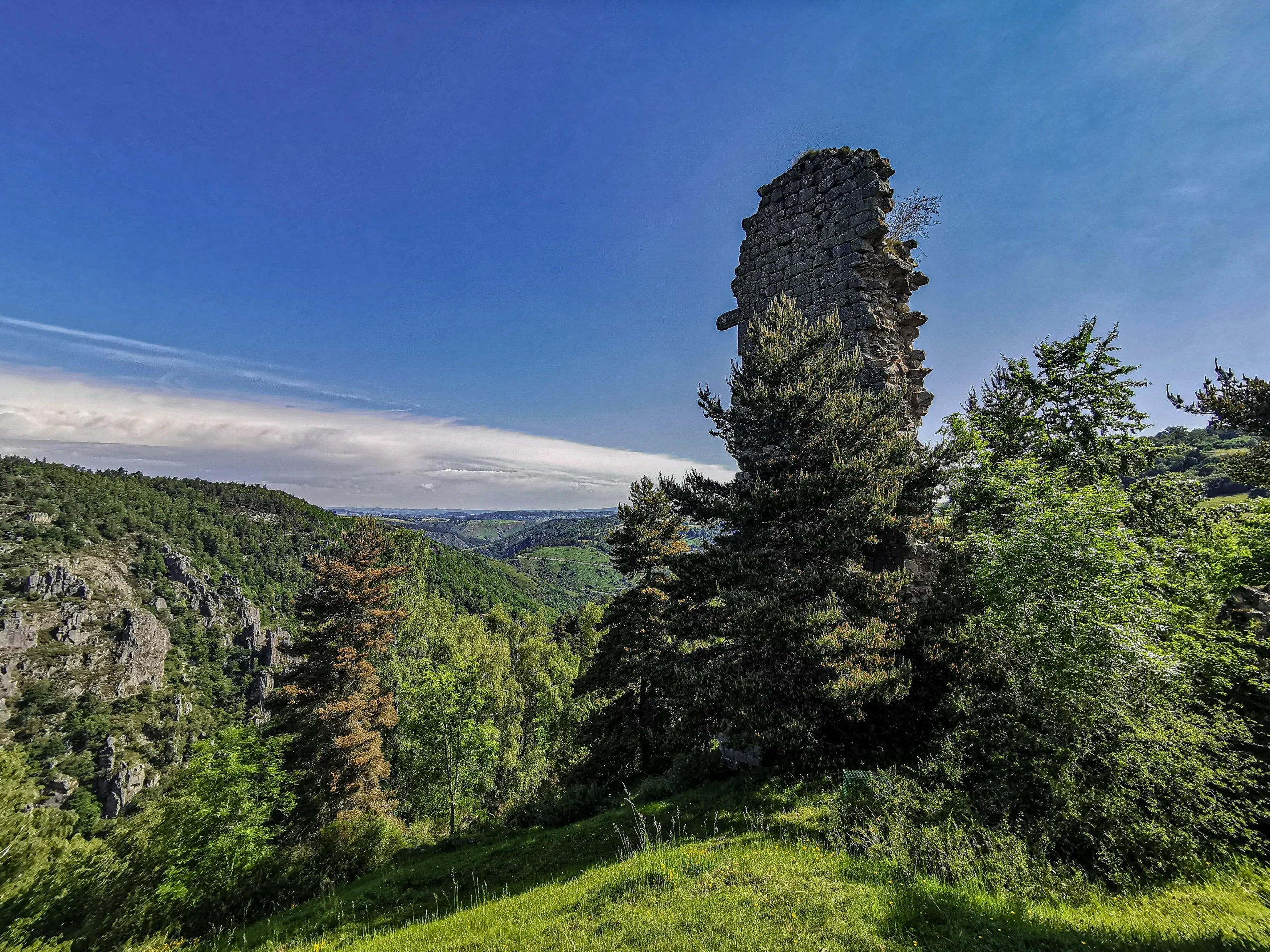
Aujourd’hui il ne reste que quelques ruines de cet édifice. En plus de la tour d’Arzenc, vous pouvez apercevoir des vestiges de deux tours cylindriques en contrebas ayant servi à contrebuter l’édifice au-dessus du ravin.
English
Perched at the top of the cliffs overlooking the gorges of the Bès, the castle of Arzenc-d'Apcher was a stronghold of the barons of Apcher, one of the eight baronies of Gévaudan. Built as a motte castrale at the end of the 12th century, the rock receives a high isolated tower. This one will be supplemented by a body of fortification and by cylindrical towers during XIVe century. During the 16th century, the castle loses its defensive character and becomes a prestigious residential house.
The castle is abandoned during the seventeenth century, the lack of maintenance and wear and tear then cause its collapse. In the Middle Ages, the castle of Arzenc-d'Apcher protected the west of the eponymous village thanks to its incomparable strategic position.
Today only a few ruins of this building remain. In addition to the tower of Arzenc, you can see the remains of two cylindrical towers below that served to counterbalance the building above the ravine.
Deutsch
Die Burg Arzenc-d'Apcher liegt auf dem Gipfel der Klippen über der Schlucht des Bès und war ein Lehen der Barone von Apcher, einer der acht Baronien des Gévaudan. Jahrhunderts wurde der Felsen mit einem hohen, freistehenden Turm versehen. Dieser wurde im Laufe des 14. Jahrhunderts durch einen Festungskörper und zylindrische Türme ergänzt. Im 16. Jahrhundert verliert die Burg ihren Verteidigungscharakter und wird zu einem repräsentativen Wohnhaus.
Im 17. Jahrhundert wurde das Schloss verlassen, da es aufgrund mangelnder Instandhaltung und Abnutzung einstürzte. Im Mittelalter schützte die Burg von Arzenc-d'Apcher den Westen des gleichnamigen Dorfes aufgrund ihrer unvergleichlichen strategischen Lage.
Heute sind nur noch wenige Ruinen von diesem Bauwerk übrig. Neben dem Turm von Arzenc sind auch die Überreste von zwei zylindrischen Türmen zu sehen, die dazu dienten, das Gebäude über der Schlucht abzustützen.
Dutch
Het kasteel van Arzenc-d?Apcher, gelegen bovenop de kliffen met uitzicht op de bergengtes van Bès, was een bolwerk van de baronnen van Apcher, een van de acht baronieën van Gévaudan. De rots werd aan het einde van de 12e eeuw gebouwd als een motte castrale en herbergde een hoge, geïsoleerde toren. Deze werd in de 14e eeuw aangevuld met een versterking en cilindrische torens. In de 16e eeuw verloor het kasteel zijn defensieve karakter en werd het een prestigieuze residentiële woning.
Het kasteel werd verlaten in de 17e eeuw, toen het instortte door gebrek aan onderhoud en slijtage. In de middeleeuwen beschermde het kasteel van Arzenc-d?Apcher het westen van het gelijknamige dorp dankzij zijn ongeëvenaarde strategische positie.
Vandaag de dag zijn er nog maar een paar ruïnes over. Naast de toren van Arzenc kun je beneden de overblijfselen van twee cilindrische torens zien, die werden gebruikt als tegenwicht voor het gebouw boven het ravijn.
Español
Encaramado en lo alto de los acantilados que dominan las gargantas de Bès, el castillo de Arzenc-d'Apcher fue una fortaleza de los barones de Apcher, una de las ocho baronías de Gévaudan. Construido como motte castrale a finales del siglo XII, la roca albergaba una torre alta y aislada. En el siglo XIV, se completó con una fortificación y torres cilíndricas. Durante el siglo XVI, el castillo perdió su carácter defensivo y se convirtió en una prestigiosa vivienda residencial.
El castillo fue abandonado en el siglo XVII, cuando se derrumbó por falta de mantenimiento y desgaste. En la Edad Media, el castillo de Arzenc-d'Apcher protegía el oeste del pueblo del mismo nombre gracias a su posición estratégica inigualable.
Hoy en día, sólo quedan algunas ruinas. Además de la torre de Arzenc, se pueden ver los restos de dos torres cilíndricas situadas más abajo, que servían de contrapeso al edificio situado sobre el barranco.
Italiano
Arroccato in cima alle scogliere che dominano le gole di Bès, il castello di Arzenc-d'Apcher era una roccaforte dei baroni di Apcher, una delle otto baronie di Gévaudan. Costruita come motte castrale alla fine del XII secolo, la rocca ospitava un'alta torre isolata. A questa si aggiunsero una fortificazione e torri cilindriche nel corso del XIV secolo. Nel corso del XVI secolo, il castello perse il suo carattere difensivo e divenne una prestigiosa dimora residenziale.
Il castello fu abbandonato nel XVII secolo, quando crollò per mancanza di manutenzione e usura. Nel Medioevo, il castello di Arzenc-d'Apcher proteggeva la parte occidentale dell'omonimo villaggio grazie alla sua impareggiabile posizione strategica.
Oggi ne rimangono solo alcune rovine. Oltre alla torre di Arzenc, si possono vedere i resti di due torri cilindriche sottostanti, che servivano a controbilanciare l'edificio sopra il burrone.
, 48310 Arzenc-d'Apcher
Crédits: © Conseil départemental - Laura Saint-Léger