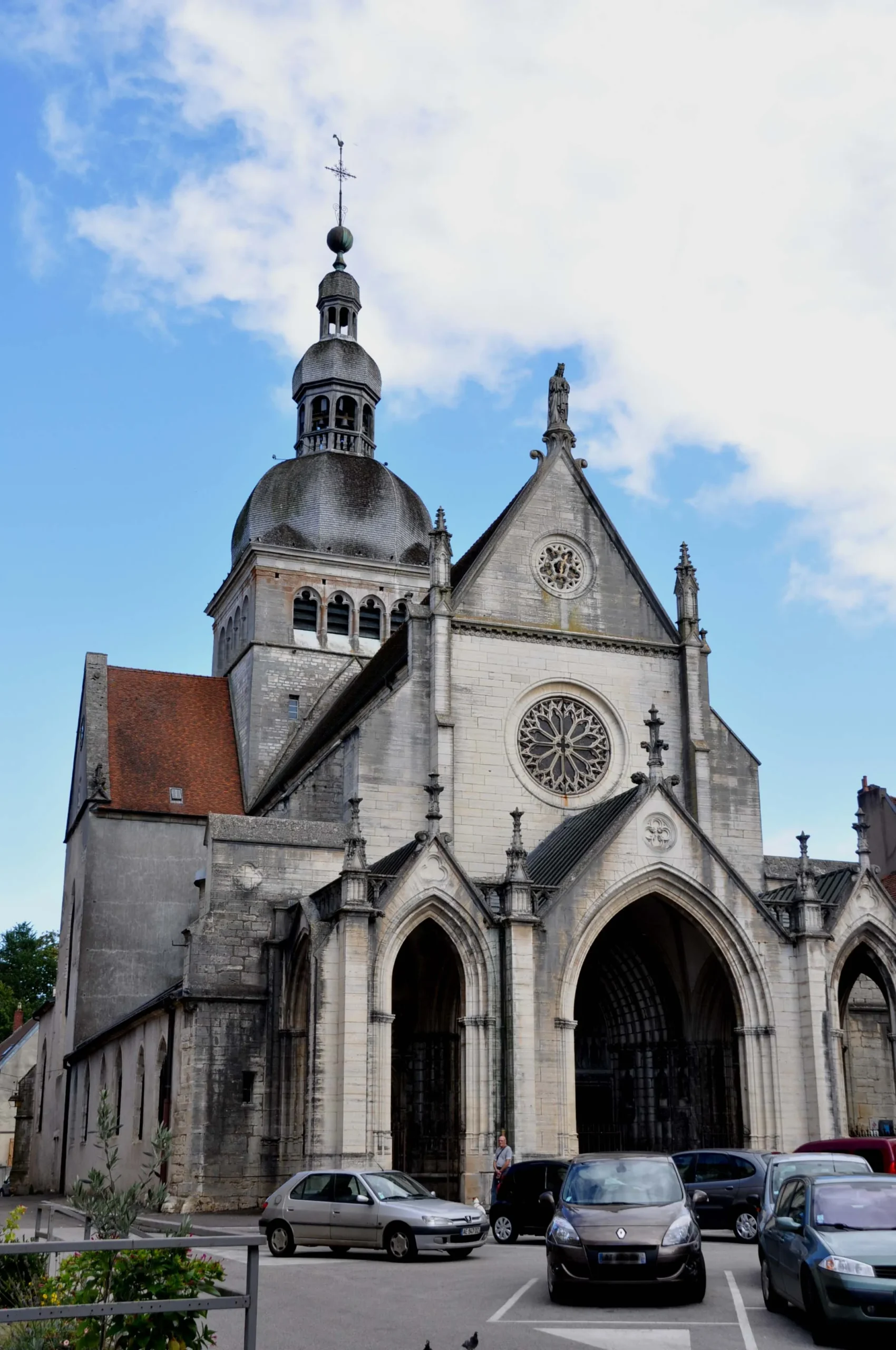
Basilique Notre-Dame – Gray
Description
English
Deutsch
Dutch
Español
Italiano
Description
L’église primitive du XIIe siècle, détruite par les guerres de Louis XI, fut reconstruite entre 1478 et 1559. La façade occidentale ne fut terminée qu’en 1863, par le porche néogothique. Le tympan, martelé à la Révolution, fut sculpté par Grandgirard. L’intérieur du bâtiment est très représentatif du dernier gothique comtois. Les piliers dépourvus de chapiteaux reçoivent directement les arrêtes de la voûte, à noter l'absence de niveau intermédiaire entre les grandes arcades et les fenêtres hautes du vaisseau central de la nef, recherche de la verticalité…
English
The original church of the twelfth century, destroyed during the wars of Louis XI, was rebuilt between 1478 and 1559. The western façade was only completed in 1863 with the neo-gothic porch. The tympanum, hammered at the Revolution, was carved by Grandgirard. The interior of the building is very representative of the late-Gothic of the region. The pillars without capitals receive directly the edges of the vault, lack the intermediate level between the large arcades and the high windows of the central ship of the nave, and there is a typical search for verticality … Visit on request through the Tourist Office.
Deutsch
Die Basilika Notre-Dame de Gray (1481-1559 und die neugotische Fassade aus dem Jahre 1863). Die Kirche wurde 1948 zur Basilika geweiht, da im Inneren der Kirche eine kleine Wunderstatue der Jungfrau Maria aufbewahrt wird, sowie das Herz des Heiligen Pierre Fourier. Schönes Mobiliar und interessante Kunstwerke, wie etwa der "Tote Christus" von Claude Lulier….
Dutch
De oorspronkelijke kerk uit de 12e eeuw, verwoest door de oorlogen van Lodewijk XI, werd herbouwd tussen 1478 en 1559. De westelijke gevel werd pas in 1863 voltooid, met het neogotische portaal. Het timpaan, gehamerd tijdens de Revolutie, werd gebeeldhouwd door Grandgirard. Het interieur van het gebouw is zeer representatief voor de laatgotische stijl van de Comté. De pilaren zonder kapitelen ontvangen rechtstreeks de randen van het gewelf, en er is geen tussenniveau tussen de grote bogen en de hoge ramen van het middenschip, een zoektocht naar verticaliteit..
Español
La iglesia original del siglo XII fue destruida por las guerras de Luis XI y reconstruida entre 1478 y 1559. La fachada occidental no se completó hasta 1863, con el pórtico neogótico. El tímpano, labrado a martillo durante la Revolución, fue esculpido por Grandgirard. El interior del edificio es muy representativo del estilo gótico tardío de Comtois. Los pilares sin capiteles reciben directamente las aristas de la bóveda, y la ausencia de un nivel intermedio entre los grandes arcos y las altas ventanas de la nave central, ¿una búsqueda de la verticalidad?
Italiano
La chiesa originale del XII secolo fu distrutta dalle guerre di Luigi XI e ricostruita tra il 1478 e il 1559. La facciata occidentale fu completata solo nel 1863, con il portico neogotico. Il timpano, realizzato durante la Rivoluzione, è stato scolpito da Grandgirard. L'interno dell'edificio è molto rappresentativo dello stile tardo gotico comtoista. I pilastri senza capitelli ricevono direttamente i bordi della volta e l'assenza di un livello intermedio tra i grandi archi e le alte finestre della navata centrale, una ricerca di verticalità?
Langues: Deutsch - English
Place sous Préfecture, 70100 Gray
Crédits: Ginette Mathis
CC BY-SA 3.0
CC BY-SA 3.0