Ancienne usine de fabrication des métaux dite forge de la Halle – Givonne
My Tourisme > Sites Culturels > Ancienne usine de fabrication des métaux dite forge de la Halle – Givonne
Description
English
Deutsch
Dutch
Español
Italiano
Description
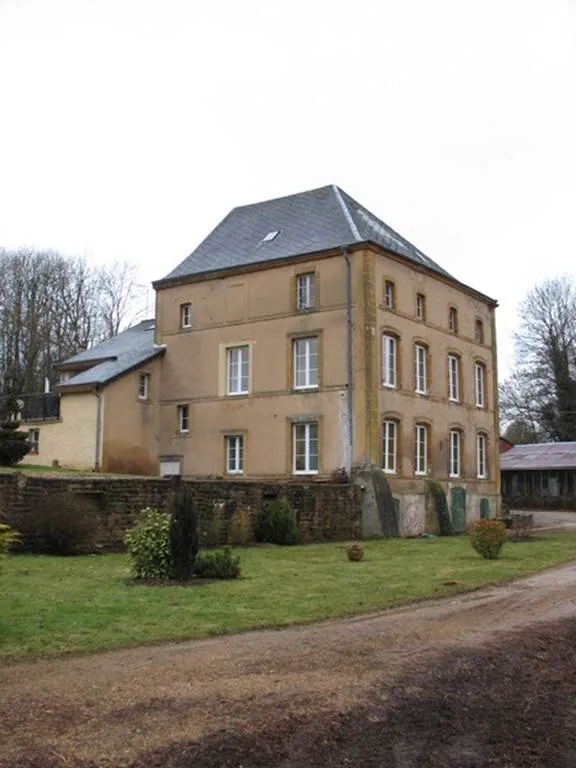
Les forges et fourneaux de Givonne, datant du 16ᵉ siècle, étaient les principales installations de la Principauté de Sedan, exploitées par les familles Goffin d'Haraucourt puis de Lembermont. À la Révolution, elles comprenaient deux feux d'affinerie, deux marteaux et un martinet. Au 19ᵉ siècle, elles passent entre les mains de Thomas, Lamotte-Pirotte, puis Desrousseaux-Noizet. Aujourd'hui, seuls subsistent le magasin, le logement et une halle à charbon du début du 19ᵉ siècle. Les bâtiments disparus incluent la forge, la halle du haut fourneau (1837), et les ateliers, à l'exception de la digue. Le bâti est en moellon calcaire avec des encadrements en pierre de taille, tandis que la charpente apparente en bois caractérise la halle à charbon.
English
The forges and furnaces of Givonne, dating from the 16th century, were the main facilities of the Principality of Sedan, operated by the Goffin d'Haraucourt and then Lembermont families. At the time of the French Revolution, they included two refining fires, two hammers and a swift. In the 19th century, they passed into the hands of Thomas, Lamotte-Pirotte, then Desrousseaux-Noizet. Today, all that remains are the store, the dwelling and an early 19th-century coal shed. The buildings that have disappeared include the forge, the blast furnace hall (1837) and the workshops, with the exception of the dam. The buildings are built of limestone rubble with ashlar surrounds, while the coal shed features an exposed timber frame.
Deutsch
Jahrhundert waren die wichtigsten Einrichtungen des Fürstentums Sedan, die von den Familien Goffin d'Haraucourt und später Lembermont betrieben wurden. Während der Revolution bestanden sie aus zwei Raffinierfeuern, zwei Hämmern und einem Hammer. Im 19. Jahrhundert gingen sie in den Besitz der Familien Thomas, Lamotte-Pirotte und Desrousseaux-Noizet über. Heute sind nur noch der Laden, die Unterkunft und ein Kohlelager aus dem frühen 19. Zu den verschwundenen Gebäuden gehören die Schmiede, die Halle des Hochofens (1837) und die Werkstätten mit Ausnahme des Damms. Die Gebäude bestehen aus Kalkstein mit Steineinfassungen, während der Kohlenschuppen aus Holz besteht.
Dutch
De smederijen en ovens van Givonne, die dateren uit de 16e eeuw, waren de belangrijkste installaties in het prinsdom Sedan en werden uitgebaat door de families Goffin d'Haraucourt en daarna Lembermont. Ten tijde van de Franse Revolutie omvatten ze twee raffinaderijbranden, twee hamers en een gierzwaluw. In de 19e eeuw gingen ze over in handen van Thomas, Lamotte-Pirotte en vervolgens Desrousseaux-Noizet. Vandaag de dag zijn alleen de winkel, de woning en een vroeg 19e-eeuwse kolenloods nog over. De gebouwen die verdwenen zijn, zijn de smederij, de hoogovenhal (1837) en de werkplaatsen, met uitzondering van de dam. De gebouwen zijn gemaakt van kalkstenen puin met bewerkte randen, terwijl de kolenloods een zichtbaar houten geraamte heeft.
Español
Las fraguas y hornos de Givonne, que datan del siglo XVI, eran las principales instalaciones del Principado de Sedán, explotadas por las familias Goffin d'Haraucourt y luego Lembermont. En la época de la Revolución Francesa, contaban con dos refinerías, dos martillos y un vencejo. En el siglo XIX, pasaron a manos de Thomas, Lamotte-Pirotte y luego Desrousseaux-Noizet. Hoy sólo quedan la tienda, la vivienda y una carbonera de principios del siglo XIX. Los edificios desaparecidos son la fragua, la nave del alto horno (1837) y los talleres, a excepción de la presa. Los edificios son de mampostería de piedra caliza con bordes de sillería, mientras que el cobertizo del carbón presenta una estructura de madera vista.
Italiano
Le fucine e i forni di Givonne, risalenti al XVI secolo, erano i principali impianti del Principato di Sedan, gestiti dalle famiglie Goffin d'Haraucourt e poi Lembermont. All'epoca della Rivoluzione francese, comprendevano due fuochi di raffineria, due magli e un rondone. Nel XIX secolo, passarono nelle mani di Thomas, Lamotte-Pirotte e poi Desrousseaux-Noizet. Oggi rimangono solo il negozio, l'abitazione e una rimessa per il carbone dell'inizio del XIX secolo. Gli edifici scomparsi comprendono la fucina, la sala dell'altoforno (1837) e le officine, ad eccezione della diga. Gli edifici sono costruiti in calcare con contorno di bugnato, mentre il capannone del carbone presenta un'intelaiatura in legno a vista.
Equipements: Installations pour handicapés
Rue de la Halle, 08200 Givonne