Ancienne chapelle priorale de Croizé – Niort
Description
English
Deutsch
Dutch
Español
Italiano
Description
Cité dès 1300, le prieuré appartient à l’ordre de St-Thomas-des-Croisés, ordre de chevalerie créé par Richard Coeur de Lion, sans doute vers 1190 ; relève du doyenné de St-André de Niort et de la paroisse de Sciecq. A la fin du XVIè s.., Agrippa d'Aubigné, baron de Surimeau, s'en empare. En 1608, afin de doter l’Oratoire de Niort, Jacques Gastaud en revendique la propriété auprès du pape qui lui en donne les provisions. A la Révolution, une partie du domaine de Croisette est acquise par Baugier, bourgeois de Niort. Plus tard, c'est une ferme.
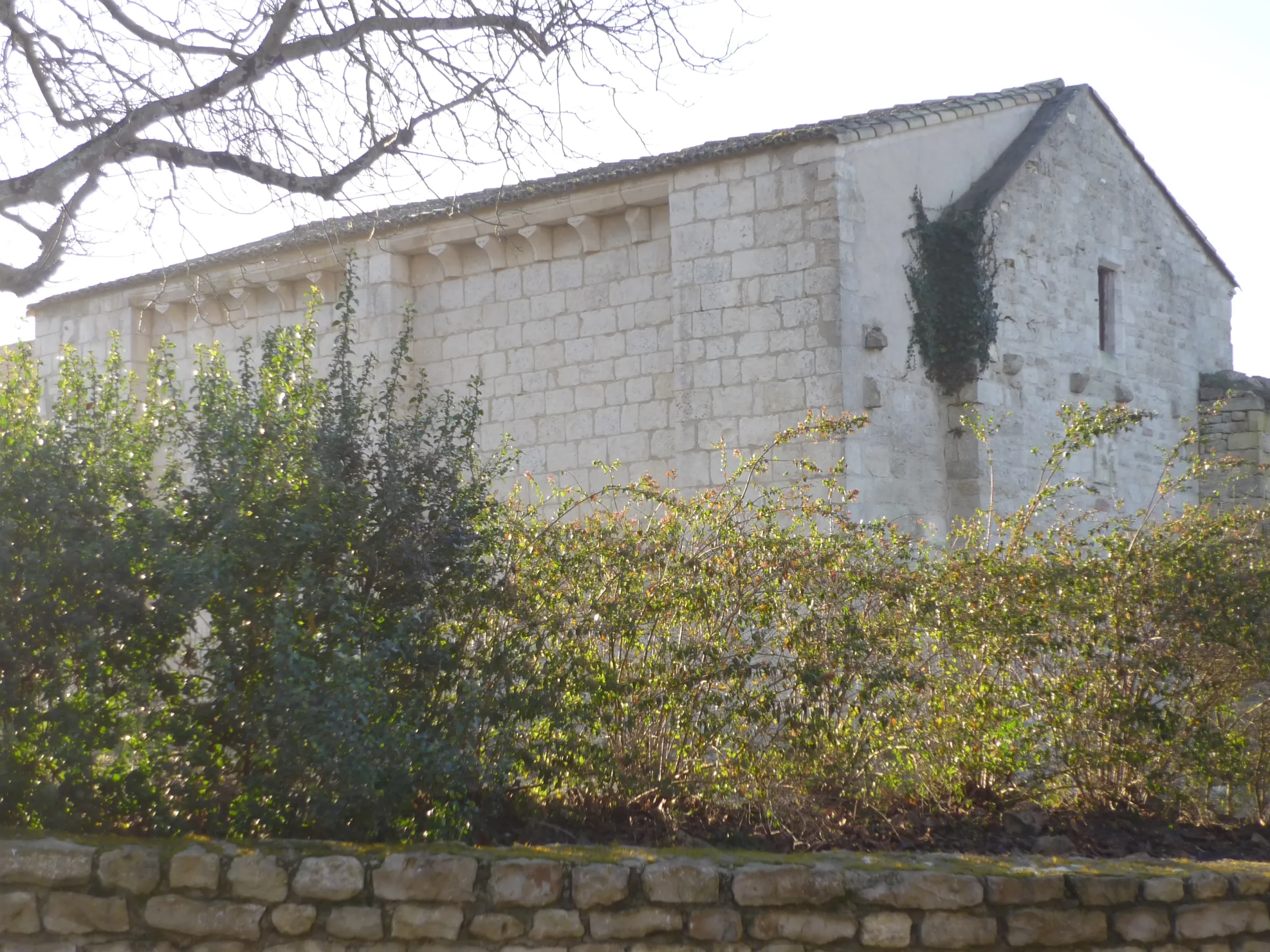
Que reste-t-il du prieuré ? Une chapelle romane ; une crucifixion naïvement sculptée du XIVè ou XVè s., en forme de retable, sur la façade occidentale ; une plate-tombe du XIIIè-XIVè s. dans le dallage de la chapelle (celle d'un membre de la famille Lucy ?). Richard de Lucy, proche d’Henri II, excommunié par Becket en 1166, eut un rôle dans sa mort.
English
Listed as early as 1300, the priory belonged to the order of St-Thomas-des-Croisés, an order of knighthood created by Richard the Lionheart, probably around 1190; it belonged to the dean of St-André de Niort and the parish of Sciecq. At the end of the 16th century, Agrippa d 'Aubigné, Baron de Surimeau, seized it. In 1608, in order to endow the Oratory of Niort, Jacques Gastaud claimed the property from the pope who gave him provisions. At the Revolution, part of the Croisette estate was acquired by Baugier, a bourgeois from Niort. Later, it was a farm.
What’s left of the priory? A Romanesque chapel; a naively carved crucifixion from the 14th or 15th century, in the shape of an altarpiece, on the western façade; a tomb platform from the 13th-14th century in the pavement of the chapel (that of a member of the Lucy family?).
Deutsch
Das Priorat wird seit 1300 erwähnt und gehört zum Orden St-Thomas-des-Croisés, einem Ritterorden, der von Richard Löwenherz vermutlich um 1190 gegründet wurde. Es gehört zum Dekanat St-André de Niort und zur Pfarrei Sciecq. Jahrhunderts übernahm Agrippa d'Aubigné, Baron von Surimeau, den Besitz. Um das Oratorium von Niort auszustatten, forderte Jacques Gastaud 1608 das Eigentum beim Papst ein, der ihm die Provisionen übergab. Während der Revolution wird ein Teil der Domaine de Croisette von Baugier, einem Bürger von Niort, erworben. Später wird es zu einem Bauernhof.
Was ist von dem Priorat übrig geblieben? Eine romanische Kapelle; eine naiv geschnitzte Kreuzigung aus dem 14. oder 15. Jahrhundert in Form eines Altaraufsatzes an der Westfassade; ein Grabmal aus dem 13. und 14. Jahrhundert im Bodenbelag der Kapelle (das Grabmal eines Mitglieds der Familie Lucy?). Richard de Lucy, ein enge
Dutch
De priorij, die al in 1300 wordt genoemd, behoort tot de orde van St-Thomas-des-Croisés, een ridderorde die door Richard Leeuwenhart is opgericht, waarschijnlijk rond 1190; zij behoort tot het dekenaat St-André de Niort en de parochie Sciecq. Aan het einde van de 16e eeuw nam Agrippa d'Aubigné, baron van Surimeau, er bezit van. In 1608 eiste Jacques Gastaud, om het Oratorium van Niort van middelen te voorzien, het eigendomsrecht op van de paus, die hem de voorzieningen gaf. Tijdens de Revolutie werd een deel van het landgoed Croisette gekocht door Baugier, een bourgeois uit Niort. Later werd het een boerderij.
Wat blijft er over van de priorij? Een Romaanse kapel; een naïef gebeeldhouwde kruisiging uit de 14e of 15e eeuw, in de vorm van een altaarstuk, aan de westelijke gevel; een grafsteen uit de 13e-14e eeuw in het plaveisel van de kapel (die van een lid van de familie Lucy?). Richard
Español
Ciudad desde 1300, el priorato pertenece a la orden de Santo Tomás de los Cruzados, orden de caballería creada por Ricardo Corazón de León, sin duda hacia 1190; releva del decanato de San Andrés de Niort y de la parroquia de Sciecq. A finales del siglo XVI. Agrippa d'Aubigné, barón de Surimeau, se apoderó de él. En 1608, con el fin de dotar al Oratorio de Niort, Jacques Gastaud reivindica su propiedad ante el Papa, que le da las provisiones. En la Revolución, una parte del dominio de Croisette es adquirida por Baugier, burgués de Niort. Más tarde, es una granja.
¿Qué queda del priorato? Una capilla románica; una crucifixión ingenuamente esculpida del siglo XIV o XV, en forma de retablo, en la fachada occidental; una tumba de los siglos XIII y XIV s. en el pavimento de la capilla (¿la de un miembro de la familia Lucy?).
Italiano
Menzionato già nel 1300, il priorato appartiene all'ordine di St-Thomas-des-Croisés, un ordine cavalleresco creato da Riccardo Cuor di Leone, probabilmente intorno al 1190; fa parte del decanato di St-André de Niort e della parrocchia di Sciecq. Alla fine del XVI secolo, Agrippa d'Aubigné, barone di Surimeau, ne prese possesso. Nel 1608, per dotare l'Oratorio di Niort, Jacques Gastaud ne rivendicò la proprietà al Papa, che gli diede le disposizioni. Durante la Rivoluzione, parte della tenuta della Croisette fu acquistata da Baugier, un borghese di Niort. In seguito, è diventata una fattoria.
Cosa rimane del priorato? Una cappella romanica; una crocifissione ingenuamente scolpita del XIV o XV secolo, in forma di pala d'altare, sulla facciata occidentale; una lapide del XIII-XIV secolo nella pavimentazione della cappella (quella di un membro della famiglia Lucy?). Richard de Lucy, uno stretto collaboratore di Enrico II, fu scomunicato da Becket nel 1166 e giocò un ruolo nella sua morte.
Chemin d'Antes, 79000 Niort
Crédits: Office de Tourisme de Niort-Marais Poitevin - 2012
Licence
Licence