Entre Maumont et Sourdoire – Saint-Julien-Maumont
Description
English
Deutsch
Dutch
Español
Italiano
Description
Ambiance caussenarde pour la 1ère partie, avec une végétation calciforme (ophrys abeille et cornouiller sanguin) et les murets de pierres sèches bordant les chemins. La 2ème partie se déroule sur le «brasier», un beau grès aux reflets blonds.
English
At the beginning of the circuit, the atmosphere is caussenarde, with a calcicole vegetation (orchids and blood dogwood) and the dry stone walls lining the paths. Then, as you get closer to the castle of Livin, the limestone gives way to "brasier", a very pretty sandstone with blond reflections. Near Saint-Bazile-de-Meyssac, the sandstone takes on an ochre colour and the arrival is at the Saint-Julien-Maumont station.
Deutsch
Zu Beginn des Rundwegs herrscht eine Caussenard-Atmosphäre mit kalkliebender Vegetation (Orchideen und Blutroter Hartriegel) und Trockenmauern, die die Wege säumen. Wenn Sie sich dann dem Schloss von Livin nähern, weicht der Kalkstein dem "Brasier", einem sehr schönen Sandstein mit blondem Schimmer. In der Nähe von Saint-Bazile-de-Meyssac färbt sich der Sandstein ockerfarben und die Ankunft erfolgt am Bahnhof von Saint-Julien-Maumont.
Dutch
Een caussenarde sfeer aan het begin van het circuit, met calcicole vegetatie (orchideeën en bloedkornoelje) en de droge stenen muren die de paden omzomen. Naarmate men dichter bij het kasteel van Livin komt, maakt de kalksteen plaats voor "brasier", een zeer mooie zandsteen met blonde reflecties. Bij Saint-Bazile-de-Meyssac krijgt de zandsteen een okerkleur en komt men aan bij het station Saint-Julien-Maumont.
Español
Un ambiente caussenarde al inicio del circuito, con vegetación calcárea (orquídeas y cornejo de sangre) y los muros de piedra seca que bordean los caminos. Luego, al acercarse al castillo de Livin, la piedra caliza da paso al "brasier", una arenisca muy bonita con reflejos rubios. Cerca de Saint-Bazile-de-Meyssac, la arenisca adquiere un color ocre y se llega a la estación de Saint-Julien-Maumont.
Italiano
Atmosfera tipica del Causse nella prima parte, con una vegetazione calcicola (ophrys ape e corniolo rosso) e i muretti a secco che costeggiano i sentieri. La seconda parte si snoda sull’«Brasier», una splendida roccia arenaria dai riflessi biondi.
Classement: Plan Départemental des Itinéraires de Promenade et de Randonnée, PDIPR
Type: En boucle
Distance: 13000.0
Esplanade du lavoir, 19500 Saint-Julien-Maumont
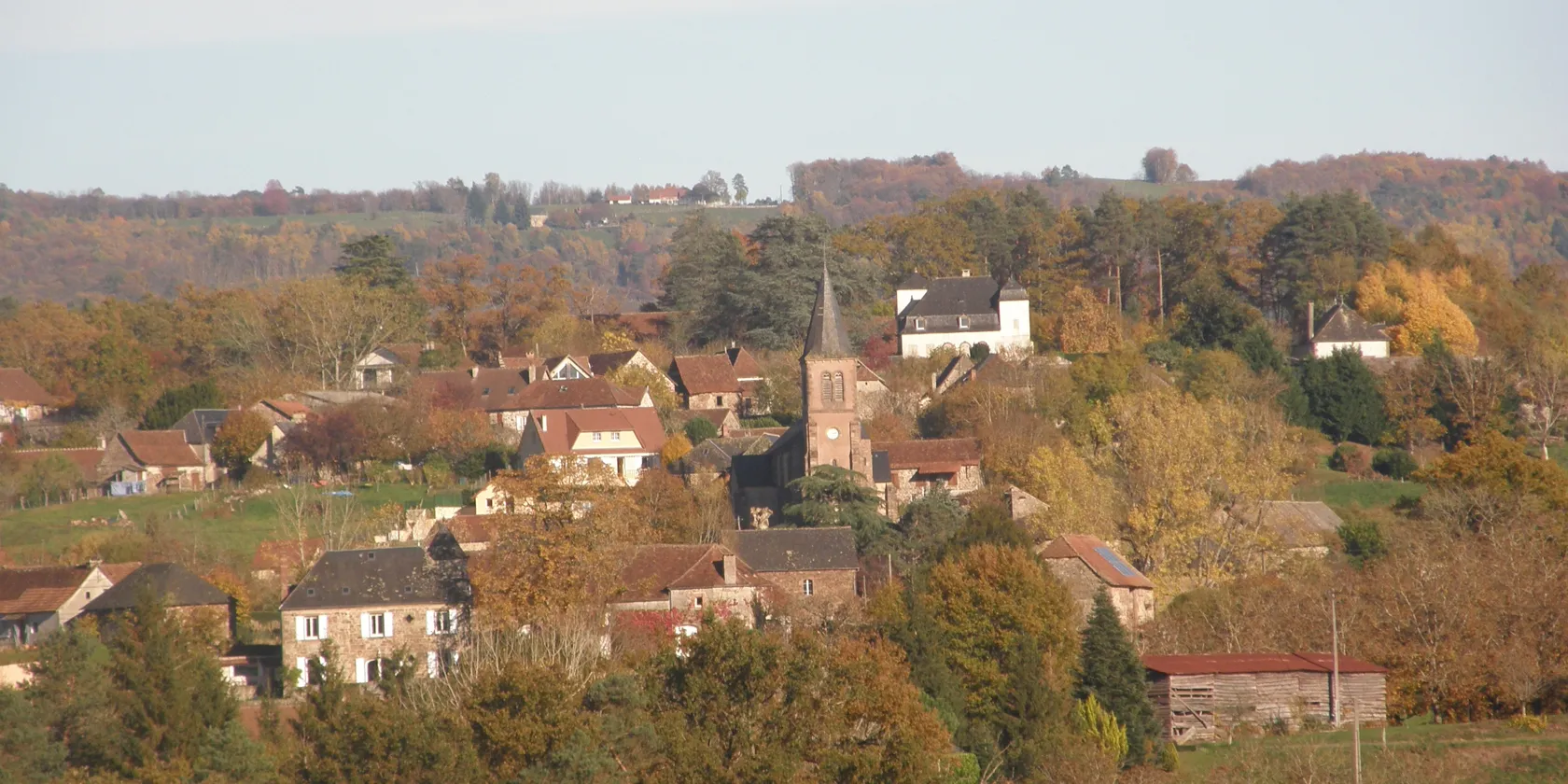
Crédits: Office de Tourisme Vallée de la Dordogne
Licence
Licence