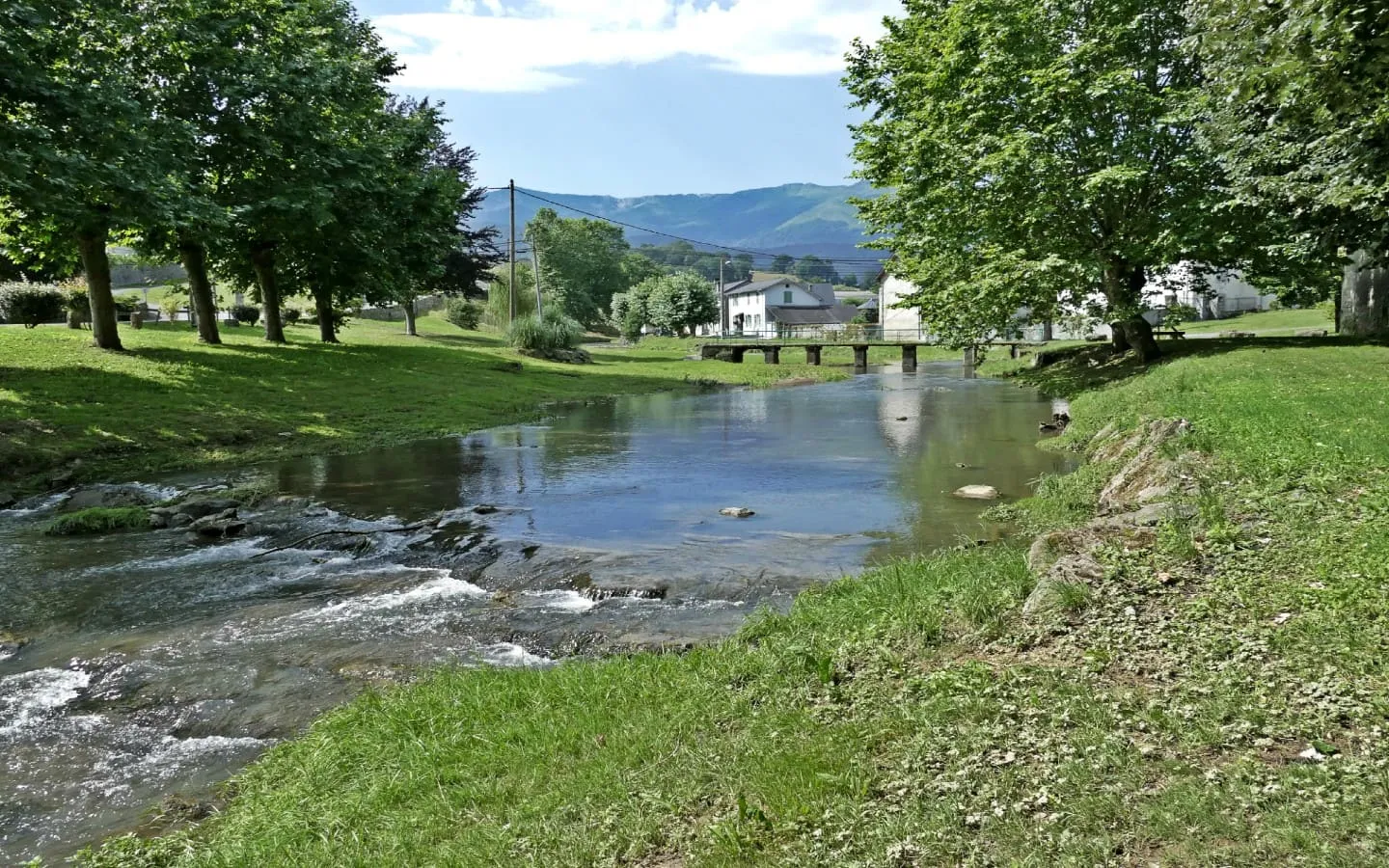
Parcours Patrimoine : la bastide des sandaliers – Bruges-Capbis-Mifaget
Description
English
Deutsch
Dutch
Español
Italiano
Description
Bruges constitue la dernière bastide créée en Pays de Nay autour de 1346. Elle se trouve sur le tracé du chemin de Saint Jacques de Compostelle dans un secteur d'activité plutôt pastorale. Elle trouvera toutefois son essor grâce au savoir-faire de ses habitants reconvertis principalement en sandaliers et cloutiers. Son habitat est assez marqué par ce passé manufacturier d'ateliers de fabrication à domicile.
Ce circuit vous offre l'opportunité d'apprécier les spécificités de construction d'une bastide, ce nouvel urbanisme apparu au moyen-âge. Une visite en toute simplicité entre histoire médiévale et révolution industrielle.
English
Probably founded by 1346, Bruges is one of the most recent fortified towns created in the east of Béarn. With it, viscounts of Béarn strengthened their presence there and helped developing the agricultural productions. Implanted in a pastoral zone, in the course of the centuries this ancient fortified town evolved into an industrial village. This route helps you discovering the symbolic elements of a typical ancient fortified town of Bearn, but also the very suttle clues of the presence of the industrial heritage of sandal manufacturing.
Deutsch
Brügge ist die letzte Bastide, die um 1346 im Pays de Nay gegründet wurde. Sie liegt an der Strecke des Jakobswegs in einem Gebiet, das eher pastoral geprägt ist. Sie erlebte jedoch einen Aufschwung dank des Know-hows ihrer Bewohner, die sich hauptsächlich als Sandalen- und Nagelschmiede betätigten. Die Siedlungen sind von der Vergangenheit der Manufakturen geprägt, in denen die Produkte zu Hause hergestellt werden.
Dieser Rundgang bietet Ihnen die Möglichkeit, die Besonderheiten des Baus einer Bastide, einer neuen Stadtplanung, die im Mittelalter entstand, kennenzulernen. Ein einfacher Rundgang zwischen mittelalterlicher Geschichte und industrieller Revolution.
Dutch
Brugge was de laatste bastide die rond 1346 in het Pays de Nay werd gesticht. Het ligt op de route van de pelgrimsroute naar Santiago de Compostela, in een gebied met voornamelijk pastorale activiteiten. De stad kwam echter tot bloei dankzij de vaardigheden van de inwoners, die voornamelijk werkzaam waren als sandel- en nagelmakers. De habitat van het gebied wordt sterk gekenmerkt door dit productieverleden van thuiswerkplaatsen.
Deze tour geeft je de mogelijkheid om de specifieke kenmerken van de bastidebouw te waarderen, een nieuw type stadsplanning dat in de Middeleeuwen ontstond. Het is een gemakkelijke manier om middeleeuwse geschiedenis te combineren met de industriële revolutie.
Español
Fundada probablemente hacia 1346, Brujas está una de los más recientes bastides creada en el este de Béarn. Les permite a los vizcondes de Béarn consolidar allí su presencia y desarrollar las producciones agrícolas. Implantado en una zona pastoral, este bastide evoluciona luego en el curso de los siglos en una villa manufacturera. Este trayecto le propone así descubrir los elementos emblemáticos de un bastide bearnés típico, pero también el patrimonio industrial asombrosamente discreto de uno de los primeros grande centros de fabricación de la sandalia.
Italiano
Bruges fu l'ultima bastide creata nel Pays de Nay intorno al 1346. Si trova sul percorso del cammino di pellegrinaggio verso Santiago de Compostela, in una zona a prevalente attività pastorale. Tuttavia, la città fiorì grazie alle abilità dei suoi abitanti, che lavoravano principalmente come fabbricanti di sandali e chiodi. L'habitat della zona è piuttosto segnato da questo passato manifatturiero di laboratori domestici.
Questa visita offre l'opportunità di apprezzare le caratteristiche specifiche della costruzione delle bastide, un nuovo tipo di urbanistica emersa nel Medioevo. È un modo semplice per combinare la storia medievale con la rivoluzione industriale.