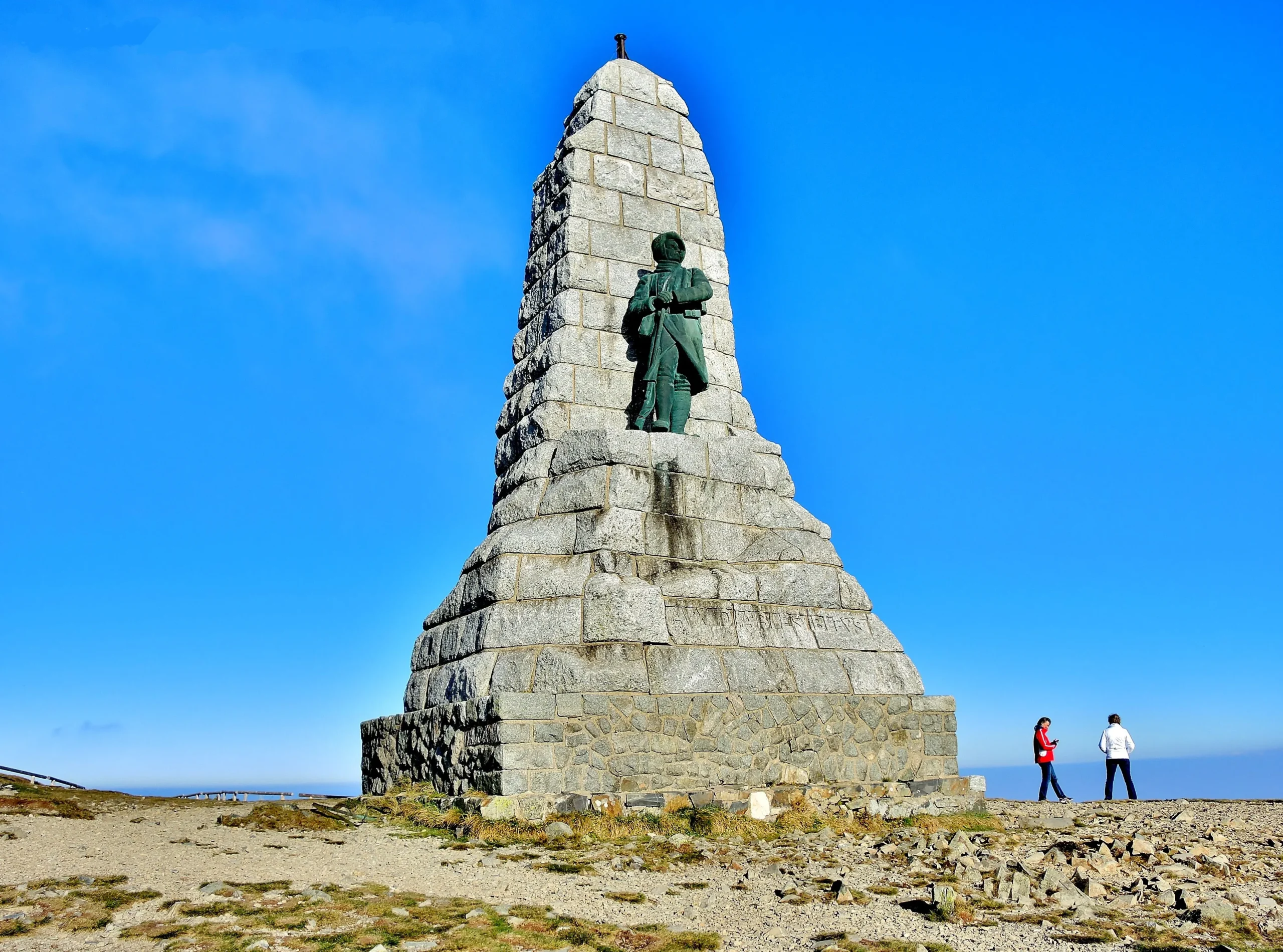
Le Grand Ballon – Soultz-Haut-Rhin
Description
English
Deutsch
Dutch
Español
Italiano
Description
Culminant à 1424 mètres, le Grand-Ballon est le plus haut sommet du massif vosgien. Parfois appelé le Ballon de Guebwiller, il est bien connu des amateurs de randonnée et ski de font ou de ski alpin. Le tourisme se développe au Grand-Ballon au cours du XIXe siècle alors qu’apparaissent les chemins de fer dans les vallées. Au sommet du Grand-Ballon se dresse le monument des Diables Bleus érigé à l’initiative du Club alpin français et du Club Vosgien en hommage aux vic¬times des bataillons de chasseurs alpins engagés dans les combats de la guerre de 14-18. Un radar de l’aviation civile a été conçu comme une oeuvre architecturale par son concepteur Claude Vasconi à a été construit en 1997. Sous le radôme, il est possible d’accéder à une table d’orientation qui offre de superbes points de vues. ACCÈS Attention en hiver : toutes les routes sont dénei¬gées (équipements obligatoires) mais la route des crêtes du Col de la Schlucht au Grand-Ballon est fermée. En voiture l’hiver vers le Grand-Ballon : par Willer sur Thur, Goldbach. En voiture l’été vers le Grand-Ballon : par Guebwiller, Wattwiller ou Willer sur Thur, Goldbach.
English
Culminating at 1424 metres, the Grand-Ballon is the highest peak in the Vosges mountains. Sometimes called the Ballon de Guebwiller, it is well known to lovers of hiking and ski touring or downhill skiing. Tourism developed in the Grand-Ballon during the 19th century when railways appeared in the valleys At the top of the Grand-Ballon stands the Blue Devils Monument erected on the initiative of the French Alpine Club and the Vosges Club in homage to the victims of the battalions of Alpine hunters engaged in the fighting of the First World War A civil aviation radar was designed as an architectural work by its designer Claude Vasconi and was built in 1997. Under the radome, it is possible to access an orientation table that offers superb views. ACCESS Beware in winter: all roads are cleared of snow (obligatory equipment) but the road from the ridges of the Col de la Schlucht to the Grand-Ballon is closed By car in winter to the Grand-Ballon by Willer on Thur, Goldbach By car in summer to the Grand-Ballon: via Guebwiller, Wattwiller or Willer sur Thur, Goldbach.
Deutsch
Der Grand-Ballon ist mit 1424 m der höchste Gipfel der Vogesen. Er wird manchmal auch als Ballon de Guebwiller bezeichnet und ist bei Wanderern, Skiläufern und Abfahrtsläufern gleichermaßen beliebt. Der Tourismus entwickelte sich am Grand-Ballon im 19. Jahrhundert, als die Eisenbahn in den Tälern entstand Auf dem Gipfel des Grand-Ballon steht das Denkmal der Blauen Teufel, das auf Initiative des französischen Alpenvereins und des Vogesenclubs zu Ehren der Opfer der Alpenjägerbataillone errichtet wurde, die in den Kämpfen des Krieges von 14-18 eingesetzt wurden Ein Radar der zivilen Luftfahrt wurde von seinem Designer Claude Vasconi als architektonisches Werk konzipiert und 1997 errichtet. Unter dem Radom befindet sich ein Orientierungstisch, von dem aus man einen herrlichen Ausblick genießen kann. ZUGANG Achtung im Winter: Alle Straßen sind schneegeräumt (Ausrüstungspflicht), aber die Route des crêtes du Col de la Schlucht au Grand-Ballon ist geschlossen Mit dem Auto im Winter zum Grand-Ballon über Willer sur Thur, Goldbach Mit dem Auto im Sommer zum Grand-Ballon: über Guebwiller, Wattwiller oder Willer sur Thur, Goldbach.
Dutch
Met een hoogte van 1424 meter is de Grand-Ballon de hoogste top van het massief van de Vogezen. Hij wordt ook wel de Ballon de Guebwiller genoemd en is bekend bij wandelaars en skiërs. Het toerisme in de Grand-Ballon ontwikkelde zich in de 19e eeuw toen de spoorwegen in de valleien verschenen Op de top van de Grand-Ballon staat het monument Diables Bleus, opgericht op initiatief van de Franse Alpenclub en de Club Vosgien als eerbetoon aan de slachtoffers van de bij de gevechten van de Eerste Wereldoorlog betrokken jagersbataljons uit de Alpen Een burgerluchtvaartradar werd door de ontwerper Claude Vasconi ontworpen als een architecturaal werk en werd gebouwd in 1997. Onder de radome is het mogelijk toegang te krijgen tot een oriëntatietafel die een prachtig uitzicht biedt. TOEGANG Wees voorzichtig in de winter: alle wegen zijn sneeuwvrij gemaakt (uitrusting verplicht), maar de route des crêtes van de Col de la Schlucht naar de Grand-Ballon is gesloten Met de auto in de winter naar de Grand-Ballon via Willer sur Thur, Goldbach Met de auto in de zomer naar Grand-Ballon: via Guebwiller, Wattwiller of Willer sur Thur, Goldbach.
Español
El Grand-Ballon, que culmina a 1.424 metros, es el pico más alto del macizo de los Vosgos. A veces llamado Ballon de Guebwiller, es bien conocido por los excursionistas y los esquiadores alpinos. El turismo se desarrolló en el Grand-Ballon durante el siglo XIX, cuando apareció el ferrocarril en los valles En la cima del Grand-Ballon se encuentra el monumento Diables Bleus, erigido por iniciativa del Club Alpino Francés y el Club Vosgien en homenaje a las víctimas de los batallones de cazadores alpinos que participaron en los combates de la guerra del 14-18 Un radar de aviación civil fue concebido como una obra arquitectónica por su diseñador Claude Vasconi y fue construido en 1997. Bajo la cúpula, es posible acceder a una mesa de orientación que ofrece unas vistas magníficas. ACCESO Tenga cuidado en invierno: todas las carreteras están limpias de nieve (el equipamiento es obligatorio) pero la ruta de las crestas desde el Col de la Schlucht hasta el Grand-Ballon está cerrada En coche en invierno hasta el Grand-Ballon vía Willer sur Thur, Goldbach En coche en verano hasta el Grand-Ballon: vía Guebwiller, Wattwiller o Willer sur Thur, Goldbach.
Italiano
Con i suoi 1424 metri, il Grand-Ballon è la vetta più alta del massiccio dei Vosgi. Talvolta chiamato Ballon de Guebwiller, è ben noto agli escursionisti e agli amanti dello sci alpino. Il turismo si è sviluppato nel Grand-Ballon durante il XIX secolo, quando la ferrovia ha fatto la sua comparsa nelle valli In cima al Grand-Ballon si trova il monumento dei Diables Bleus, eretto su iniziativa del Club Alpino Francese e del Club Vosgien in omaggio alle vittime dei battaglioni di cacciatori alpini impegnati nei combattimenti della guerra del '14-'18 Un radar per l'aviazione civile è stato concepito come opera architettonica dal suo progettista Claude Vasconi ed è stato costruito nel 1997. Sotto il radome è possibile accedere a un tavolo di orientamento che offre una vista superba. ACCESSO Attenzione in inverno: tutte le strade sono sgombrate dalla neve (l'attrezzatura è obbligatoria), ma la route des crêtes dal Col de la Schlucht al Grand-Ballon è chiusa In auto in inverno fino al Grand-Ballon via Willer sur Thur, Goldbach In auto in estate fino al Grand-Ballon: via Guebwiller, Wattwiller o Willer sur Thur, Goldbach.
, 68360 Soultz-Haut-Rhin