FORET, MARAIS ET PELOUSES DU VAL CLAVIN – Auberive
Description
English
Deutsch
Dutch
Español
Italiano
Description
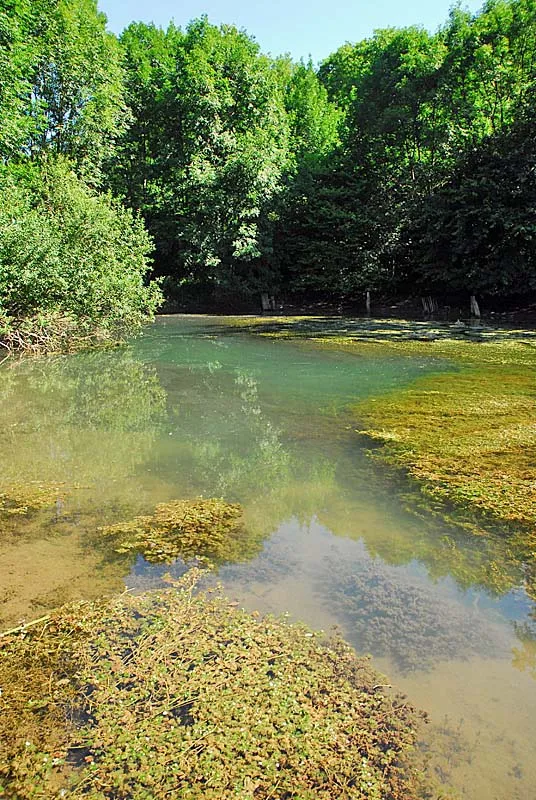
Le Val Clavin est l'un des sites les plus prestigieux de Haute-Marne. Il est très représentatif de la Montagne Chatillonnaise. Ouverte au nord, la combe possède l'un des microclimats les plus froids du secteur, favorisant une végétation à tendance montagnarde, avec des types forestiers en étroite relation avec l'orientation de la pente : localisée aux secteurs les plus froids se développe la hêtraie froide à dentaire et l'érablière à scolopendre ; sur une vaste proportion des versants bien exposés prospère la hêtraie sèche montagnarde à Carex alba, avec de nombreuses espèces rares et protégées (Cephalanthera rubra et longifolia) ; les forêts hygrophiles bordent le ruisseau et le marais. Site non aménagé (rester sur le chemin de randonnée balisé)
Accès réservé à un public avisé et respectueux Pour les spécialistes de nature :
Les pelouses aujourd'hui couvrent une surface minuscule en comparaison de leur étendue il y a 50 ans : il s'agit de groupements relevant du Violo rupestris-Seslerietum (bien pourvu en espèces rares et protégées comme la grande gentiane, la laîche pied d'oiseau, la violette rupestre) et du Festuco lemanii-Brometum (avec la laîche pied d'oiseau et l'helianthème blanchâtre protégés en Champagne-Ardenne). La végétation :
La végétation du marais tufeux est l'une des plus originale du Val, avec le bas-marais parcouru de ruisselets et de touradons, dominés par le choin ferrugineux (espèce protégée au niveau national), avec entre autres la swertie perenne, la linaigrette à larges feuilles, la parnassie des marais et une rare orchidée, Dactylorhiza traunsteineri, toutes étant inscrites sur la liste rouge des végétaux de Champagne-Ardenne : la flore de ce groupement est typiquement montagnarde et riche en espèces protégées.
Dans les zones les plus humides se rencontre le marais à grandes laîches. Les mégaphorbiaies localisées en bordure des marais et des saulaies comportent deux espèces peu communes : Aconitum napellus protégé et Filipendula vulgaris.
Plusieurs zones du Val Clavin offrent des systèmes dynamiques en mosaiques où les zones de lisières et de petites clairières sont bien développées, et notamment un groupement xérophile avec des espèces de la hêtraie sèche et des espèces des pelouses.
La végétation globale du site contiend 14 espèces protégées et 13 espèces figurant sur la liste rouge des végétaux de Champagne-Ardenne. La faune :
L'entomofaune, très riche, comprend de nombreuses espèces rares, avec sept espèces de libellules (dont l'agrion de mercure, protégé nationalementt, inscrit sur les listes rouges nationales et européennes des insectes en voie de disparition, la grande aeschne, les cordulégestres annelé et bidenté, etc.), cinq espèces de criquets chanteurs ou de sauterelles, et quatre espèces de papillons, dont le nacré de la sanguisorbe, le petit collier argenté et la bacchante, protégée par la convention de Berne, inscrite sur le livre rouge de la faune menacée en France et sur la liste rouge des insectes de Champagne-Ardenne.
L'avifaune est caractérisée par de nombreux passereaux (alouette lullu, alouette des champs, gobe mouche gris, bruant proyer, fauvette babillarde, locustelle tachetée qui est ici le passereau le plus typique du marais du Val Clavin, nichant au milieu des choins et molinies, etc.), différents pics et pie-grièches (pic vert, pic mar, pic noir, pic épeiche, pic épeichette, pie-grièche écorcheur, pie-grièche grise), rapaces diunes qui fréquentent le site à la recherche de nourriture (milans noir et royal, busard Saint-Martin, faucons hobereau et crécerelle, bondrée apivore et épervier d'Europe) et des rapaces nocturnes qui nichent dans le secteur (chouette chevêche, chouette effraie, chouette hulotte, hibou moyen-duc) ainsi que certaines espèces à intérêt cynégétique (tourterelle des bois et tourterelle turque, caille des blés, diverses grives, bécasse des bois, pigeons ramier et colombin) et d'autres nicheurs rares à l'échelle régionale comme le cincle plongeur par exemple. Beaucoup d'entre eux font partie de la liste rouge régionale.<br>Les chauve-souris sont une des grandes richesses du Val Clavin et renferment notamment la noctule commune qui loge dans les trous de pics situé dans les arbres morts du vallon du Gorgeot, le grand murin, le murin de Daubenton, le murin à moustaches, la sérotine commune, la pipistrelle et l'oreillard roux ; l'ensemble de la zone est plutôt un secteur de chasse pour ces chiroptères qui y trouvent de nombreux insectes. La ZNIEFF fait partie de la grande ZNIEFF II dite du massif forestier et ses abords au sud d'Auberive. Le marais est encore en bon état malgré de graves atteintes qui ont eu lieu ces dernières années (enrésinements et extension de l'agriculture), le site est maintenant protégé par un A. P. B. et une gestion a été effectuée sur le marais de Vivey (Val Clavin). Elle doit être poursuivie. Par ailleurs, le vallon de la Combe Sainte-Marie doit faire l'objet d'une réseve biologique forestière.
English
Val Clavin is one of the most prestigious sites in Haute-Marne. It is highly representative of the Montagne Chatillonnaise. Open to the north, the combe has one of the coldest microclimates in the area, favoring vegetation with mountainous tendencies, with forest types closely related to the orientation of the slope: located in the coldest areas, the cold beech-tooth forest and the maple-sedge maple grove develop; on a large proportion of the well-exposed slopes, the montane dry beech forest with Carex alba thrives, with numerous rare and protected species (Cephalanthera rubra and longifolia); hygrophilous forests line the stream and marsh. Undeveloped site (stay on the marked hiking trail)
Access reserved for an informed and respectful public For nature specialists:
Today's grasslands cover a tiny area compared with their extent 50 years ago: they are groupings belonging to the Violo rupestris-Seslerietum (well endowed with rare and protected species such as great gentian, bird's-foot sedge and rock violet) and the Festuco lemanii-Brometum (with bird's-foot sedge and whitish helianthemum, protected in Champagne-Ardenne). Vegetation :
The tufa marsh vegetation is one of the most original in the Val, with low marshes criss-crossed by brooks and peat bogs, dominated by choin ferrugineux (a nationally protected species), along with swertie perenne, broad-leaved cotton grass, marsh parnassia and a rare orchid, Dactylorhiza traunsteineri, all of which are on the Champagne-Ardenne red list of plants: the flora of this group is typically mountainous and rich in protected species.
In the wettest areas, we find the sedge marsh. The megaphorbia on the edges of the marshes and willows include two uncommon species: the protected Aconitum napellus and Filipendula vulgaris.
Several areas of Val Clavin offer dynamic mosaic systems with well-developed edges and small clearings, including a xerophilous grouping with dry beech and grassland species.
The overall vegetation of the site contains 14 protected species and 13 species on the red list of plants in Champagne-Ardenne. Fauna:
The very rich entomofauna includes many rare species, with seven species of dragonfly (including the nationally protected mercury agrion, on the national and European red lists of endangered insects, the great aeschne, the ringed and bidentate cordulégestres, etc.), five species of crickets, and a large number of other species.), five species of song locusts or grasshoppers, and four species of butterfly, including the sanguisorbe peacock butterfly, the little silver-necked butterfly and the bacchante, protected by the Bern Convention, listed in the Red Book of endangered fauna in France and on the Red List of insects in Champagne-Ardenne.
The avifauna is characterized by numerous passerines (skylark, skylark, grey flycatcher, proyer sparrow, babbler warbler, spotted locustelle, the most typical passerine of the Val Clavin marshes, nesting among oak and mulberry trees, etc.).), various woodpeckers and shrikes (green woodpecker, pileated woodpecker, black woodpecker, great spotted woodpecker, red-backed shrike, grey shrike), diurnal raptors that frequent the site in search of food (black and red kites, northern harrier, hobby and kestrel falcons, bee-eater and sparrowhawk) and nocturnal raptors that nest in the area (little owl, barn owl, tawny owl, long-eared owl), as well as a number of species of hunting interest (turtle and collared doves, quail, various thrushes, woodcock, woodpigeon and pigeon) and other regionally rare nesters such as the dipper. Many of them are on the regional red list.<br>Bats are one of the great treasures of Val Clavin, and include the common noctule, which lodges in the woodpecker holes in the dead trees of the Gorgeot valley, the great murine, Daubenton's murine, the moustached murine, the common serotine, the pipistrelle and the red-eared squirrel; the whole area is more of a hunting area for these chiropterans, which find numerous insects. The ZNIEFF is part of the larger ZNIEFF II "massif forestier et ses abords au sud d'Auberive". The marsh is still in good condition despite serious damage in recent years (afforestation and extension of agriculture), and the site is now protected by an A. The site is now protected by an A.P.B., and management work has been carried out on the Vivey marsh (Val Clavin). This should be continued. In addition, the Combe Sainte-Marie valley is to be the subject of a biological forest reserve.
Deutsch
Das Val Clavin ist einer der prestigeträchtigsten Orte der Haute-Marne. Es ist sehr repräsentativ für die Montagne Chatillonnaise. Das nach Norden offene Tal hat eines der kältesten Mikroklimata der Gegend und begünstigt eine Vegetation, die zu den Bergen tendiert, mit Waldtypen, die in engem Zusammenhang mit der Ausrichtung des Hangs stehen: auf einem großen Teil der gut exponierten Hänge gedeiht der montane trockene Buchenwald mit Carex alba und zahlreichen seltenen und geschützten Arten (Cephalanthera rubra und longifolia); hygrophile Wälder säumen den Bach und den Sumpf. Nicht erschlossener Standort (auf dem markierten Wanderweg bleiben)
Zugang nur für ein sachkundiges und respektvolles Publikum Für Naturkenner :
Die Rasen bedecken heute eine winzige Fläche im Vergleich zu ihrer Ausdehnung vor 50 Jahren: Es handelt sich um Gruppen, die zum Violo rupestris-Seslerietum (gut ausgestattet mit seltenen und geschützten Arten wie dem Großen Enzian, der Vogelfuß-Segge und dem Fels-Veilchen) und zum Festuco lemaniii-Brometum (mit der Vogelfuß-Segge und dem Weißen Sonnenröschen, die in der Champagne-Ardenne geschützt sind) gehören. Die Vegetation :
Die Vegetation des Tuffmoors ist eine der originellsten im Val, mit dem von Bächen und Quadern durchzogenen Flachmoor, das von der eisenhaltigen Choin ferrugineux (national geschützte Art) beherrscht wird, mit u. a. der Swertie perenne, dem Breitblättrigen Wollgras, dem Sumpfparnass und einer seltenen Orchidee, Dactylorhiza traunsteineri, die alle auf der Roten Liste der Pflanzen der Champagne-Ardenne stehen : die Flora dieser Gruppe ist typisch für die Bergregion und reich an geschützten Arten.
In den feuchtesten Gebieten findet man den Großseggensumpf. Die am Rande von Sümpfen und Weidengebüschen lokalisierten Megaphorbien weisen zwei wenig verbreitete Arten auf: den geschützten Aconitum napellus und Filipendula vulgaris.
Mehrere Bereiche des Val Clavin bieten dynamische mosaikartige Systeme, in denen die Bereiche der Waldränder und kleinen Lichtungen gut entwickelt sind, und insbesondere eine xerophile Gruppe mit Arten des trockenen Buchenwaldes und Arten der Rasenflächen.
Die Gesamtvegetation des Standorts enthält 14 geschützte Arten und 13 Arten, die in der Roten Liste der Pflanzen der Champagne-Ardenne aufgeführt sind. Die Fauna :
Die Entomofauna ist sehr reichhaltig und umfasst zahlreiche seltene Arten mit sieben Libellenarten (darunter die national geschützte Quecksilber-Azurjungfer, die auf der nationalen und europäischen Roten Liste der vom Aussterben bedrohten Insekten steht, die Große Heidelibelle, die geringelte und die zweizähnige Kordeljungfer, etc.), fünf Arten von Singschrecken oder Heuschrecken und vier Schmetterlingsarten, darunter der Perlmutterfalter, der kleine Silberhals und der durch die Berner Konvention geschützte Bacchus, der im Roten Buch der bedrohten Fauna Frankreichs und in der Roten Liste der Insekten der Region Champagne-Ardenne aufgeführt ist.
Die Vogelwelt zeichnet sich durch zahlreiche Sperlingsvögel aus (Heidelerche, Feldlerche, Grauschnäpper, Zaunammer, Mönchsgrasmücke, Gefleckte Heuschrecke, die hier der typischste Sperling des Sumpfgebiets Val Clavin ist und inmitten von Chinch und Pfeifengras nistet, etc.), verschiedene Spechte und Neuntöter (Grünspecht, Mittelspecht, Schwarzspecht, Buntspecht, Neuntöter, Raubwürger), Taggreifvögel, die das Gebiet auf der Suche nach Nahrung aufsuchen (Schwarz- und Rotmilan, Kornweihe, Baum- und Turmfalke, Wespenbussard und Sperber), und nachtaktive Greifvögel, die in der Gegend nisten (Steinkauz, schleiereule, Waldkauz, Waldohreule) sowie einige Arten von jagdlichem Interesse (Turteltaube und Türkentaube, Wachtel, verschiedene Drosseln, Waldschnepfe, Ringel- und Hohltaube) und andere regional seltene Brutvögel wie z. B. die Wasseramsel. Viele von ihnen stehen auf der regionalen Roten Liste.<br> Fledermäuse sind ein großer Reichtum des Val Clavin und umfassen u. a. den Kleinen Abendsegler, der in Spechthöhlen in den toten Bäumen des Vallon du Gorgeot wohnt, das Große Mausohr, die Daubenton-Maus, die Mückenfledermaus, die Gemeine Serotaine, die Pipistrelle und das Braune Langohr; das gesamte Gebiet ist eher ein Jagdgebiet für diese Chiroptera, die hier zahlreiche Insekten finden. Das ZNIEFF ist Teil des großen ZNIEFF II, das als Waldmassiv und seine Umgebung südlich von Auberive bezeichnet wird. Das Moor ist trotz der schweren Beeinträchtigungen, die in den letzten Jahren stattgefunden haben (Aufforstung und Ausweitung der Landwirtschaft), noch in gutem Zustand. Das Gebiet wird nun durch ein A. P. B. geschützt und im Sumpfgebiet von Vivey (Val Clavin) wurde ein Management durchgeführt. Sie muss fortgesetzt werden. Darüber hinaus soll das Tal der Combe Sainte-Marie Gegenstand eines biologischen Waldreservats werden.
Dutch
Val Clavin is een van de meest prestigieuze sites in de Haute-Marne. Het is zeer representatief voor de Montagne Chatillonnaise. De vallei is open naar het noorden toe en heeft een van de koudste microklimaten van de streek, wat gunstig is voor de bergvegetatie, met bostypes die nauw verbonden zijn met de richting van de helling: op een groot deel van de goed belichte hellingen gedijt het montane droge beukenbos met Carex alba, met talrijke zeldzame en beschermde soorten (Cephalanthera rubra en longifolia); hygrofiele bossen omzomen de beek en het moeras. Onontgonnen gebied (blijf op het bewegwijzerde wandelpad)
Toegang voorbehouden aan een geïnformeerd en respectvol publiek Voor natuurliefhebbers:
De huidige graslanden beslaan een kleine oppervlakte in vergelijking met hun omvang 50 jaar geleden: het zijn groepen die behoren tot de Violo rupestris-Seslerietum (rijk aan zeldzame en beschermde soorten zoals de grote gentiaan, de vogelvoetzegge en het rotsviooltje) en de Festuco lemanii-Brometum (met vogelvoetzegge en wit helianthemum, die beschermd zijn in Champagne-Ardenne). Vegetatie:
De moerasvegetatie van tufsteen is een van de origineelste van de Val, met lage moerassen die doorkruist worden door beekjes en venen, gedomineerd door choin ferrugineux (een nationaal beschermde soort), met onder andere swertie perenne, breedbladige linaigrette, moerasparnassia en een zeldzame orchidee, Dactylorhiza traunsteineri, die allemaal op de rode plantenlijst van Champagne-Ardenne staan: de flora van deze groep is typisch bergachtig en rijk aan beschermde soorten.
In de natste gebieden vind je het rietmoeras. De megaforbia's aan de randen van de moerassen en wilgen bevatten twee zeldzame soorten: de beschermde Aconitum napellus en Filipendula vulgaris.
Verschillende delen van Val Clavin bieden dynamische mozaïeksystemen met goed ontwikkelde randen en kleine open plekken, en in het bijzonder een xerofiele groepering met droge beuken- en graslandsoorten.
De totale vegetatie op het terrein bevat 14 beschermde soorten en 13 soorten die op de rode plantenlijst van Champagne-Ardenne staan. Fauna:
De zeer rijke entomofauna omvat veel zeldzame soorten, met zeven libellensoorten (waaronder de nationaal beschermde kwikagrion, opgenomen op de nationale en Europese rode lijsten van bedreigde insecten, de grote aeschne, de geringde en tweezaadlobbige cordulégestres, enz.), vijf soorten zangkrekels of sprinkhanen, en vier vlindersoorten, waaronder de sanguisorbe pauw, de kleine zilverhalsvlinder en de bacchante, beschermd door de Conventie van Bern, opgenomen in het Rode Boek van bedreigde fauna in Frankrijk en op de Rode Lijst van insecten in Champagne-Ardenne.
De avifauna wordt gekenmerkt door talrijke zangvogels (veldleeuwerik, veldleeuwerik, grauwe vliegenvanger, prooirest, babbelaar, gevlekte sprinkhaan, de meest typische zangvogel van de moerassen van Val Clavin, die nestelt tussen de eiken en moerbeibomen, etc.), verschillende spechten en eksters, en een verscheidenheid aan roofvogels.), verschillende spechten en kiekendieven (groene specht, bonte specht, zwarte specht, grote bonte specht, grauwe klauwier), dagroofvogels die hier vaak naar voedsel zoeken (zwarte en rode wouw, blauwe kiekendief, hobby- en torenvalk, bijeneter en sperwer) en nachtroofvogels die in het gebied nestelen (steenuil, kerkuil, bosuil, ransuil), evenals een aantal soorten die interessant zijn voor de jacht (tortel- en kraagduiven, kwartel, verschillende lijsters, houtsnip, houtduif en duif) en andere zeldzame regionale broeders zoals de waterspreeuw. Vleermuizen zijn een van de grote schatten van Val Clavin, waaronder de gewone noctule, die leeft in de spechtengaten in de dode bomen van de Gorgeot vallei, de grote murine, Daubenton's murine, de besnorde murine, de gewone serotine, de pipistrelle en de rosse vleermuis; het hele gebied is meer een jachtgebied voor deze chiropterans, die veel insecten vinden. Het ZNIEFF maakt deel uit van het grote ZNIEFF II dat bekend staat als het Massif Forestier en zijn omgeving ten zuiden van Auberive. Het moeras is nog steeds in goede staat ondanks de ernstige schade die de laatste jaren is ontstaan (bebossing en uitbreiding van de landbouw), de site wordt nu beschermd door een A. Het gebied wordt nu beschermd door een P.B.A. en het moeras van Vivey (Val Clavin) wordt beheerd. Dit werk moet worden voortgezet. Daarnaast moet er in de vallei van Combe Sainte-Marie een biologisch bosreservaat worden aangelegd.
Español
Val Clavin es uno de los lugares más prestigiosos de la Alta Marne. Es muy representativo de la Montagne Chatillonnaise. Abierto hacia el norte, el valle posee uno de los microclimas más fríos de la zona, lo que favorece la vegetación de montaña, con tipos de bosque estrechamente relacionados con la dirección de la pendiente: en una gran parte de las laderas bien expuestas, prospera el hayedo seco montano con Carex alba, con numerosas especies raras y protegidas (Cephalanthera rubra y longifolia); los bosques higrófilos bordean el arroyo y la marisma. Zona no urbanizada (siga el sendero señalizado)
Acceso reservado a un público informado y respetuoso Para los amantes de la naturaleza :
Las praderas actuales ocupan una superficie minúscula en comparación con su extensión hace 50 años: son grupos pertenecientes al Violo rupestris-Seslerietum (rico en especies raras y protegidas como la genciana grande, la juncia pata de pájaro y la violeta de las rocas) y al Festuco lemanii-Brometum (con juncia pata de pájaro y heliantemo blanquecino, protegidos en Champaña-Ardenas). Vegetación:
La vegetación de las marismas de toba es una de las más originales del Val, con marismas bajas surcadas por arroyos y turberas, dominadas por el choin ferrugineux (especie protegida a nivel nacional), con, entre otras, swertie perenne, linaigrette de hoja ancha, parnassia palustre y una orquídea rara, la Dactylorhiza traunsteineri, todas ellas incluidas en la lista roja de plantas de Champaña-Ardenas: la flora de este grupo es típicamente montañosa y rica en especies protegidas.
En las zonas más húmedas, se encuentra la marisma de juncia. Las megaforbias situadas en los bordes de las marismas y los sauces contienen dos especies poco comunes: el Aconitum napellus y la Filipendula vulgaris, ambas protegidas.
Varias zonas de Val Clavin ofrecen sistemas dinámicos en mosaico con bordes bien desarrollados y pequeños claros, y en particular una agrupación xerófila con especies de hayas secas y praderas.
El conjunto de la vegetación del lugar contiene 14 especies protegidas y 13 especies de la lista roja de plantas de Champaña-Ardenas. Fauna:
La entomofauna, muy rica, incluye numerosas especies raras, con siete especies de libélulas (entre ellas el agrión de mercurio, protegido a escala nacional e incluido en las listas rojas nacional y europea de insectos amenazados, el gran aeschne, los cordulégestres anillados y bidentados, etc.), cinco especies de grillos y dos especies de rapaces.), cinco especies de grillos cantores o saltamontes, y cuatro especies de mariposas, entre ellas el pavo real sanguisorbe, la pequeña mariposa de cuello plateado y la bacante, protegidas por el Convenio de Berna, inscritas en el Libro Rojo de la fauna amenazada de Francia y en la Lista Roja de los insectos de Champaña-Ardenas.
La avifauna se caracteriza por numerosos paseriformes (alondra, alondra común, papamoscas gris, gorrión proyector, curruca carrasqueña, locustela moteada, que es el paseriforme más típico de las marismas del Val Clavin, ya que anida entre los robles y las moreras, etc.), diversos pájaros carpinteros y urracas, y una gran variedad de rapaces.), diversos pájaros carpinteros y alcaudones (pito real, pito real, pito negro, pico picapinos, alcaudón dorsirrojo, alcaudón real), rapaces diurnas que frecuentan el lugar en busca de alimento (milano negro y milano real, aguilucho pálido, halcón cenizo y cernícalo vulgar, abejaruco y gavilán) y rapaces nocturnas que nidifican en la zona (mochuelo común, lechuza común, cárabo, búho chico), así como numerosas especies de interés cinegético (tórtola turca y turca de collar, codorniz, zorzales diversos, becada, paloma torcaz y paloma) y otras raras nidificantes regionales como el mirlo acuático. Los murciélagos son uno de los grandes tesoros del Val Clavin, e incluyen el noctule común, que vive en los agujeros de los pájaros carpinteros en los árboles muertos del valle del Gorgeot, el murciélago grande, el murciélago de Daubenton, el murciélago bigotudo, el serotino común, el pipistrelle y el murciélago de orejas rojas; toda la zona es más bien un coto de caza para estos quirópteros, que encuentran muchos insectos. La ZNIEFF forma parte de la gran ZNIEFF II conocida como Massif Forestier y sus alrededores, al sur de Auberive. La marisma sigue en buen estado a pesar de los graves daños que se han producido en los últimos años (forestación y expansión de la agricultura), el sitio está ahora protegido por una A. El lugar está ahora protegido por un P.B.A. y se ha llevado a cabo una gestión en la marisma de Vivey (Val Clavin). Este trabajo debe continuar. Además, el valle de Combe Sainte-Marie debería ser objeto de una reserva biológica forestal.
Italiano
La Val Clavin è uno dei siti più prestigiosi della Haute-Marne. È altamente rappresentativa della Montagne Chatillonnaise. Aperta a nord, la valle presenta uno dei microclimi più freddi della zona, che favorisce la vegetazione di montagna, con tipologie forestali strettamente legate alla direzione del pendio: su gran parte dei pendii ben esposti, prospera la faggeta secca montana con Carex alba, con numerose specie rare e protette (Cephalanthera rubra e longifolia); i boschi igrofili costeggiano il torrente e la palude. Sito non edificato (rimanere sul sentiero pedonale segnalato)
Accesso riservato a un pubblico informato e rispettoso Per gli amanti della natura :
Le praterie odierne coprono una superficie minima rispetto alla loro estensione di 50 anni fa: si tratta di gruppi appartenenti al Violo rupestris-Slerietum (ricco di specie rare e protette come la genziana maggiore, la carice a piede d'uccello e la violetta di roccia) e al Festuco lemanii-Brometum (con la carice a piede d'uccello e l'eliantemo biancastro, protetti in Champagne-Ardenne). Vegetazione:
La vegetazione palustre tufacea è una delle più originali della Val, con paludi basse attraversate da ruscelli e torbiere, dominate da choin ferrugineux (specie protetta a livello nazionale), con, tra le altre, swertie perenne, linaigrette a foglie larghe, parnassia palustre e una rara orchidea, Dactylorhiza traunsteineri, tutte inserite nella lista rossa delle piante della Champagne-Ardenne: la flora di questo gruppo è tipicamente montana e ricca di specie protette.
Nelle zone più umide si trova la carice palustre. La megaforbia situata ai margini delle paludi e i salici contengono due specie poco comuni: l'Aconitum napellus, protetto, e la Filipendula vulgaris.
Diverse aree della Val Clavin offrono sistemi dinamici a mosaico con bordi ben sviluppati e piccole radure, e in particolare un raggruppamento xerofilo con specie di faggio secco e praterie.
La vegetazione complessiva del sito contiene 14 specie protette e 13 specie della lista rossa delle piante della Champagne-Ardenne. Fauna:
L'entomofauna, molto ricca, comprende molte specie rare, con sette specie di libellule (tra cui l'agrione mercurio, protetto a livello nazionale e inserito nelle liste rosse nazionali ed europee degli insetti in pericolo, l'eschimo maggiore, il cordulégestre anellato e bidentato, ecc.), cinque specie di grilli canterini o cavallette e quattro specie di farfalle, tra cui il pavone sanguisorbe, la farfallina dal collo argentato e la baccante, protette dalla Convenzione di Berna, elencate nel Libro rosso della fauna minacciata in Francia e nella Lista rossa degli insetti della Champagne-Ardenne.
L'avifauna è caratterizzata da numerosi passeriformi (allodola, lucherino, pigliamosche grigio, passeriforme, merlo acquaiolo, locustella maculata, che è il passeriforme più tipico delle paludi della Val Clavin, che nidifica tra le querce e i gelsi, ecc.), vari picchi e averle (picchio verde, picchio pileato, picchio nero, picchio rosso maggiore, averla capirossa, averla cenerina), rapaci diurni che frequentano il sito in cerca di cibo (nibbio bruno e rosso, albanella reale, falco lodolaio e gheppio, gruccione e sparviero) e rapaci notturni che nidificano nell'area (civetta, barbagianni, allocco, gufo comune), oltre a numerose specie di interesse venatorio (tortore e colombacci, quaglie, vari tordi, beccacce, colombacci e piccioni) e ad altri rari nidificatori regionali come il merlo acquaiolo. I pipistrelli sono uno dei grandi tesori della Val Clavin e comprendono la nottola comune, che vive nelle tane dei picchi negli alberi morti della valle del Gorgeot, la grande murina, la murina di Daubenton, la murina baffuta, la serotina comune, il pipistrello e il pipistrello dalle orecchie rosse; l'intera area è più che altro una zona di caccia per questi chirotteri, che trovano molti insetti. Lo ZNIEFF fa parte del grande ZNIEFF II noto come Massiccio Forestiero e dei suoi dintorni a sud di Auberive. La palude è ancora in buone condizioni nonostante i gravi danni che si sono verificati negli ultimi anni (rimboschimento ed espansione dell'agricoltura); il sito è ora protetto da una A. Il sito è ora protetto da un P.B.A. e la gestione è stata effettuata sulla palude di Vivey (Val Clavin). Questo lavoro deve continuare. Inoltre, la valle di Combe Sainte-Marie dovrebbe essere oggetto di una riserva biologica forestale.
Classement: Zone naturelle d'intérêt écologique, faunistique et floristique, ZNIEFF
, 52160 Auberive
Crédits: Jean-François Feutriez