Vieux Château des Deffays (ruines) – Sillé-le-Guillaume
Description
English
Deutsch
Dutch
Español
Italiano
Description
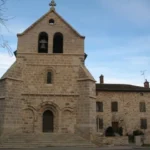
Longtemps pris pour un "oppidum carolingien", de récentes recherches ont permis de démontrer qu'il s'agit en fait d'une fortification du XIIe siècle. Elle se dresse en pleine forêt, aux abords du Grand Étang des Deffays (plus connu aujourd'hui sous le nom de Coco Plage), entre les anciens moulins banaux de la baronnie de Sillé et la route qui reliait la ville à Mont-Saint-Jean. Cette forteresse apparait pour la première fois dans les textes en 1409. Et déjà, il s'agit d'une ruine. Ainsi abandonnée très tôt, ce château construit semble t-il en peu de temps, présente un plan original qui en font un élément unique dans l'architecture militaire du Maine. Informations : il est uniquement possible de faire le tour extérieur du château. Pour des raisons de sécurités, il est interdit de pénétrer dans l'enceinte du château.
English
Long thought to be a "Carolingian oppidum", recent research has shown that it is in fact a 12th-century fortification. It stands in the middle of the forest, on the edge of the Grand Étang des Deffays (better known today as Coco Plage), between the former banal mills of the barony of Sillé and the road linking the town to Mont-Saint-Jean. This fortress was first mentioned in 1409. And it was already a ruin. Abandoned at an early date, the castle was built in what appears to have been a very short space of time, with an original layout that makes it unique in the military architecture of the Maine region. Information: it is only possible to walk around the outside of the castle. For security reasons, it is forbidden to enter the castle grounds.
Deutsch
Lange Zeit wurde es für ein "karolingisches Oppidum" gehalten, doch jüngste Forschungen haben ergeben, dass es sich in Wirklichkeit um eine Festung aus dem 12. Sie steht mitten im Wald, am Rande des Grand Étang des Deffays (heute besser bekannt als Coco Plage), zwischen den alten Bannmühlen der Baronie Sillé und der Straße, die die Stadt mit Mont-Saint-Jean verband. Diese Festung taucht 1409 zum ersten Mal in den Texten auf. Und schon damals handelte es sich um eine Ruine. Die Burg wurde sehr früh verlassen und scheinbar in kurzer Zeit erbaut. Sie weist einen originellen Grundriss auf, der sie zu einem einzigartigen Element der Militärarchitektur in Maine macht. Information: Es ist nur möglich, die Burg von außen zu umrunden. Aus Sicherheitsgründen ist es verboten, die Burg zu betreten.
Dutch
Lang werd gedacht dat het een Karolingisch oppidum was, maar recent onderzoek heeft aangetoond dat het in feite een 12e-eeuws fort is. Het staat midden in het bos, aan de rand van het Grand Étang des Deffays (tegenwoordig beter bekend als Coco Plage), tussen de voormalige banale molens van de baronie van Sillé en de weg die de stad verbond met Mont-Saint-Jean. Dit fort werd voor het eerst vermeld in 1409. Het was toen al een ruïne. Het kasteel, dat al vroeg werd verlaten, werd blijkbaar in korte tijd gebouwd, met een originele indeling die het uniek maakt in de militaire architectuur van de Maine. Informatie: Het is alleen mogelijk om rond de buitenkant van het kasteel te lopen. Om veiligheidsredenen is het verboden om het kasteelterrein te betreden.
Español
Considerado durante mucho tiempo un oppidum carolingio, investigaciones recientes han demostrado que se trata en realidad de una fortificación del siglo XII. Se alza en medio del bosque, al borde del Grand Étang des Deffays (más conocido hoy como Coco Plage), entre los antiguos molinos banales de la baronía de Sillé y la carretera que unía la ciudad con Mont-Saint-Jean. Esta fortaleza se menciona por primera vez en 1409. Ya era una ruina. Abandonado en fecha temprana, el castillo se construyó al parecer en poco tiempo, con un trazado original que lo hace único en la arquitectura militar de la región de Maine. Información: Sólo es posible pasear por el exterior del castillo. Por razones de seguridad, está prohibido entrar en el recinto del castillo.
Italiano
A lungo ritenuto un oppidum carolingio, recenti ricerche hanno dimostrato che si tratta in realtà di una fortificazione del XII secolo. Si trova in mezzo alla foresta, ai margini del Grand Étang des Deffays (meglio conosciuto oggi come Coco Plage), tra gli ex mulini banali della baronia di Sillé e la strada che collegava la città a Mont-Saint-Jean. Questa fortezza è stata menzionata per la prima volta nel 1409. Era già una rovina. Abbandonato precocemente, il castello è stato apparentemente costruito in un breve lasso di tempo, con una disposizione originale che lo rende unico nell'architettura militare della regione del Maine. Informazioni: è possibile passeggiare solo all'esterno del castello. Per motivi di sicurezza, è vietato entrare nel parco del castello.
Médiéval
Sillé Plage, 72140 Sillé-le-Guillaume