Temple protestant – Thionville
Description
English
Deutsch
Dutch
Español
Italiano
Description
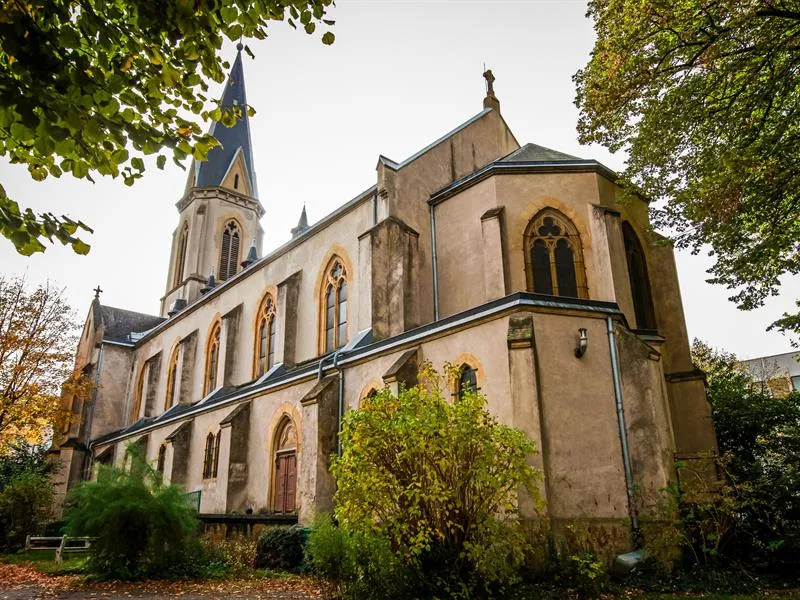
800 Protestants allemands demandent en 1876 la construction d'un lieu de culte qui leur soit dédié. Caractéristique de l'architecture protestante de la fin du XIXème siècle, le temple étonne par ses similitudes avec les églises catholiques. De style néo-gothique, très prisé par les Allemands, il présente un plan allongé, une tour, un chevet polygonal et surtout l'utilisation de la célèbre pierre de Jaumont. C'est surtout la grande rose de la façade qui rappellent les styles architecturaux des églises catholiques. La décoration intérieure et les vitraux colorés, là encore, s'intègrent dans le style néo-gothique. La sobriété des lieux rappellent les préceptes religieux valorisés par les Protestants.
English
In 1876, 800 German Protestants demanded the construction of a place of worship dedicated to them. Characteristic of the Protestant architecture of the end of the 19th century, the temple astonishes by its similarities with the Catholic churches. In neo-gothic style, much appreciated by the Germans, it has an elongated plan, a tower, a polygonal chevet and above all the use of the famous Jaumont stone. It is especially the large rose on the facade that recalls the architectural styles of Catholic churches. The interior decoration and the coloured stained glass windows are again in the neo-gothic style. The sobriety of the place recalls the religious precepts valued by the Protestants.
Deutsch
800 deutsche Protestanten forderten 1876 den Bau eines ihnen gewidmeten Gotteshauses. Der für die protestantische Architektur des ausgehenden 19. Jahrhunderts charakteristische Tempel überrascht durch seine Ähnlichkeiten mit katholischen Kirchen. Im neogotischen Stil, der bei den Deutschen sehr beliebt war, weist er einen langgestreckten Grundriss, einen Turm, einen polygonalen Kopfteil und vor allem die Verwendung des berühmten Jaumont-Steins auf. Vor allem die große Rose an der Fassade erinnert an die Baustile der katholischen Kirchen. Die Innendekoration und die bunten Glasfenster passen auch hier in den neugotischen Stil. Die Schlichtheit der Räumlichkeiten erinnert an die religiösen Gebote, die von den Protestanten geschätzt wurden.
Dutch
in 1876 verzochten 800 Duitse protestanten om de bouw van een aan hen gewijd bedehuis. Kenmerkend voor de protestantse architectuur aan het eind van de 19e eeuw, lijkt de tempel verrassend veel op katholieke kerken. In de neogotische stijl, zeer geliefd bij de Duitsers, heeft het een langgerekte plattegrond, een toren, een veelhoekig chevet en vooral het gebruik van de beroemde Jaumont-steen. De grote roos op de gevel doet denken aan de bouwstijl van katholieke kerken. Het interieur en de gekleurde gebrandschilderde ramen zijn eveneens in neogotische stijl. De soberheid van de plaats doet denken aan de door de protestanten gewaardeerde religieuze voorschriften.
Español
en 1876, 800 protestantes alemanes solicitaron la construcción de un lugar de culto dedicado a ellos. Característico de la arquitectura protestante de finales del siglo XIX, el templo es sorprendentemente similar a las iglesias católicas. De estilo neogótico, muy favorecido por los alemanes, tiene una planta alargada, una torre, una cabecera poligonal y, sobre todo, el uso de la famosa piedra de Jaumont. La gran rosa de la fachada recuerda a los estilos arquitectónicos de las iglesias católicas. La decoración interior y las vidrieras de colores también son de estilo neogótico. La sobriedad del lugar recuerda los preceptos religiosos valorados por los protestantes.
Italiano
nel 1876, 800 protestanti tedeschi chiesero la costruzione di un luogo di culto a loro dedicato. Caratteristico dell'architettura protestante della fine del XIX secolo, il tempio è sorprendentemente simile alle chiese cattoliche. In stile neogotico, molto amato dai tedeschi, presenta una pianta allungata, una torre, un chevet poligonale e soprattutto l'uso della famosa pietra di Jaumont. La grande rosa sulla facciata ricorda gli stili architettonici delle chiese cattoliche. Anche la decorazione interna e le vetrate colorate sono in stile neogotico. La sobrietà del luogo ricorda i precetti religiosi apprezzati dai protestanti.
Passage du Temple, 57100 Thionville
Crédits: Ville de Thionville