Prieuré Saint-Morand – Altkirch
Description
English
Deutsch
Dutch
Español
Italiano
Description
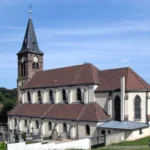
Le prieuré est ouvert les samedis et dimanches de 12h à 17h (une messe est célébrée les derniers dimanches du mois, à 18h) La première mention du site date de 1105, date à laquelle Frédéric, comte de Ferrette, donne le prieuré à Hugues Sémur, abbé de Cluny. Saint Morand y officie dès 1106. Il était alors chargé d'y établir la règle bénédictine. Il parcourut la région pendant dix ans, multipliant les conversions, les guérisons et les miracles. A sa mort en 1115, il fut inhumé au centre de l'église du prieuré qui prit son nom. Saint-Morand fut canonisé à la fin du XIIème siècle. En vous aventurant à l'intérieur, vous pourrez encore vous recueillir devant un gisant représentant Saint-Morand et un reliquaire offert en 1428 par l'archiduc Frédéric du Tyrol. Le prieuré fut racheté en 1828 par la ville d'Altkirch pour en faire un hôpital. Aujourd'hui, l'hôpital occupe toujours les bâtiments grâce à des restructurations et des agrandissements.
English
The priory is open Saturdays and Sundays from 12pm to 5pm (a mass is celebrated on the last Sunday of the month, at 6pm) The first mention of the site dates back to 1105, when Frédéric, Count of Ferrette, gave the priory to Hugues Sémur, abbot of Cluny. Saint Morand began officiating there in 1106. He was responsible for establishing the Benedictine rule. For ten years, he travelled the region, multiplying conversions, healings and miracles. On his death in 1115, he was buried in the center of the priory church that took his name. Saint-Morand was canonized at the end of the 12th century. If you venture inside, you'll still find a recumbent statue of St. Morand and a reliquary donated in 1428 by Archduke Frederick of Tyrol. In 1828, the priory was bought by the town of Altkirch and turned into a hospital. Today, the hospital still occupies the buildings thanks to restructuring and enlargement.
Deutsch
Das Priorat ist samstags und sonntags von 12:00 bis 17:00 Uhr geöffnet (an den letzten Sonntagen des Monats wird um 18:00 Uhr eine Messe gefeiert) Die erste Erwähnung des Ortes stammt aus dem Jahr 1105, als Frédéric, Graf von Ferrette, das Priorat Hugues Sémur, dem Abt von Cluny, schenkte. Saint Morand amtierte dort ab 1106. Damals hatte er den Auftrag, dort die Benediktinerregel einzuführen. Er reiste zehn Jahre lang durch die Region und verzeichnete zahlreiche Bekehrungen, Heilungen und Wunder. Nach seinem Tod im Jahr 1115 wurde er in der Mitte der Kirche des Priorats, das nach ihm benannt wurde, beigesetzt. Saint-Morand wurde Ende des 12. Jahrhunderts heiliggesprochen. Wenn Sie sich ins Innere wagen, können Sie noch vor einer Liege, die den Heiligen Morand darstellt, und einem Reliquienschrein, der 1428 vom Erzherzog Friedrich von Tirol gestiftet wurde, beten. Das Priorat wurde 1828 von der Stadt Altkirch aufgekauft, um es als Krankenhaus zu nutzen. Heute nutzt das Krankenhaus die Gebäude dank Umstrukturierungen und Erweiterungen immer noch.
Dutch
De priorij is open op zaterdag en zondag van 12.00 tot 17.00 uur (op de laatste zondag van de maand wordt om 18.00 uur een mis opgedragen) De eerste vermelding van de site dateert uit 1105, toen Frédéric, graaf van Ferrette, de priorij schonk aan Hugues Sémur, abt van Cluny. Saint Morand was er abt vanaf 1106. Hij was verantwoordelijk voor de invoering van de benedictijnse regel. Hij reisde tien jaar lang door de regio en zorgde voor veel bekeringen, genezingen en wonderen. Toen hij in 1115 stierf, werd hij begraven in het midden van de priorij die zijn naam droeg. Saint-Morand werd aan het einde van de 12e eeuw heilig verklaard. Als je je binnen waagt, kun je nog steeds een ligbeeld van Saint-Morand bezichtigen en een reliekschrijn die in 1428 werd geschonken door aartshertog Frederik van Tirol. De priorij werd in 1828 gekocht door de stad Altkirch en omgebouwd tot een ziekenhuis. Vandaag de dag is het ziekenhuis nog steeds gevestigd in de gebouwen dankzij herstructureringen en uitbreidingen.
Español
El priorato está abierto los sábados y domingos de 12.00 a 17.00 horas (el último domingo del mes se celebra una misa a las 18.00 horas) La primera mención del lugar se remonta a 1105, cuando Frédéric, conde de Ferrette, donó el priorato a Hugues Sémur, abad de Cluny. San Morand ofició allí desde 1106. Fue el encargado de instaurar la regla benedictina. Recorrió la región durante diez años, multiplicando conversiones, curaciones y milagros. A su muerte, en 1115, fue enterrado en el centro de la iglesia prioral que llevaba su nombre. Saint-Morand fue canonizado a finales del siglo XII. Si se aventura a entrar, aún puede visitar una estatua yacente de Saint-Morand y un relicario donado en 1428 por el archiduque Federico de Tirol. En 1828, la ciudad de Altkirch compró el priorato y lo convirtió en hospital. Hoy en día, el hospital sigue ocupando los edificios gracias a reestructuraciones y ampliaciones.
Italiano
Il monastero è aperto il sabato e la domenica dalle 12 alle 17 (l'ultima domenica del mese viene celebrata una messa alle 18) La prima menzione del sito risale al 1105, quando Frédéric, conte di Ferrette, donò il priorato a Hugues Sémur, abate di Cluny. San Morand vi officiò dal 1106. Fu responsabile dell'istituzione della regola benedettina. Percorse la regione per dieci anni, moltiplicando conversioni, guarigioni e miracoli. Quando morì, nel 1115, fu sepolto al centro della chiesa del priorato che prese il suo nome. Saint-Morand fu canonizzato alla fine del XII secolo. Se vi avventurate all'interno, potete ancora visitare una statua reclinata di Saint-Morand e un reliquiario donato nel 1428 dall'arciduca Federico del Tirolo. Il priorato fu acquistato dalla città di Altkirch nel 1828 e trasformato in ospedale. Oggi l'ospedale occupa ancora gli edifici grazie a ristrutturazioni e ampliamenti.
Rue de Saint-Morand, 68130 Altkirch