ORGUE DE L'EGLISE SAINT REMY – EULMONT
Description
English
Deutsch
Dutch
Español
Italiano
Description
Choeur de style gothique flamboyant du XVe, nef plus tardive avec les voûtes en bois. Orgue situé en tribune au-dessus de l'entrée, construit en 1842, de facture de Nicolas-Antoine Lété, restauré en 2000 et 2001, buffet en boiserie très classique, c'est le seul instrument connu avec un clavier de 56 notes chez Lété, et un des premiers exemples en France. La construction de l’église du village a été entreprise par les prieurs de Lay-Saint-Christophe au début du 16e siècle. L’achèvement de la construction eût lieu précisément en 1518 et elle devient annexe de Lay en 1521.
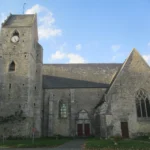
L’édifice actuel n’est pas un ensemble homogène ; on peut y distinguer trois parties. La tour carrée à trois étages avec des ouvertures géminées, a été datée du 14 e siècle par la société d’archéologie lorraine en 1899. Le cœur quant à lui, avec sa très belle voûte gothique en croisées d’ogive est daté de 15e siècle. La nef centrale et ses deux collatéraux pourvus de voûtes gothiques faites de plâtre et de bois ne furent construits qu’au 19e siècle.
English
Flamboyant Gothic style choir from the 15th century, later nave with wooden vaults. Organ located in the gallery above the entrance, built in 1842, made by Nicolas-Antoine Lété, restored in 2000 and 2001, very classical woodwork buffet, it is the only known instrument with a 56-note keyboard at Lété's, and one of the first examples in France. The construction of the village church was undertaken by the priors of Lay-Saint-Christophe at the beginning of the 16th century. The completion of the construction took place precisely in 1518 and it became an annex of Lay in 1521.
The present building is not a homogeneous whole; three parts can be distinguished. The three-storey square tower with geminated openings was dated to the 14th century by the archaeological society of Lorraine in 1899. The heart, with its beautiful Gothic cross vault, is dated from the 15th century. The central nave and its two side aisles with Gothic vaults made of plaster and wood were not built until the 19th century.
Deutsch
Chor im Stil der Flamboyant-Gotik aus dem 15. Jh., späteres Kirchenschiff mit Holzgewölben. Orgel auf der Empore über dem Eingang, erbaut 1842, von Nicolas-Antoine Lété, 2000 und 2001 restauriert, sehr klassisches Holzgehäuse, es ist das einzige bekannte Instrument mit einer 56-tönigen Klaviatur von Lété und eines der ersten Beispiele in Frankreich. Der Bau der Dorfkirche wurde von den Prioren von Lay-Saint-Christophe Anfang des 16. Jahrhunderts begonnen. Die Fertigstellung erfolgte genau im Jahr 1518 und sie wurde 1521 zum Nebengebäude von Lay.
Das heutige Gebäude ist kein homogenes Ganzes; es lassen sich drei Teile unterscheiden. Der dreistöckige quadratische Turm mit Zwillingsöffnungen wurde 1899 von der lothringischen Archäologiegesellschaft auf das 14. Das Herz mit seinem wunderschönen gotischen Kreuzgewölbe wird auf das 15. Jahrhundert datiert. Das Mittelschiff und die beiden Seitenschiffe mit gotischen Gewölben aus Gips und Holz wurden erst im 19.
Dutch
Koor in flamboyante gotische stijl uit de 15e eeuw, later schip met houten gewelven. Orgel in de galerij boven de ingang, gebouwd in 1842, door Nicolas-Antoine Lété, gerestaureerd in 2000 en 2001, zeer klassiek houtwerk, het is het enige bekende instrument met een 56-tonig klavier van Lété, en een van de eerste exemplaren in Frankrijk. De bouw van de dorpskerk werd ondernomen door de priorijen van Lay-Saint-Christophe in het begin van de 16e eeuw. Het werd voltooid in 1518 en werd een dependance van Lay in 1521.
Het huidige gebouw is geen homogeen geheel; er kunnen drie delen worden onderscheiden. De vierkante toren met drie verdiepingen en gemetselde openingen werd in 1899 door de Lorraine Archaeological Society gedateerd op de 14e eeuw. Het hart, met zijn prachtige gotische kruisgewelf, dateert uit de 15e eeuw. Het middenschip en de twee zijbeuken met gotische gewelven van gips en hout werden pas in de 19e eeuw gebouwd.
Español
Coro de estilo gótico flamígero del siglo XV, nave posterior con bóvedas de madera. Órgano situado en la galería sobre la entrada, construido en 1842, realizado por Nicolas-Antoine Lété, restaurado en 2000 y 2001, caja de madera muy clásica, es el único instrumento conocido con un teclado de 56 notas de Lété, y uno de los primeros ejemplos en Francia. La construcción de la iglesia del pueblo fue realizada por los priores de Lay-Saint-Christophe a principios del siglo XVI. Se terminó en 1518 y se convirtió en un anexo de Lay en 1521.
El edificio actual no es un conjunto homogéneo; se pueden distinguir tres partes. La torre cuadrada de tres pisos con vanos geminados fue datada en el siglo XIV por la Sociedad Arqueológica de Lorena en 1899. El corazón, con su hermosa bóveda de crucería gótica, está fechado en el siglo XV. La nave central y sus dos laterales con bóvedas góticas de yeso y madera no se construyeron hasta el siglo XIX.
Italiano
Coro in stile gotico fiammeggiante del XV secolo, navata successiva con volte in legno. Organo situato nella galleria sopra l'ingresso, costruito nel 1842, opera di Nicolas-Antoine Lété, restaurato nel 2000 e nel 2001, cassa in legno molto classica, è l'unico strumento conosciuto con tastiera a 56 note di Lété, e uno dei primi esempi in Francia. La costruzione della chiesa del villaggio fu intrapresa dai priori di Lay-Saint-Christophe all'inizio del XVI secolo. Fu completato nel 1518 e divenne una dipendenza di Lay nel 1521.
L'edificio attuale non è un insieme omogeneo; si possono distinguere tre parti. La torre quadrata a tre piani con aperture geminate è stata datata al XIV secolo dalla Società Archeologica della Lorena nel 1899. Il cuore, con la sua bella volta a crociera gotica, risale al XV secolo. La navata centrale e le due laterali con volte gotiche in gesso e legno furono costruite solo nel XIX secolo.
église Saint Rémy, 54690 Eulmont