EGLISE SAINT RIGOMER ET SAINT RÉMY – SAINT RÉMY DU VAL
Description
English
Deutsch
Dutch
Español
Italiano
Description
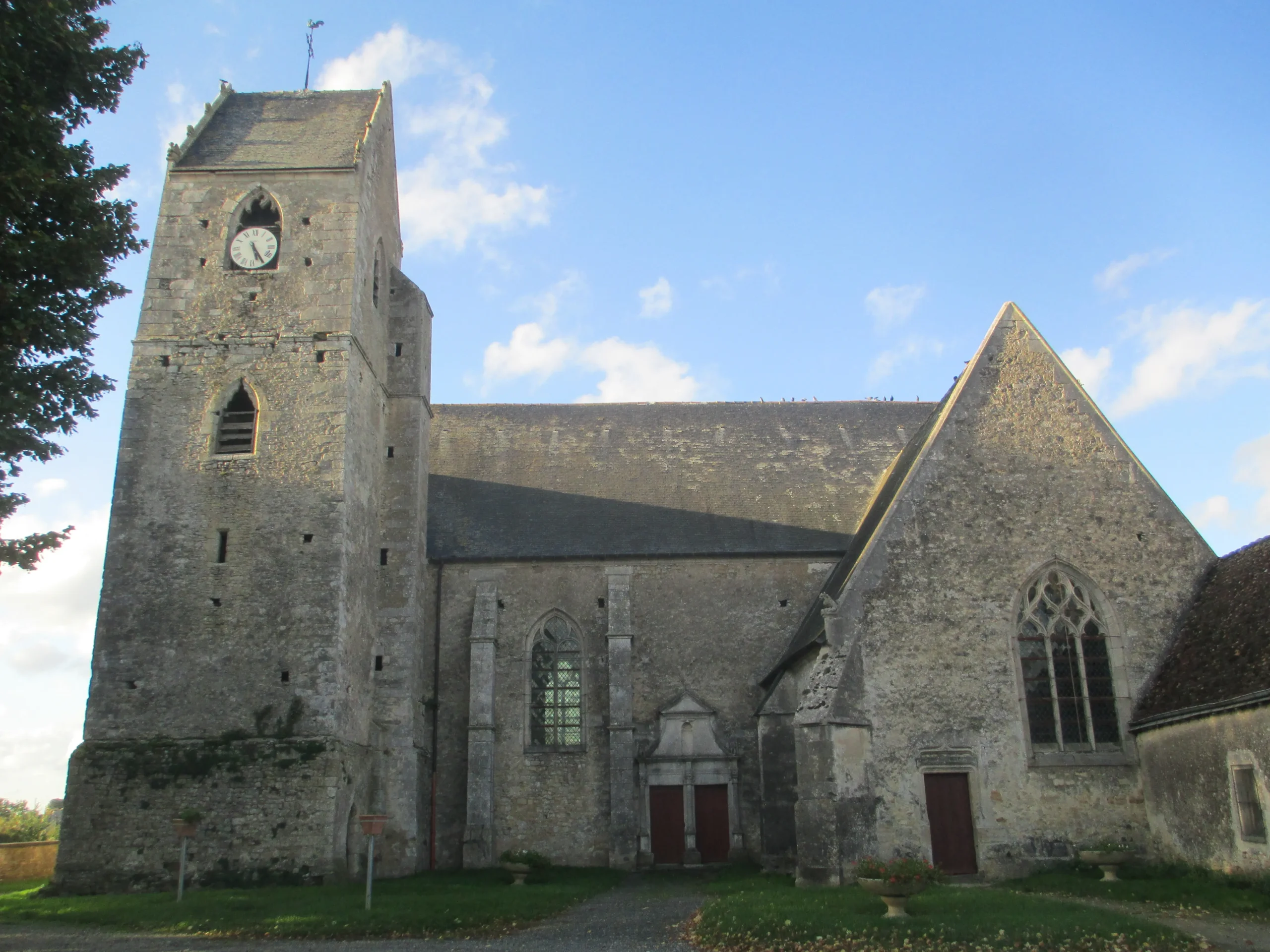
Située au bord des fossés du château fort sur la plateforme qui surplombe la vallée de la Bienne, l’église fut reconstruite à la fin du moyen-âge, où un lieu de culte apparait déjà dans les écrits dès 1009-1028. Du XVème et XVIème siècle avec une tour clocher défensive surmontée d'un toit en bâtière (2 versants opposés en forme de bât) sur 2 pignons découverts. Ce style de toit du XIIème ou antérieur, est assez rare. La nef simple a 4 travées, les voûtes gothiques du XVème retombent sur de fines colonnes sans chapiteau, le chœur est à chevet plat et ses voûtes retombent sur des culots. Le transept est important. L'intérieur contient un mobilier riche classé monument historique: retables de la Vierge de Pitié et de St Sébastien, Vierge à l'enfant (XV ou XIème siècle), maître autel (XVIIIe), clôture de chœur (XVIIIe), stalles (XVIIIe) et Christ en croix (XVII) L’église est classée au titre des Monuments Historique. Ne manquez pas à proximité les vestiges du château fort et le superbe panorama depuis la motte, le four à chanvre et le logis de Moullins.
English
Located on the edge of the moat of the castle on the platform overlooking the valley of the Bienne, the church was rebuilt at the end of the Middle Ages, where a place of worship already appears in the writings from 1009-1028. From the 15th and 16th centuries with a defensive bell tower topped by a gable roof (2 opposite sides in the form of a batten) on 2 uncovered gables. This style of roof from the 12th century or earlier is quite rare. The simple nave has 4 bays, the 15th century gothic vaults fall on fine columns without capitals, the choir has a flat chevet and its vaults fall on culottes. The transept is important. The interior contains a rich furniture classified as historical monument: altarpieces of the Virgin of Pity and St Sebastian, Virgin and Child (XV or XIth century), high altar (XVIIIth), choir fence (XVIIIth), stalls (XVIIIth) and Christ on the Cross (XVII) The church is classified as a Historical Monument. Don't miss the remains of the fortified castle and the superb panorama from the motte, the hemp oven and the Moullins dwelling.
Deutsch
Die Kirche liegt am Rand der Burggräben auf der Plattform über dem Bielatal und wurde im späten Mittelalter wieder aufgebaut, wo ein Gotteshaus bereits zwischen 1009 und 1028 in den Schriften auftaucht. Aus dem 15. und 16. Jahrhundert mit einem wehrhaften Glockenturm, der von einem Satteldach (zwei gegenüberliegende Seitenflächen in Form von Stäben) auf zwei offenen Giebeln gekrönt wird. Dieser Dachstil aus dem 12. Jahrhundert oder früher ist recht selten. Das einfache Kirchenschiff hat vier Joche, die gotischen Gewölbe aus dem 15. Jahrhundert ruhen auf dünnen Säulen ohne Kapitell, der Chor hat ein flaches Kopfende und seine Gewölbe ruhen auf Sockeln. Das Querschiff ist wichtig. Das Innere enthält eine reiche Ausstattung, die unter Denkmalschutz steht: Altarbilder der Jungfrau der Gnade und des Heiligen Sebastian, Jungfrau mit Kind (15. oder 11. Jh.), Hochaltar (18. Jh.), Chorabschluss (18. Jh.), Chorgestühl (18. Jh.) und Christus am Kreuz (17. Jh.) Die Kirche ist als historisches Monument klassifiziert. Verpassen Sie nicht die Überreste der Burg in der Nähe und das herrliche Panorama von der Motte, dem Hanfofen und dem Logis de Moullins.
Dutch
De kerk werd aan het einde van de middeleeuwen herbouwd aan de rand van de slotgracht, op het platform dat uitkijkt over de vallei van Bienne, waar al in 1009-1028 een bedehuis wordt vermeld. Uit de 15e en 16e eeuw met een defensieve klokkentoren met daarop een zadeldak (2 tegenover elkaar liggende zijden in de vorm van een lat) op 2 open gevels. Deze dakstijl, uit de 12e eeuw of eerder, is vrij zeldzaam. Het eenvoudige schip heeft 4 traveeën, de 15e eeuwse gotische gewelven vallen op dunne zuilen zonder kapitelen, het koor heeft een plat chevet en de gewelven vallen op culottes. Het dwarsschip is belangrijk. Het interieur bevat een rijk meubilair dat als historisch monument is geclassificeerd: altaarstukken van de Maagd van Weldadigheid en Sint-Sebastiaan, Maagd en Kind (15e of 11e eeuw), hoogaltaar (18e eeuw), koorhek (18e eeuw), koorgestoelte (18e eeuw) en Christus aan het Kruis (17e eeuw) De kerk is geclassificeerd als Historisch Monument. Mis niet de overblijfselen van het versterkte kasteel en het prachtige panorama vanaf de motte, de hennepoven en de woning van de Moullins.
Español
La iglesia fue reconstruida a finales de la Edad Media en el borde del foso del castillo, en la plataforma que domina el valle de Biel, donde se registra un lugar de culto ya en 1009-1028. La iglesia fue construida en los siglos XV y XVI con un campanario defensivo rematado por un tejado "bâtière" (dos caras opuestas en forma de listón) sobre dos hastiales descubiertos. Este estilo de tejado, del siglo XII o anterior, es bastante raro. La sencilla nave tiene 4 tramos, las bóvedas góticas del siglo XV caen sobre finas columnas sin capiteles, el coro tiene una cabecera plana y sus bóvedas caen sobre culotes. El crucero es importante. El interior contiene un rico mobiliario clasificado como monumento histórico: retablos de la Virgen de la Piedad y de San Sebastián, la Virgen y el Niño (siglos XV o XI), el altar mayor (siglo XVIII), el coro (siglo XVIII), la sillería del coro (siglo XVIII) y el Cristo en la Cruz (siglo XVII) La iglesia está catalogada como Monumento Histórico. No se pierda los restos del castillo fortificado y el magnífico panorama desde el lienzo, el horno de cáñamo y la vivienda de los Moullins.
Italiano
La chiesa fu ricostruita alla fine del Medioevo sul bordo del fossato del castello, sulla piattaforma che domina la valle di Bienne, dove già nel 1009-1028 è attestato un luogo di culto. La chiesa fu costruita nel XV e XVI secolo con un campanile difensivo sormontato da un tetto "bâtière" (due lati opposti a forma di stecca) su due timpani scoperti. Questo stile di tetto, risalente al XII secolo o precedente, è piuttosto raro. La navata semplice è a 4 campate, le volte gotiche del XV secolo ricadono su sottili colonne senza capitelli, il coro ha un chevet piatto e le sue volte ricadono su culottes. Il transetto è importante. L'interno contiene un ricco arredo classificato come monumento storico: pale d'altare della Vergine della Pietà e di San Sebastiano, Vergine con Bambino (XV o XI secolo), altare maggiore (XVIII secolo), paravento del coro (XVIII secolo), stalli del coro (XVIII secolo) e Cristo in Croce (XVII secolo) La chiesa è classificata come monumento storico. Non perdete i resti del castello fortificato e il superbo panorama dalla motta, il forno della canapa e la dimora dei Moullins.
Gothique - Roman - Xixe siècle
, 72600 Saint-Rémy-du-Val
Crédits: Pucesurvitaminee