Musée du Temps – Besançon
Description
English
Deutsch
Dutch
Español
Italiano
Description
Le musée du Temps de Besançon: un musée dans un palais Installé au cœur d’un prestigieux palais Renaissance, le palais Granvelle, le musée du Temps retrace les grands moments de l’horlogerie bisontine, faisant dialoguer l’histoire de la mesure du temps et l’histoire de la ville. L’évocation de Besançon comme « capitale horlogère » s’inscrit au musée à travers les collections patrimoniales de la ville. Outre la fameuse Leroy 01, longtemps considérée comme la montre la plus compliquée du monde, le musée présente une partie des instruments de l’Observatoire astronomique de Besançon, qui certifiait la bonne marche des chronomètres, ainsi que le matériel pédagogique de l’Ecole Nationale d’Horlogerie. Au-delà, les collections d’horlogerie offrent une vue d’ensemble de l’histoire de la discipline où se retrouvent représentés avec Ferdinand Berthoud ou Antide Janvier les plus grands noms de l’histoire horlogère.
En parallèle, tapisseries, personnages illustres, plan-relief, peintures historiques, mobilier et objets d’art, nous invitent à plonger dans l’histoire du lieu, de la ville et même de la Franche-Comté. Pour terminer, un panorama sur les toits de la ville est offert aux visiteurs après avoir contemplé le fameux pendule de Foucault situé au pied de la tour du palais et rythmant la rotation de la Terre.
English
The Musée du Temps in Besançon: a museum in a palace Located in the heart of a prestigious Renaissance palace, the Granvelle Palace, the Time Museum retraces the great moments of watchmaking in Besançon, bringing together the history of time measurement and the history of the city. The evocation of Besançon as a "watchmaking capital" is reflected in the museum through the city's heritage collections. In addition to the famous Leroy 01, long considered the most complicated watch in the world, the museum presents some of the instruments of the Besançon Astronomical Observatory, which certified the correct operation of the chronometers, as well as the educational material of the National Watchmaking School. In addition, the watchmaking collections offer an overview of the history of the discipline, with Ferdinand Berthoud and Antide Janvier representing some of the greatest names in watchmaking history.
At the same time, tapestries, famous people, relief drawings, historical paintings, furniture and objets d'art invite us to delve into the history of the place, the town and even the Franche-Comté region. To finish, a panorama of the city's roofs is offered to visitors after contemplating Foucault's famous pendulum, located at the foot of the palace tower, which gives rhythm to the Earth's rotation.
Deutsch
Das Musée du Temps in Besançon: ein Museum in einem Palast Das Musée du Temps befindet sich im Herzen eines prestigeträchtigen Renaissancepalastes, dem Palais Granvelle, und zeigt die großen Momente der Uhrmacherei in Bisont. Die Beschwörung von Besançon als "Hauptstadt der Uhrmacherei" wird im Museum durch die Erbgutsammlungen der Stadt verankert. Neben der berühmten Leroy 01, die lange Zeit als die komplizierteste Uhr der Welt galt, zeigt das Museum einen Teil der Instrumente des astronomischen Observatoriums von Besançon, das die Funktionstüchtigkeit der Chronometer bescheinigte, sowie das Lehrmaterial der Ecole Nationale d'Horlogerie. Darüber hinaus bieten die Uhrensammlungen einen Überblick über die Geschichte des Fachs, in dem mit Ferdinand Berthoud oder Antide Janvier die größten Namen der Uhrengeschichte vertreten sind.
Parallel dazu laden uns Wandteppiche, berühmte Persönlichkeiten, Planreliefs, historische Gemälde, Möbel und Kunstgegenstände dazu ein, in die Geschichte des Ortes, der Stadt und sogar der Franche-Comté einzutauchen. Zum Abschluss bietet sich den Besuchern ein Panoramablick über die Dächer der Stadt, nachdem sie das berühmte Foucaultsche Pendel betrachtet haben, das sich am Fuß des Palastturms befindet und den Rhythmus der Erdrotation bestimmt.
Dutch
Het Musée du Temps in Besançon: een museum in een paleis Het Tijdmuseum, gevestigd in het hart van een prestigieus renaissancepaleis, het Granvelle-paleis, toont de grote momenten van de horlogerie in Besançon en brengt de geschiedenis van de tijdmeting en de geschiedenis van de stad samen. De evocatie van Besançon als "horlogehoofdstad" wordt in het museum weerspiegeld door de erfgoedcollecties van de stad. Naast de beroemde Leroy 01, die lang als het meest ingewikkelde horloge ter wereld werd beschouwd, presenteert het museum enkele instrumenten van het Astronomisch Observatorium van Besançon, dat de goede werking van de chronometers certificeerde, en het onderwijsmateriaal van de Nationale horlogeschool. Daarnaast bieden de horlogecollecties een overzicht van de geschiedenis van de discipline, waarbij Ferdinand Berthoud en Antide Janvier de grootste namen uit de horlogegeschiedenis vertegenwoordigen.
Tegelijkertijd nodigen wandtapijten, beroemde personen, reliëftekeningen, historische schilderijen, meubels en kunstvoorwerpen uit om zich te verdiepen in de geschiedenis van de plaats, de stad en zelfs de Franche-Comté. Tot slot krijgen de bezoekers een panorama van de daken van de stad te zien, nadat ze de beroemde slinger van Foucault hebben bekeken, die aan de voet van de paleistoren staat en het ritme van de draaiing van de aarde aangeeft.
Español
El Museo del Tiempo de Besançon: un museo en un palacio Situado en el corazón de un prestigioso palacio renacentista, el Palacio de la Granvelle, el Museo del Tiempo recorre los grandes momentos de la relojería en Besançon, aunando la historia de la medición del tiempo y la historia de la ciudad. La evocación de Besançon como "capital relojera" se refleja en el museo a través de las colecciones patrimoniales de la ciudad. Además del famoso Leroy 01, considerado durante mucho tiempo el reloj más complicado del mundo, el museo presenta algunos de los instrumentos del Observatorio Astronómico de Besançon, que certificaban el correcto funcionamiento de los cronómetros, así como el material didáctico de la Escuela Nacional de Relojería. Además, las colecciones de relojería ofrecen una visión general de la historia de la disciplina, con Ferdinand Berthoud y Antide Janvier como representantes de los grandes nombres de la historia de la relojería.
Al mismo tiempo, tapices, personajes célebres, dibujos en relieve, pinturas históricas, muebles y objetos de arte nos invitan a adentrarnos en la historia del lugar, de la ciudad e incluso de la región del Franco Condado. Para terminar, se ofrece a los visitantes una panorámica de los tejados de la ciudad tras contemplar el famoso péndulo de Foucault situado a los pies de la torre del palacio y que da ritmo a la rotación de la Tierra.
Italiano
Il Musée du Temps di Besançon: un museo in un palazzo Situato nel cuore di un prestigioso palazzo rinascimentale, il Palazzo della Granvelle, il Museo del Tempo ripercorre i grandi momenti dell'orologeria di Besançon, unendo la storia della misurazione del tempo alla storia della città. L'evocazione di Besançon come "capitale dell'orologeria" si riflette nel museo attraverso le collezioni del patrimonio cittadino. Oltre al famoso Leroy 01, a lungo considerato l'orologio più complicato del mondo, il museo presenta alcuni strumenti dell'Osservatorio Astronomico di Besançon, che certificava il corretto funzionamento dei cronometri, e il materiale didattico della Scuola Nazionale di Orologeria. Inoltre, le collezioni di orologeria offrono una panoramica della storia della disciplina, con Ferdinand Berthoud e Antide Janvier che rappresentano i più grandi nomi della storia dell'orologeria.
Allo stesso tempo, arazzi, personaggi famosi, disegni in rilievo, dipinti storici, mobili e oggetti d'arte ci invitano ad approfondire la storia del luogo, della città e persino della regione della Franca Contea. Per finire, un panorama sui tetti della città viene offerto ai visitatori dopo aver contemplato il famoso pendolo di Foucault situato ai piedi della torre del palazzo e che dà il ritmo della rotazione terrestre.
Métiers - Nouvelles technologies et images - Histoire - Industrie - Sciences et techniques
Langues: Deutsch - English
Classement: Qualité Tourisme - Tourisme & Handicap auditif - Tourisme & Handicap mental - Tourisme & Handicap moteur
Moyens de paiement: Carte bleue - Espèce - Chèque - Cartes bancaires - Eurocard - mastercard - Visa
Equipements: Toilettes - Salle de réunion - Boutique - Salle de réunion équipée
96 Grande rue, 25000 Besançon
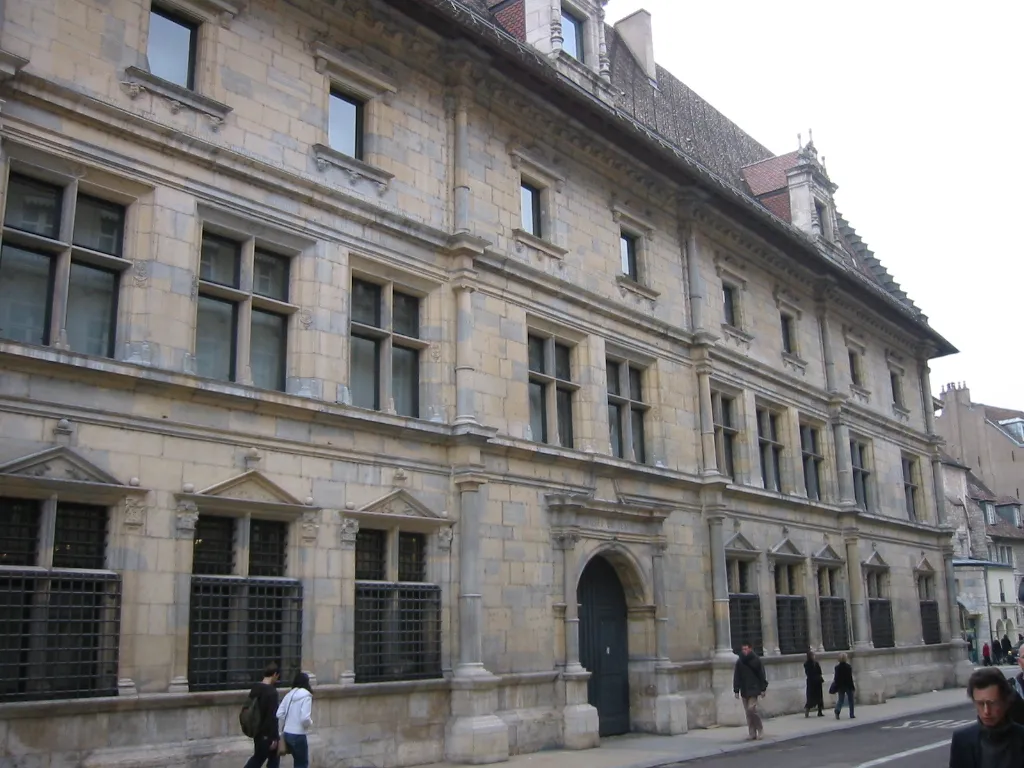
Crédits: https://commons.wikimedia.org/wiki/File:Palais_Grandvelle_Mus%C3%A9e_du_Temps.jpg
CC BY-SA 3.0
CC BY-SA 3.0