L'Octogone – Montmorillon
Description
English
Deutsch
Dutch
Español
Italiano
Description
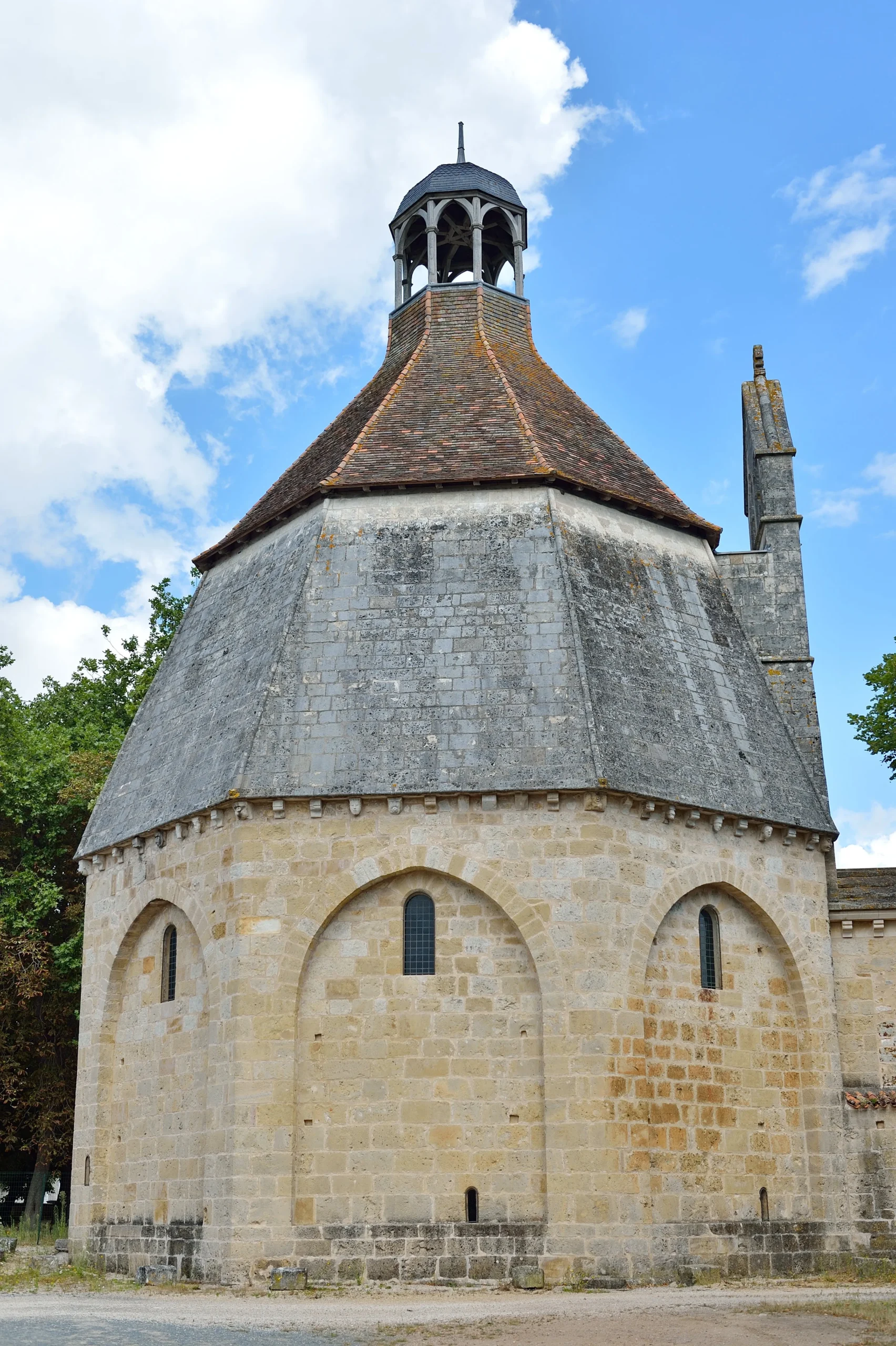
Cet édifice, construit au 12ème siècle dans le cimetière de la Maison-Dieu, avait une double fonction au Moyen Âge. Dans sa partie supérieure, il accueillait une chapelle liée au culte des défunts, et dans sa partie inférieure, l’espace abritait l’ossuaire du cimetière. Les ossements des chrétiens, prélevés régulièrement dans le cimetière, y étaient entreposés dans l’attente de la résurrection promise. La corniche à modillons et le portail occidental présentent de beaux éléments sculptés du 12ème siècle. C’est le monument le plus original du territoire du Montmorillonnais.
Classement aux Monuments Historiques en 1840. Un pupitre patrimonial installé à l’entrée vous délivrera des informations sur ce monument. Site inaccessible à la visite.
English
This building, built in the 12th century in the cemetery of the Maison-Dieu, had a double function in the Middle Ages. In its upper part, it housed a chapel linked to the cult of the dead, and in its lower part, the space sheltered the cemetery's ossuary. The bones of the Christians, taken regularly from the cemetery, were stored there awaiting the promised resurrection. The modillion cornice and the western portal have beautiful sculpted elements from the 12th century. It is the most original monument in the Montmorillonnais area.
It was classified as a Historic Monument in 1840. A heritage desk installed at the entrance will give you information on this monument. Site inaccessible to the visit.
Deutsch
Dieses im 12. Jahrhundert auf dem Friedhof des Maison-Dieu errichtete Gebäude hatte im Mittelalter eine doppelte Funktion. In seinem oberen Teil beherbergte es eine Kapelle, die mit der Verehrung der Verstorbenen verbunden war, und in seinem unteren Teil beherbergte der Raum das Beinhaus des Friedhofs. Die Gebeine der Christen, die regelmäßig vom Friedhof entnommen wurden, wurden hier in Erwartung der versprochenen Auferstehung aufbewahrt. Das Modulationsgesims und das Westportal weisen schöne geschnitzte Elemente aus dem 12. Jahrhundert. Es handelt sich um das originellste Bauwerk im Gebiet des Montmorillonnais.
1840 als historisches Monument klassifiziert. Am Eingang befindet sich ein Pult mit Informationen zu diesem Bauwerk. Nicht zugänglich für Besucher.
Dutch
Dit gebouw, gebouwd in de 12e eeuw op het kerkhof van het Maison-Dieu, had in de Middeleeuwen een dubbele functie. In het bovenste gedeelte bevond zich een kapel in verband met de verering van de doden en in het onderste gedeelte het ossuarium van de begraafplaats. De beenderen van christenen werden regelmatig van het kerkhof gehaald en daar bewaard in afwachting van de beloofde opstanding. De modillion kroonlijst en het westelijke portaal hebben prachtige gebeeldhouwde elementen uit de 12e eeuw. Het is het meest originele monument in de Montmorillonnais.
Geclassificeerd als Historisch Monument in 1840. Een erfgoedbalie bij de ingang geeft u informatie over dit monument. De site is niet toegankelijk voor bezoekers.
Español
Este edificio, construido en el siglo XII en el cementerio de la Maison-Dieu, tenía una doble función en la Edad Media. En su parte superior, albergaba una capilla vinculada al culto de los muertos, y en su parte inferior, el espacio albergaba el osario del cementerio. Los huesos de los cristianos se sacaban regularmente del cementerio y se almacenaban aquí en previsión de la prometida resurrección. La cornisa del modillón y el portal occidental tienen hermosos elementos tallados del siglo XII. Es el monumento más original de la zona de Montmorillonnais.
Fue catalogado como Monumento Histórico en 1840. Un mostrador del patrimonio instalado en la entrada le proporcionará información sobre este monumento. El sitio no está abierto a los visitantes.
Italiano
Questo edificio, costruito nel XII secolo nel cimitero di Maison-Dieu, aveva una duplice funzione nel Medioevo. La parte superiore ospitava una cappella dedicata al culto dei morti, mentre la parte inferiore era utilizzata come ossario del cimitero. Le ossa dei cristiani, prelevate regolarmente dal cimitero, venivano conservate qui in attesa della promessa resurrezione. Il cornicione a modiglioni e il portale occidentale presentano raffinati intagli del XII secolo. È il monumento più originale della regione del Montmorillonnais.
È stato dichiarato monumento storico nel 1840. All'ingresso si trova un banco di informazioni sul patrimonio che fornisce informazioni sul monumento. Il sito non è aperto ai visitatori.
, 86500 Montmorillon
Crédits: Non communiqué
Licence
Licence