L'HORREUM – Narbonne
Description
English
Deutsch
Dutch
Español
Italiano
Description
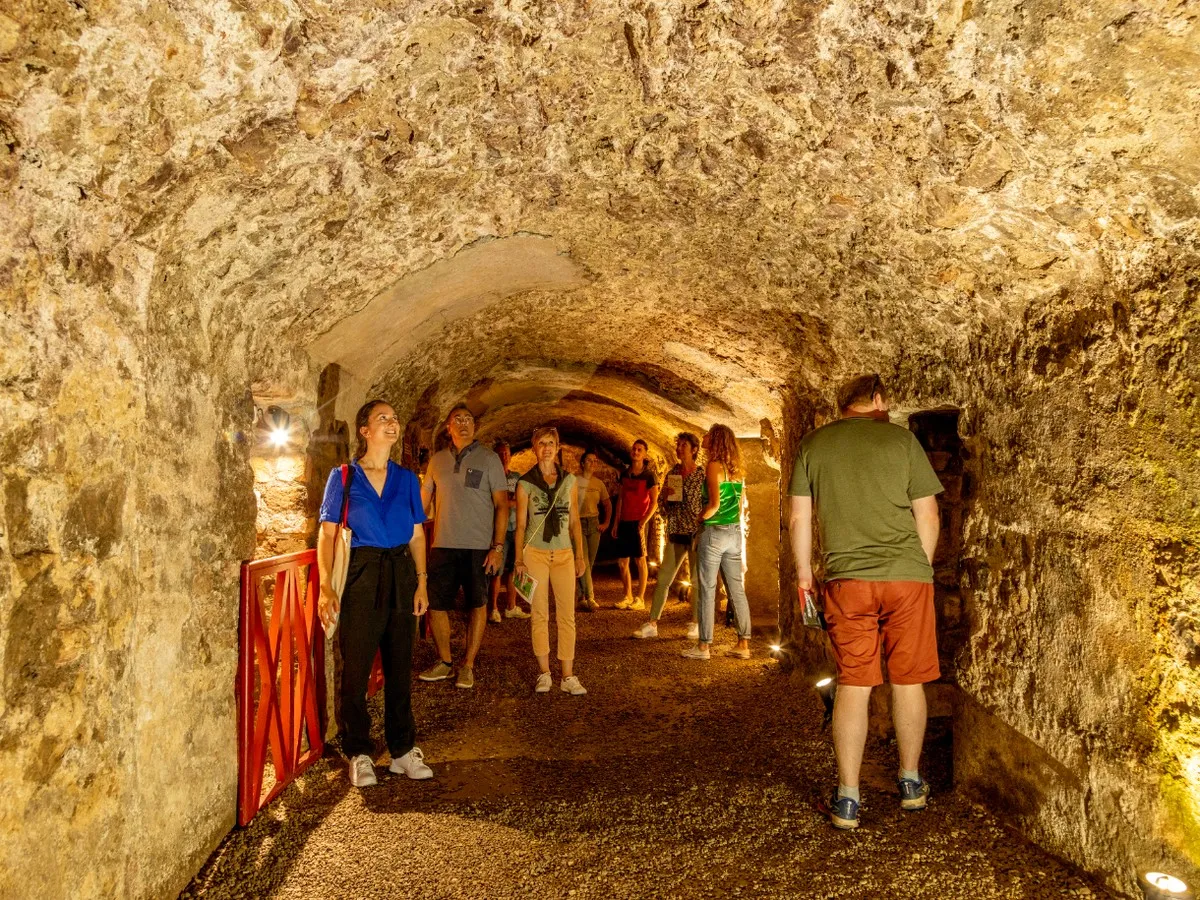
L’Horreum, au cœur de la ville moderne, se compose de galeries souterraines construites au Ier siècle avant J.-C. et situées à 5 mètres sous terre. Elles devaient constituer les fondations d’un bâtiment, sans doute un marché ou un entrepôt, (horreum signifiant « entrepôt »). Construit en surface, l’édifice se trouvait au sud du forum, en bordure du cardo (axe nord-sud) de la ville romaine de Narbo Martius. Ces galeries souterraines ont traversé les siècles avec divers remaniements et leur réutilisation partielle comme caves particulières. Signalées officiellement en 1838, elles ont été classées au titre des Monuments Historiques en 1961 puis aménagées et ouvertes au public en 1976. Avec les vestiges archéologiques du site du Clos de la Lombarde, l’Horreum est l’un des seuls monuments romains visibles et visitables au centre de Narbonne. Il appartient à l’Etablissement public de coopération culturelle (EPCC) Narbo Via, avec le musée Narbo Via et Amphoralis, restituant ainsi le prestigieux passé romain de Narbonne. Entrée gratuite pour les moins de 18 ans.
English
The Horreum, at the heart of the modern city, consists of underground galleries built in the 1st century BC and situated 5 meters below ground. They would have formed the foundations of a building, probably a market or warehouse (horreum meaning "storehouse"). Built on the surface, the building was located to the south of the forum, along the cardo (north-south axis) of the Roman town of Narbo Martius. These underground galleries have survived the centuries, with various alterations and partial re-use as private cellars. Officially listed in 1838, they were classified as Historic Monuments in 1961, then developed and opened to the public in 1976. Along with the archaeological remains of the Clos de la Lombarde site, the Horreum is one of the only Roman monuments visible and open to visitors in the center of Narbonne. Together with the Narbo Via Museum and Amphoralis, it is part of the Etablissement Public de Coopération Culturelle (EPCC) Narbo Via, thus restoring Narbonne?s prestigious Roman past. Free admission for under-18s.
Deutsch
Das Horreum, das Herz der modernen Stadt, besteht aus unterirdischen Gängen, die im 1. Jahrhundert v. Chr. gebaut wurden und 5 Meter unter der Erde liegen. Sie sollten das Fundament für ein Gebäude bilden, das wahrscheinlich ein Markt oder ein Lagerhaus war (Horreum bedeutet "Lagerhaus"). Das Gebäude wurde oberirdisch errichtet und befand sich südlich des Forums, am Rande des Cardo (Nord-Süd-Achse) der römischen Stadt Narbo Martius. Die unterirdischen Gänge überdauerten die Jahrhunderte mit verschiedenen Umbauten und der teilweisen Wiederverwendung als private Weinkeller. Sie wurden 1838 offiziell erwähnt, 1961 unter Denkmalschutz gestellt und 1976 ausgebaut und der Öffentlichkeit zugänglich gemacht. Zusammen mit den archäologischen Überresten der Ausgrabungsstätte Clos de la Lombarde ist das Horreum eines der wenigen sichtbaren und besuchbaren römischen Monumente im Zentrum von Narbonne. Es gehört zusammen mit dem Museum Narbo Via und Amphoralis zum Etablissement public de coopération culturelle (EPCC) Narbo Via und stellt so die glanzvolle römische Vergangenheit von Narbonne wieder her. Freier Eintritt für Personen unter 18 Jahren.
Dutch
Het Horreum, in het hart van de moderne stad, bestaat uit ondergrondse galerijen die in de 1e eeuw voor Christus werden gebouwd en 5 meter onder de grond liggen. Ze zouden de funderingen hebben gevormd van een gebouw, waarschijnlijk een markt of een opslagplaats (horreum betekent "opslagplaats"). Het bovengrondse gebouw bevond zich ten zuiden van het forum, aan de rand van de cardo (noord-zuid as) van de Romeinse stad Narbo Martius. Deze ondergrondse galerijen hebben de eeuwen overleefd, met verschillende verbouwingen en gedeeltelijk hergebruik als privékelders. Ze werden officieel geregistreerd in 1838, geclassificeerd als Historisch Monument in 1961 en vervolgens ontwikkeld en opengesteld voor het publiek in 1976. Samen met de archeologische overblijfselen van de Clos de la Lombarde is het Horreum een van de enige Romeinse monumenten die in het centrum van Narbonne te zien en te bezoeken zijn. Het maakt deel uit van de openbare instelling voor culturele samenwerking Narbo Via (EPCC), samen met het Narbo Via Museum en Amphoralis, en herstelt zo het prestigieuze Romeinse verleden van Narbonne. Gratis toegang voor kinderen onder de 18 jaar.
Español
El Horreum, en el corazón de la ciudad moderna, está formado por galerías subterráneas construidas en el siglo I a.C. y situadas a 5 metros bajo tierra. Habrían constituido los cimientos de un edificio, probablemente un mercado o un almacén (horreum significa "almacén"). Construido en la superficie, el edificio estaba situado al sur del foro, en el borde del cardo (eje norte-sur) de la ciudad romana de Narbo Martius. Estas galerías subterráneas han sobrevivido al paso de los siglos, con diversas reformas y su reutilización parcial como bodegas privadas. Oficialmente catalogadas en 1838, fueron clasificadas como Monumentos Históricos en 1961, y posteriormente acondicionadas y abiertas al público en 1976. Junto con los restos arqueológicos del yacimiento del Clos de la Lombarde, el Horreum es uno de los únicos monumentos romanos que pueden verse y visitarse en el centro de Narbona. Forma parte del Establecimiento Público de Cooperación Cultural de la Narbo Vía (EPCC), junto con el Museo de la Narbo Vía y Amphoralis, restaurando así el prestigioso pasado romano de Narbona. Entrada gratuita para menores de 18 años.
Italiano
L'Horreum, nel cuore della città moderna, è costituito da gallerie sotterranee costruite nel I secolo a.C. e situate a 5 metri di profondità. Esse avrebbero costituito le fondamenta di un edificio, probabilmente un mercato o un magazzino (horreum significa "magazzino"). Costruito in superficie, l'edificio si trovava a sud del foro, ai margini del cardo (asse nord-sud) della città romana di Narbo Martius. Queste gallerie sotterranee sono sopravvissute ai secoli, con varie modifiche e un parziale riutilizzo come cantine private. Ufficialmente censite nel 1838, sono state classificate come Monumento Storico nel 1961, quindi valorizzate e aperte al pubblico nel 1976. Insieme ai resti archeologici del sito del Clos de la Lombarde, l'Horreum è uno degli unici monumenti romani visibili e visitabili nel centro di Narbonne. Fa parte dell'Ente Pubblico di Cooperazione Culturale Narbo Via (EPCC), insieme al Museo Narbo Via e all'Amphoralis, restituendo così a Narbonne il suo prestigioso passato romano. Ingresso gratuito per i minori di 18 anni.
Classement: Vignobles & Découvertes
Moyens de paiement: Carte bleue - Espèce - Chèque - Eurocard - mastercard - Virements - Visa
Equipements: Boutique
7 rue Rouget de l'Isle, 11100 Narbonne
Crédits: A.Späni - Narbo Via