Lavoir – Bidart
Description
English
Deutsch
Dutch
Español
Italiano
Description
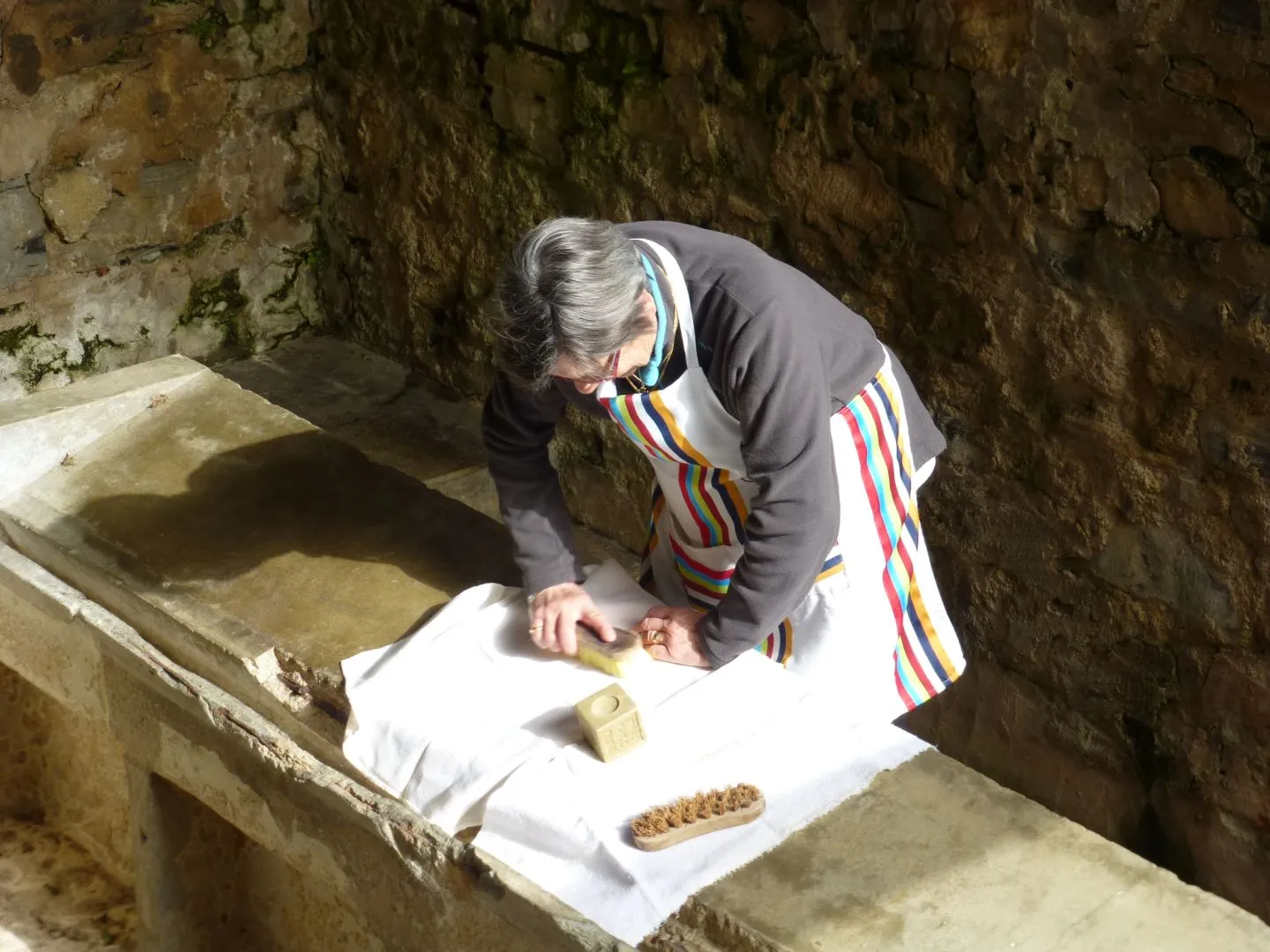
Le lavoir a été rénové en 1934 : son bassin a été refait en ciment et couvert d’une toiture. Le captage de la source lui, a gardé son aspect originel. Il est alimenté par la source Plazako Ithurria, ou source de la place. Si son eau n’est plus potable aujourd’hui, elle servait aux habitants du centre, comblés de sa constante fraicheur (15°).
D’autres sources existent à Bidart dont Contresta. Appelée "source royale", elle a gagné en reconnaissance suite à la découverte de ses vertus thérapeutiques. Elle était en effet employée en cure contre les infections urinaires et les états arthriques. L’eau de cette source n’est plus potable aujourd’hui.
English
The wash-house was renovated in 1934: its basin was redone in cement and covered with a roof. The spring catchment has kept its original aspect. It is fed by the Plazako Ithurria spring, or source of the square. Although its water is no longer drinkable today, it used to be used by the inhabitants of the centre, filled with its constant freshness (15°)
Other springs exist in Bidart, including Contresta. Called "royal spring", it gained recognition following the discovery of its therapeutic virtues. It was indeed used as a cure against urinary infections and arthritic states. The water from this spring is no longer drinkable today.
Deutsch
Das Waschhaus wurde 1934 renoviert: Das Becken wurde aus Zement gefertigt und mit einem Dach versehen. Die Quellfassung hat ihr ursprüngliches Aussehen behalten. Sie wird von der Quelle Plazako Ithurria, auch Quelle des Platzes genannt, gespeist. Ihr Wasser ist heute zwar nicht mehr trinkbar, aber es diente den Bewohnern des Zentrums, die sich an seiner konstanten Frische (15 °C) erfreuten
In Bidart gibt es noch weitere Quellen, darunter Contresta. Sie wurde als "königliche Quelle" bezeichnet und gewann nach der Entdeckung ihrer therapeutischen Eigenschaften an Anerkennung. Sie wurde als Kur gegen Harnwegsinfektionen und arthritische Beschwerden eingesetzt. Heute ist das Wasser aus dieser Quelle nicht mehr trinkbar.
Dutch
Het washuis werd in 1934 gerenoveerd: het bassin werd herbouwd in cement en bedekt met een dak. De bron heeft zijn oorspronkelijke uiterlijk behouden. Het wordt gevoed door de Plazako Ithurria bron, of bron van het plein. Hoewel het water niet meer drinkbaar is, werd het gebruikt door de inwoners van het centrum, die blij waren met de constante koelte (15°)
Er zijn andere bronnen in Bidart, waaronder Contresta. Hij werd de "koninklijke bron" genoemd en kreeg erkenning na de ontdekking van zijn therapeutische eigenschappen. Het werd gebruikt als middel tegen urine-infecties en artritis. Het water van deze bron is tegenwoordig niet meer drinkbaar.
Español
El lavadero fue renovado en 1934: su cuenca fue reconstruida en cemento y cubierta con un techo. El manantial ha conservado su aspecto original. Se alimenta de la fuente Plazako Ithurria, o fuente de la plaza. Aunque su agua ya no es potable, era utilizada por los habitantes del centro, que estaban encantados con su frescura constante (15°C)
En Bidart existen otros manantiales, como el de Contresta. Llamado "manantial real", ganó reconocimiento tras el descubrimiento de sus virtudes terapéuticas. Se utilizaba como cura para las infecciones urinarias y la artritis. El agua de este manantial ya no es potable hoy en día.
Italiano
Il lavatoio fu ristrutturato nel 1934: la vasca fu ricostruita in cemento e coperta con un tetto. La sorgente ha mantenuto il suo aspetto originale. È alimentata dalla sorgente Plazako Ithurria, o sorgente della piazza. Sebbene l'acqua non sia più potabile, veniva utilizzata dagli abitanti del centro, che si rallegravano della sua costante freschezza (15°C)
Nel Bidart esistono altre sorgenti, tra cui Contresta. Chiamata "sorgente reale", è stata riconosciuta in seguito alla scoperta delle sue virtù terapeutiche. Veniva utilizzato come cura per le infezioni urinarie e l'artrite. Oggi l'acqua di questa sorgente non è più potabile.