Eglise Sainte Foy – Morlaàs
Description
English
Deutsch
Dutch
Español
Italiano
Description
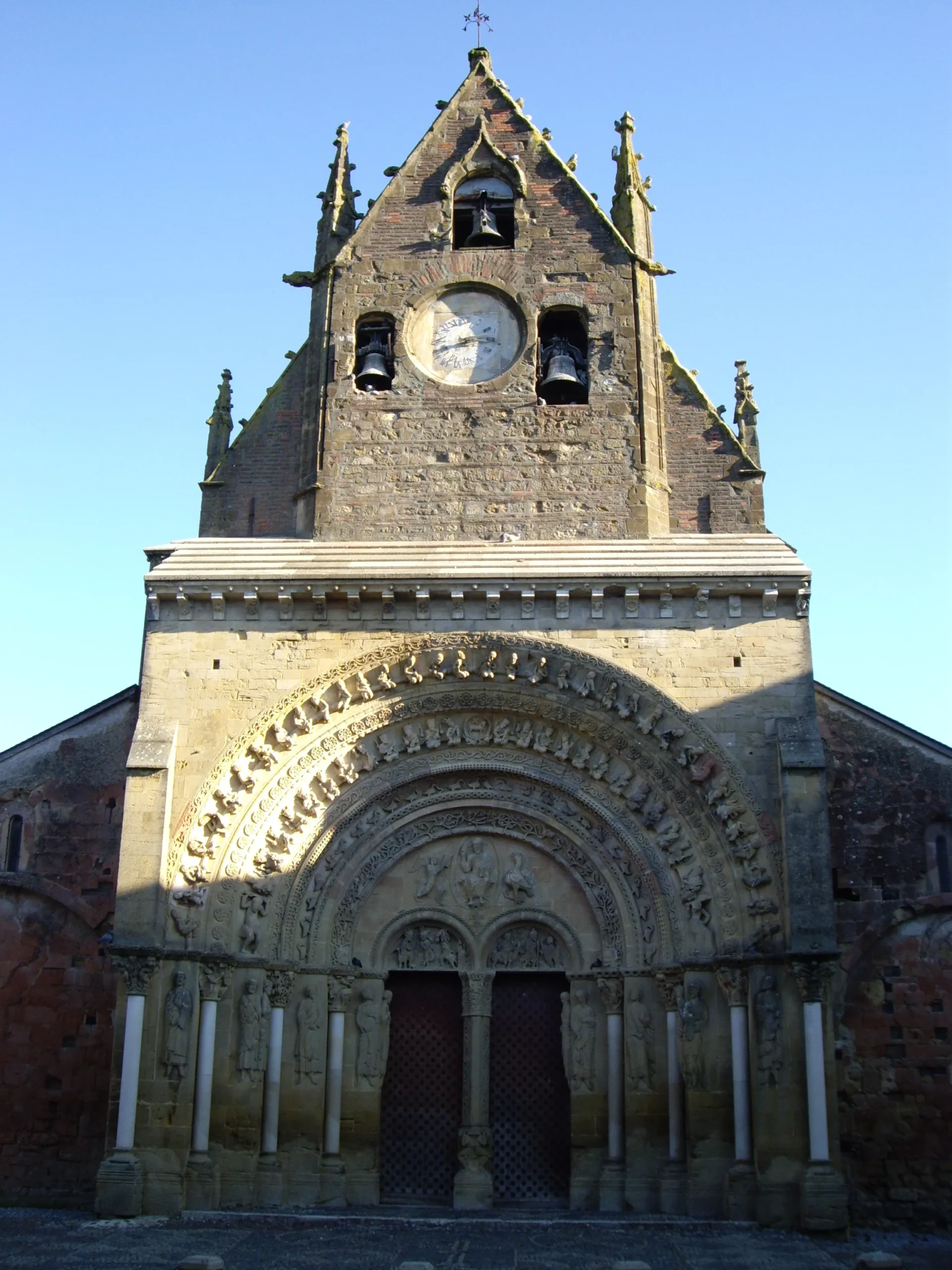
Classée aux Monuments Historiques en 1841, l'église Sainte-Foy édifiée au coeur de la capitale historique du Béarn, présente de très beaux chapiteaux sculptés dans le choeur, dont la décollation de Sainte Foy, et le "piton de Jaca", motif architectural se retrouvant sur les voies de pèlerinage.
Le portail roman, remanié au XIXème siècle, possède des originaux, visibles dans la salle d'exposition de l'Office de Tourisme. Quant au remarquable original du tympan, on peut le découvrir dans la chapelle du Bienheureux Bernard. L’ensemble des 10 verrières a été réalisé par Mauméjean (1869). Possibilité de visites guidées.
English
Classified as an Historical Monument in 1841, The Church Sainte-Foy, built in the heart of the historical capital of Bearn, shows very impressive carved capitals in the choir like the Beheading of Sainte Foy and the Piton de Jaca, an architectural motif reproduced on the pilgrimage roads. Original stones of the Romanesque portal, which had been renovated in the 19th century, are exhibited at the Office of Tourism. The original of the remarkable tympanum can be seen in the chapel of the Bienheureux Bernard. Ten stained glass windows have been done by Mauméjean (1869).
Deutsch
Die 1841 unter Denkmalschutz gestellte Kirche Sainte-Foy wurde im Herzen der historischen Hauptstadt des Béarn erbaut und weist im Chor wunderschöne Skulpturenkapitelle auf, darunter die Enthauptung der Heiligen Foy und der "Piton de Jaca", ein architektonisches Motiv, das auf Pilgerwegen zu finden ist.
Das romanische Portal, das im 19. Jahrhundert umgebaut wurde, besitzt Originale, die im Ausstellungsraum des Fremdenverkehrsamtes zu sehen sind. Das bemerkenswerte Original des Tympanons kann in der Kapelle des Seligen Bernhard besichtigt werden. Die 10 Glasfenster wurden von Mauméjean (1869) geschaffen. Geführte Besichtigungen möglich.
Dutch
De kerk van Sainte-Foy, die in 1841 op de monumentenlijst is geplaatst, ligt in het hart van de historische hoofdstad van Béarn en heeft zeer mooie gebeeldhouwde kapitelen in het koor, waaronder de onthoofding van Sainte Foy, en de "piton de Jaca", een architectonisch motief dat op de pelgrimsroutes voorkomt.
Van het Romaanse portaal, dat in de 19e eeuw is herbouwd, zijn de originelen te zien in de tentoonstellingsruimte van het VVV-kantoor. Het opmerkelijke origineel van het timpaan is te zien in de kapel van de zalige Bernardus. Alle 10 ramen zijn gemaakt door Mauméjean (1869). Rondleidingen zijn mogelijk.
Español
Declarada Monumento Histórico en 1841, la iglesia de Sainte-Foy, construida en el corazón de la capital histórica de Béarn, posee bellísimos capiteles esculpidos en el coro, entre ellos la decapitación de Sainte Foy, y el "piton de Jaca", motivo arquitectónico presente en las rutas de peregrinación.
La portada románica, reformada en el siglo XIX, conserva originales que pueden verse en la sala de exposiciones de la Oficina de Turismo. En cuanto al notable original del tímpano, puede verse en la capilla del Beato Bernardo. Las 10 ventanas son obra de Mauméjean (1869). Se ofrecen visitas guiadas.
Italiano
Classificata come Monumento Storico nel 1841, la chiesa di Sainte-Foy, costruita nel cuore della capitale storica del Béarn, presenta nel coro bellissimi capitelli scolpiti, tra cui la decapitazione di Sainte Foy, e il "piton de Jaca", un motivo architettonico che si trova sulle vie di pellegrinaggio.
Il portale romanico, rielaborato nel XIX secolo, presenta degli originali che possono essere ammirati nella sala espositiva dell'Ufficio del Turismo. Il notevole originale del timpano si trova nella cappella del Beato Bernardo. Tutte le 10 finestre sono state realizzate da Mauméjean (1869). Sono disponibili visite guidate.
En ville
Classement: Monument Historique
Place Sainte-Foy, 64160 Morlaàs
Crédits: Florent Pécassou
CC BY-SA 3.0
CC BY-SA 3.0


