ÉGLISE SAINT-REMY DE SAUCOURT-SUR-ROGNON – Doulaincourt-Saucourt
Description
English
Deutsch
Dutch
Español
Italiano
Description
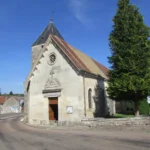
L’église Saint-Rémy, à plan allongé, est entièrement voûté d'arêtes. Son chœur, à deux travées et chevet à 5 pans, et la nef à vaisseau unique à 3 travées, datent tous deux de la seconde moitié du 18ème siècle. Le clocher-porche, surmonté d'une flèche polygonale, ainsi que les deux chapelles qui lui sont accosté, ont été ajouté dans la seconde moitié du 19e siècle (une cloche est datée de 1872).
English
Saint-Rémy church, with its elongated floor plan, is entirely cross-vaulted. Its two-bay choir with 5-sided chevet and 3-bay single nave both date from the second half of the 18th century. The bell tower-porch, topped by a polygonal spire, and the two chapels adjoining it, were added in the second half of the 19th century (one bell is dated 1872).
Deutsch
Die Kirche Saint-Rémy hat einen länglichen Grundriss und ist vollständig kreuzgratgewölbt. Der zweijochige Chor mit fünfseitigem Kopfende und das einschiffige, dreijochige Kirchenschiff stammen aus der zweiten Hälfte des 18. Der Glockenturm mit einer polygonalen Spitze und die beiden Kapellen wurden in der zweiten Hälfte des 19.
Dutch
De Saint-Rémy kerk heeft een langwerpige plattegrond en is geheel voorzien van kruisgewelven. Het koor met twee traveeën en een vijfzijdige koorafsluiting en het schip met drie traveeën dateren allebei uit de tweede helft van de 18e eeuw. De klokkentoren met veelhoekige spits en de twee kapellen ernaast werden in de tweede helft van de 19e eeuw toegevoegd (één klok is gedateerd 1872).
Español
La iglesia de Saint-Rémy es de planta alargada y está totalmente cubierta con bóvedas de crucería. Su coro de dos tramos con cabecera de cinco lados y su nave única de tres tramos datan de la segunda mitad del siglo XVIII. El campanario, coronado por una aguja poligonal, y las dos capillas contiguas se añadieron en la segunda mitad del siglo XIX (una de las campanas está fechada en 1872).
Italiano
La chiesa di Saint-Rémy ha una pianta allungata ed è interamente coperta da volte a crociera. Il coro a due campate con chevet a 5 lati e la navata unica a 3 campate risalgono entrambi alla seconda metà del XVIII secolo. Il campanile, sormontato da una guglia poligonale, e le due cappelle adiacenti sono stati aggiunti nella seconda metà del XIX secolo (una campana è datata 1872).
, 52270 Doulaincourt-Saucourt
Crédits: Google streetview