EGLISE SAINT PIERRE SAINT LONGIS – SAINT LONGIS
Description
English
Deutsch
Dutch
Español
Italiano
Description
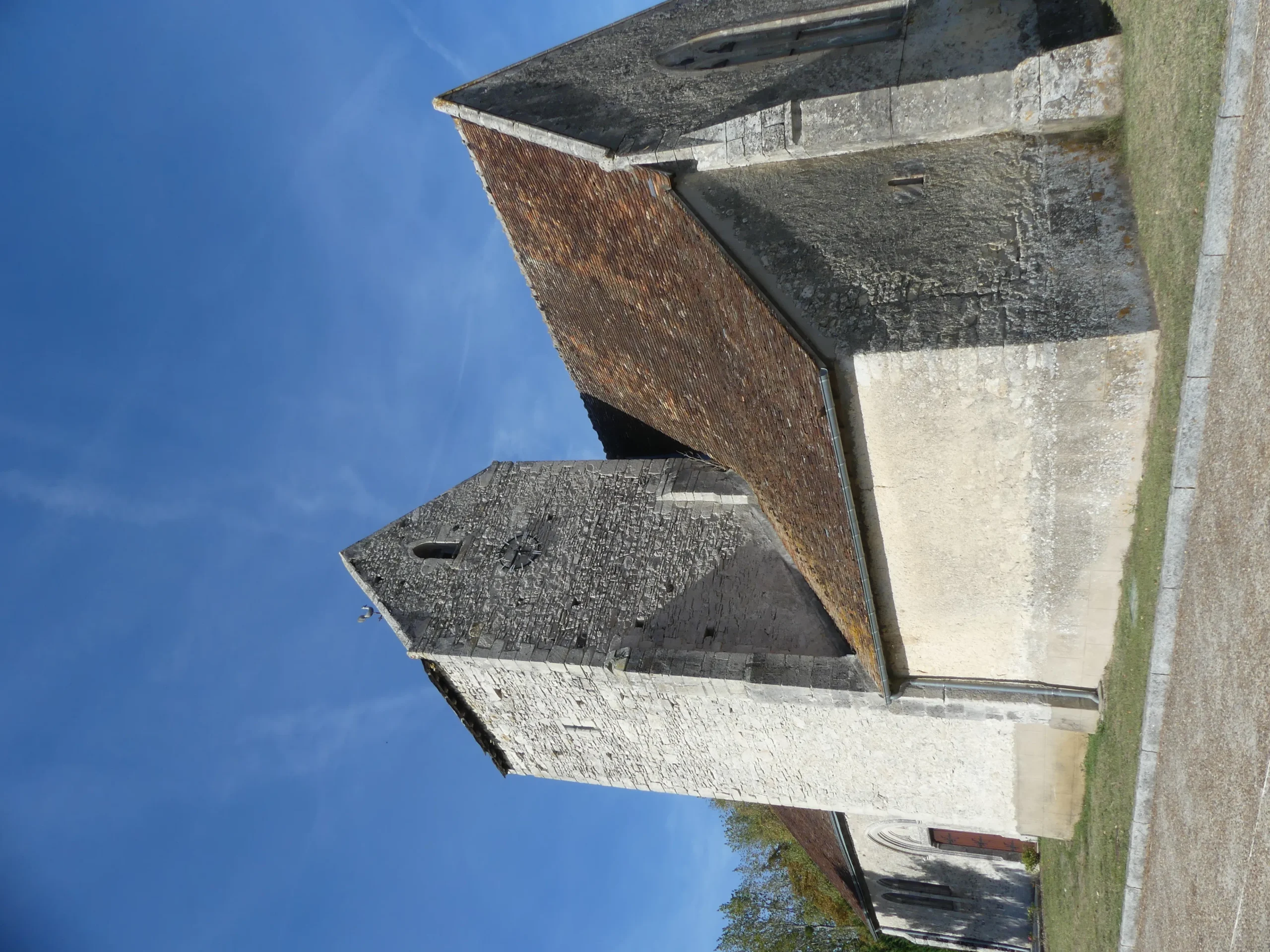
Fondée au 11ème siècle, le Prieuré de Saint Longis relève de l'abbaye St Vincent du Mans. Son église devient paroissiale après la destruction de l'ancienne église Saint Pierre. Le bâtiment remanié au XIXème conserve des éléments d'origine romane : réemploi de pierres sculptées, baie du chevet, arc triomphal entre la nef et le chœur.
Comme beaucoup de clochers dans le Saosnois, la tour-clocher latérale carrée est coiffée d’un toit en bâtière couvert d'ardoise (et non en tuiles) à deux pignons découverts. A l'intérieur, l’antependium du maître autel représente le Christ donnant les clés du Royaume des cieux à Saint Pierre entouré des 12 apôtres.
English
Founded in the 11th century, the Priory of Saint Longis is part of the Abbey of St Vincent du Mans. Its church became a parish church after the destruction of the old church of Saint Peter The building, which was remodelled in the 19th century, retains elements of Romanesque origin: reuse of sculpted stones, chevet bay, triumphal arch between the nave and the choir
Like many bell towers in the Saosnois region, the square side bell tower is topped by a slate roof (not tiled) with two open gables. Inside, the antependium of the main altar represents Christ giving the keys of the Kingdom of Heaven to Saint Peter surrounded by the 12 apostles.
Deutsch
Das Priorat Saint Longis wurde im 11. Jahrhundert gegründet und unterstand der Abtei St Vincent du Mans. Seine Kirche wurde nach der Zerstörung der alten Kirche Saint Pierre zur Pfarrkirche Das im 19. Jahrhundert umgebaute Gebäude bewahrt Elemente romanischen Ursprungs: Wiederverwendung von geschnitzten Steinen, Erker am Kopfende, Triumphbogen zwischen Kirchenschiff und Chor
Wie viele Kirchtürme im Saosnois hat der seitliche quadratische Glockenturm ein mit Schiefer (und nicht mit Ziegeln) gedecktes Satteldach mit zwei offenen Giebeln. Im Inneren stellt das Antependium des Hauptaltars Christus dar, der dem Heiligen Petrus, umgeben von den 12 Aposteln, die Schlüssel des Himmelreichs übergibt.
Dutch
De Priorij van Saint Longis, gesticht in de 11e eeuw, maakte deel uit van de Abdij van Saint Vincent du Mans. De kerk werd een parochiekerk na de verwoesting van de voormalige kerk van Sint Peter Het gebouw, dat in de 19e eeuw werd verbouwd, behoudt elementen van romaanse oorsprong: hergebruik van gebeeldhouwde stenen, chevet bay, triomfboog tussen het schip en het koor
Zoals vele klokkentorens in de Saosnois, wordt de vierkante zijklokkentoren bekroond door een leien dak (niet met pannen) met twee open gevels. Binnen stelt het antependium van het hoofdaltaar voor dat Christus de sleutels van het Koninkrijk der Hemelen geeft aan Petrus, omringd door de 12 apostelen.
Español
Fundado en el siglo XI, el Priorato de Saint Longis formaba parte de la Abadía de San Vicente de Mans. Su iglesia se convirtió en parroquia tras la destrucción de la antigua iglesia de San Pedro El edificio, remodelado en el siglo XIX, conserva elementos de origen románico: reutilización de piedras esculpidas, vano de la cabecera, arco de triunfo entre la nave y el coro
Como muchos campanarios del Saosnois, la torre lateral cuadrada está coronada por un tejado de pizarra (no de tejas) con dos frontones abiertos. En el interior, el antependio del altar mayor representa a Cristo entregando las llaves del Reino de los Cielos a San Pedro rodeado de los 12 apóstoles.
Italiano
Fondato nell'XI secolo, il Priorato di Saint Longis faceva parte dell'Abbazia di Saint Vincent du Mans. La sua chiesa divenne una parrocchia dopo la distruzione della precedente chiesa di San Pietro L'edificio, rimaneggiato nel XIX secolo, conserva elementi di origine romanica: riutilizzo di pietre scolpite, campata chevet, arco trionfale tra la navata e il coro
Come molti campanili del Saosnois, la torre laterale quadrata è sormontata da un tetto in ardesia (non in tegole) con due frontoni aperti. All'interno, il paliotto dell'altare maggiore rappresenta Cristo che consegna le chiavi del Regno dei Cieli a San Pietro circondato dai 12 apostoli.
6 place Saint Pierre, 72600 Saint-Longis
Crédits: Brunodumaine