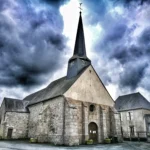
Eglise Saint Pierre ès Liens – Puy-l'Évêque
Description
English
Deutsch
Dutch
Español
Italiano
Description
Construite au XIIIe siècle, c’est un édifice modeste, doté d’une nef unique et d’une abside en « cul-de-four ». Le clocher a subi plusieurs modifications aux XVIIe et XIXe siècles et les murs massifs de l’époque romane ont été percés de larges ouvertures. A la fin du XVe siècle, l’intérieur a été décoré d’un ensemble de peintures murales exceptionnellement riche et complet qui nous éclaire avec précision sur les mentalités religieuses du temps.
English
Built in the 13th century, it is a modest building, with a single nave and a "cul-de-four" apse. The bell tower underwent several modifications in the 17th and 19th centuries and the massive walls of the Romanesque period were pierced with large openings. At the end of the 15th century, the interior was decorated with an exceptionally rich and complete set of wall paintings that shed light on the religious mentality of the time.
Deutsch
Jahrhundert erbaut und ist ein bescheidenes Gebäude mit einem einzigen Kirchenschiff und einer Apsis in Form eines "Cul-de-four". Der Glockenturm wurde im 17. und 19. Jahrhundert mehrmals umgebaut und die massiven Mauern aus der romanischen Epoche wurden mit großen Öffnungen versehen. Jahrhunderts wurde das Innere mit einem außergewöhnlich reichen und vollständigen Satz von Wandmalereien geschmückt, die uns einen genauen Einblick in die religiösen Mentalitäten der damaligen Zeit geben.
Dutch
Gebouwd in de 13e eeuw, is het een bescheiden gebouw met een enkel schip en een "cul-de-four" apsis. De klokkentoren onderging verschillende aanpassingen in de 17e en 19e eeuw en de massieve muren uit de romaanse periode werden doorboord met grote openingen. Aan het einde van de 15e eeuw werd het interieur versierd met een uitzonderlijk rijke en volledige reeks muurschilderingen die licht werpen op de religieuze mentaliteit van die tijd.
Español
Construida en el siglo XIII, es un modesto edificio de una sola nave con un ábside en forma de "cul-de-four". El campanario sufrió varias modificaciones en los siglos XVII y XIX y los macizos muros del periodo románico fueron perforados con grandes aberturas. A finales del siglo XV, el interior estaba decorado con un conjunto excepcionalmente rico y completo de pinturas murales que arrojan luz sobre la mentalidad religiosa de la época.
Italiano
Costruita nel XIII secolo, è un edificio modesto a navata unica con abside "cul-de-four". Il campanile ha subito diverse modifiche nel XVII e nel XIX secolo e le massicce pareti del periodo romanico sono state perforate da grandi aperture. Alla fine del XV secolo, l'interno è stato decorato con una serie eccezionalmente ricca e completa di dipinti murali che fanno luce sulla mentalità religiosa dell'epoca.
Martignac, 46700 Puy-l'Évêque

Crédits: eglise