ÉGLISE SAINT-MAURICE – Greux
Description
English
Deutsch
Dutch
Español
Italiano
Description
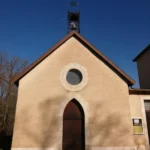
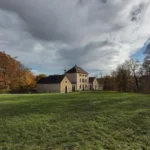
L’église primitive de Greux était construite au flanc de la côte comme l’ancien village. Son emplacement rectangulaire est situé derrière le groupe des trois statues tournées vers le village actuel : la Vierge, Sainte Marguerite et Sainte Jeanne d’Arc. L’église Saint Maurice fut reconstruite en 1733 alors que Jean Jacob était curé de Greux depuis plus de quarante ans. Sur sa tombe est inscrit qu’il a fait construire ladite église de ses propres deniers. Les habitants y ont cependant contribué. Les cultivateurs ont fait par corvées volontaires la conduite de tous les matériaux et les autres habitants ont fourni des journées de travail soit comme manœuvres, soit comme maçons selon leurs aptitudes. Sur le portail richement décoré, la date de reconstruction de l'église y est inscrite.
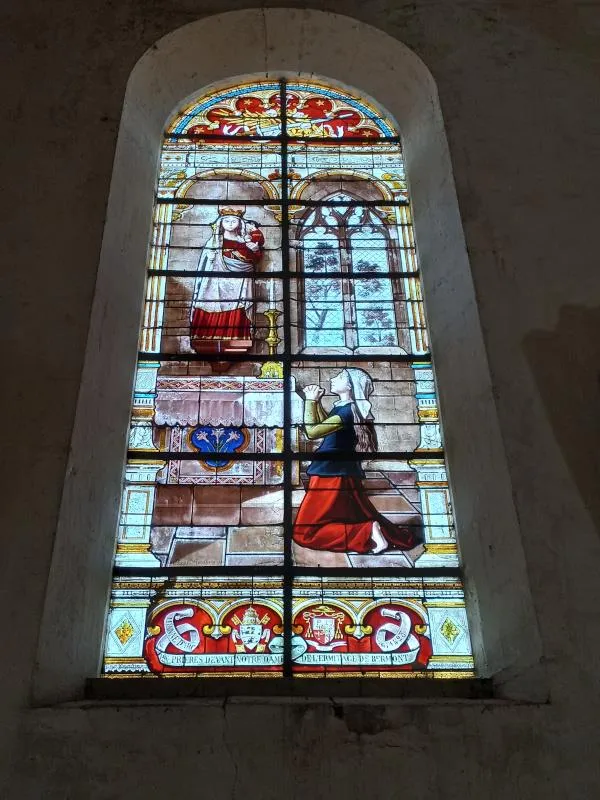
A l'intérieur de l'église, on y retrouve notamment 2 vitraux : l'un représentant Jeanne d'Arc priant à Bermont et l'autre Jeanne d'Arc écoutant ses voix.
Les fonds baptismaux sont d'origine et datent de 1773. On suppose qu'un grand nombre d'enfants se sont fait baptiser dans cette église.
English
The early church of Greux was built into the hillside like the old village. Its rectangular site is behind the group of three statues facing the village today: the Virgin Mary, Saint Margaret and Saint Joan of Arc. The church of Saint Maurice was rebuilt in 1733, when Jean Jacob had been Greux?s parish priest for over forty years. His tombstone states that he built the church with his own money. However, the local inhabitants contributed to the work. Farmers volunteered to carry all the materials, and other residents contributed workdays either as laborers or masons, according to their abilities. The date of the church's reconstruction is inscribed on the richly decorated portal.
Inside the church, there are 2 stained-glass windows: one depicting Joan of Arc praying in Bermont, the other Joan of Arc listening to her voices.
The baptismal font is original, dating from 1773. It is assumed that a large number of children were baptized in this church.
Deutsch
Die ursprüngliche Kirche von Greux wurde wie das alte Dorf an den Hang gebaut. Ihr rechteckiger Standort befindet sich hinter der Gruppe der drei Statuen, die dem heutigen Dorf zugewandt sind: die Jungfrau Maria, die Heilige Margareta und die Heilige Jeanne d'Arc. Die Kirche Saint Maurice wurde 1733 wieder aufgebaut, als Jean Jacob seit über vierzig Jahren Pfarrer von Greux war. Auf seinem Grabstein ist vermerkt, dass er die Kirche aus eigenen Mitteln errichten ließ. Die Einwohner trugen jedoch ihren Teil dazu bei. Die Landwirte führten freiwillig alle Materialien herbei und die anderen Einwohner leisteten je nach ihren Fähigkeiten Arbeitstage als Arbeiter oder Maurer. Auf dem reich verzierten Portal ist das Datum des Wiederaufbaus der Kirche verzeichnet.
Im Inneren der Kirche befinden sich zwei Glasfenster: eines zeigt Jeanne d'Arc beim Gebet in Bermont und das andere Jeanne d'Arc, die auf ihre Stimmen hört.
Das Taufbecken ist original und stammt aus dem Jahr 1773. Es wird angenommen, dass sich in dieser Kirche viele Kinder taufen ließen.
Dutch
De vroege kerk van Greux werd net als het oude dorp in de heuvel gebouwd. De rechthoekige plaats bevindt zich achter de groep van drie standbeelden die vandaag tegenover het dorp staan: de Heilige Maagd, de Heilige Margaretha en de Heilige Jeanne d'Arc. De kerk Saint Maurice werd in 1733 herbouwd toen Jean Jacob al meer dan veertig jaar pastoor van Greux was. Op zijn grafsteen staat dat hij de kerk met zijn eigen geld bouwde. De inwoners droegen echter bij. De boeren boden zich vrijwillig aan om al het materiaal te dragen en de andere inwoners zorgden voor werkdagen als arbeiders of metselaars, afhankelijk van hun capaciteiten. De datum waarop de kerk werd herbouwd staat op het rijk versierde portaal.
Binnen in de kerk zijn er 2 gebrandschilderde ramen: een die Jeanne d'Arc afbeeldt terwijl ze in Bermont bidt en de andere Jeanne d'Arc die naar haar stemmen luistert.
De doopvont is origineel en dateert uit 1773. Aangenomen wordt dat er in deze kerk een groot aantal kinderen is gedoopt.
Español
La primitiva iglesia de Greux se construyó en la ladera de la colina, como el antiguo pueblo. Su emplazamiento rectangular se encuentra detrás del grupo de tres estatuas que hoy dan al pueblo: la Virgen, Santa Margarita y Santa Juana de Arco. La iglesia de San Mauricio fue reconstruida en 1733, cuando Jean Jacob era párroco de Greux desde hacía más de cuarenta años. Su lápida indica que la construyó con su propio dinero. Sin embargo, los habitantes contribuyeron. Los campesinos se ofrecieron voluntarios para transportar todos los materiales y los demás habitantes aportaron días de trabajo como peones o albañiles según sus capacidades. La fecha en que se reconstruyó la iglesia está inscrita en el portal, ricamente decorado.
En el interior de la iglesia hay 2 vidrieras: una representa a Juana de Arco rezando en Bermont y la otra a Juana de Arco escuchando sus voces.
La pila bautismal es original y data de 1773. Se supone que un gran número de niños fueron bautizados en esta iglesia.
Italiano
La chiesa primitiva di Greux è stata costruita sul fianco della collina come il vecchio villaggio. Il suo sito rettangolare si trova dietro il gruppo di tre statue che si affacciano oggi sul villaggio: la Vergine, Santa Margherita e Santa Giovanna d'Arco. La chiesa di San Maurizio fu ricostruita nel 1733, quando Jean Jacob era parroco di Greux da oltre quarant'anni. Sulla sua lapide si legge che costruì la chiesa con i propri soldi. Tuttavia, gli abitanti contribuirono. I contadini si offrirono di trasportare tutti i materiali e gli altri abitanti offrirono giornate di lavoro come manovali o muratori a seconda delle loro capacità. La data di ricostruzione della chiesa è incisa sul portale riccamente decorato.
All'interno della chiesa si trovano due vetrate: una raffigura Giovanna d'Arco in preghiera a Bermont e l'altra Giovanna d'Arco che ascolta le sue voci.
Il fonte battesimale è originale e risale al 1773. Si presume che un gran numero di bambini sia stato battezzato in questa chiesa.
27 rue Jeanne d'Arc, 88630 Greux
Crédits: ©OTOV